
How Marilyn Monroe’s Body Was Exploited, Mocked, and Sold After Her Death in 1962

How Marilyn Monroe's Body Was Exploited, Mocked, and Sold After Her Death in 1962
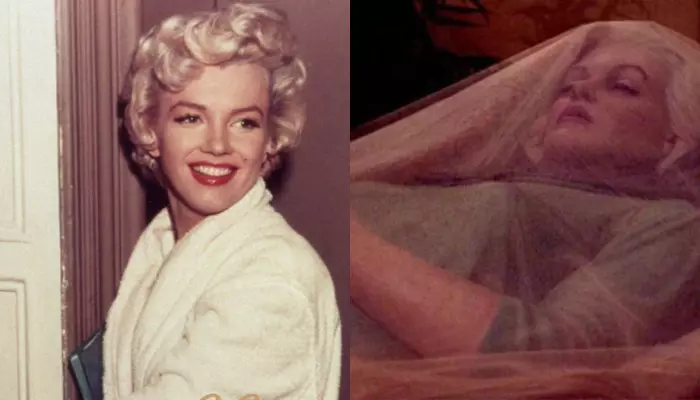
Marilyn Monroe spent her life being consumed by an industry and public that treated her more as an object than a person. That dynamic did not end when she died. If anything, her death on August 5, 1962, accelerated the exploitation — removing even the limited agency she had exercised while alive.
What followed her passing at her Brentwood home was a cascade of violations so systematic and shameless that they illuminate something deeply uncomfortable about how society treats famous women, even after they are gone.
The Scene at Her Home and What Came Immediately After
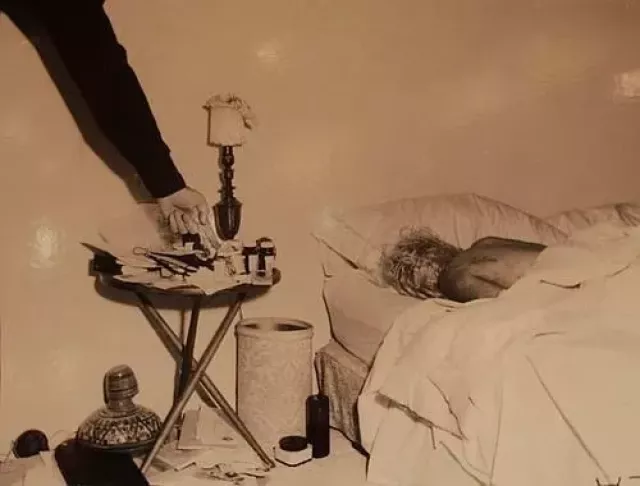
Monroe was found unresponsive in her bedroom, a telephone still in her hand. Police arrived, then press. Paparazzi surrounded the property with a speed that suggested celebrity death had already become its own media event by 1962.
Photographs taken inside her bedroom were later circulated. More disturbingly, a now-infamous image shows an unidentified man posing beside her naked corpse, pointing toward the prescription bottles on her bedside table. The funeral home reportedly had to conceal her body in a storage room to prevent further intrusion — a detail that captures how little institutional protection existed for even the most famous woman in the world.
The Autopsy and the Bribed Photograph
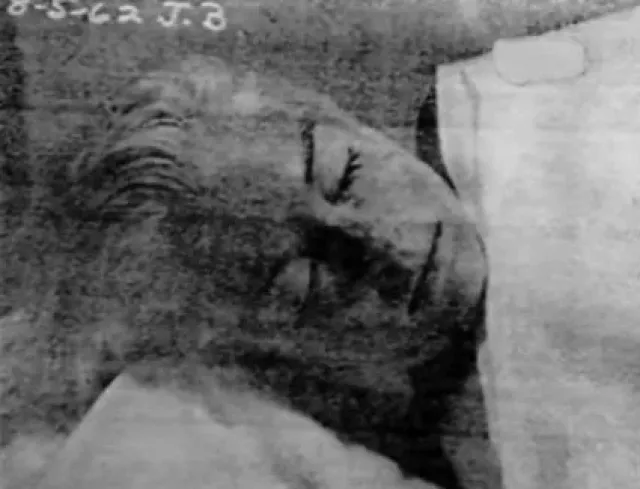
Before reaching the funeral home, Monroe’s body was transferred for autopsy, conducted by deputy chief examiner Dr. Thomas Noguchi. The cause of death was ruled a probable suicide from barbiturate overdose — primarily Nembutal and Chloral Hydrate.
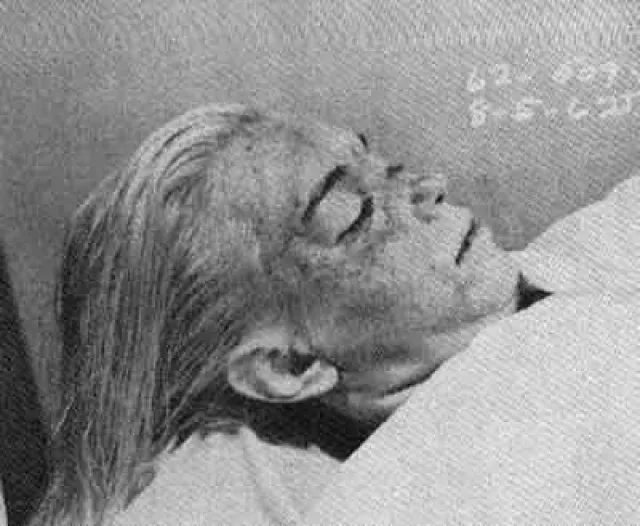
At the morgue, a Life magazine photographer allegedly paid a mortuary attendant with a bottle of whiskey to gain access and photograph her body immediately post-autopsy, before embalming. The transaction is as cynical as it sounds — a woman’s most vulnerable moment sold for a bottle of spirits and a byline.
Allegations have also surfaced that post-autopsy images were later stored and displayed at the Hollywood Museum of Death, extending the violation across decades.
The Funeral Home That Reduced Her to Criticism
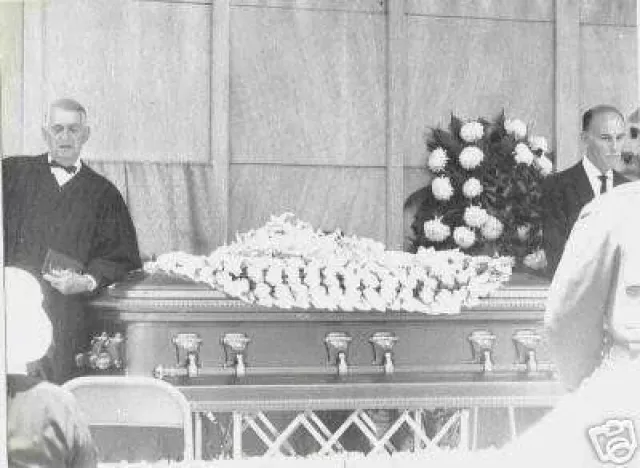
Abbott and Hast, the funeral home that handled Monroe’s preparation, served the Hollywood elite. They had previously managed the remains of Clark Gable and Natalie Wood. Their discretion, apparently, was selective.
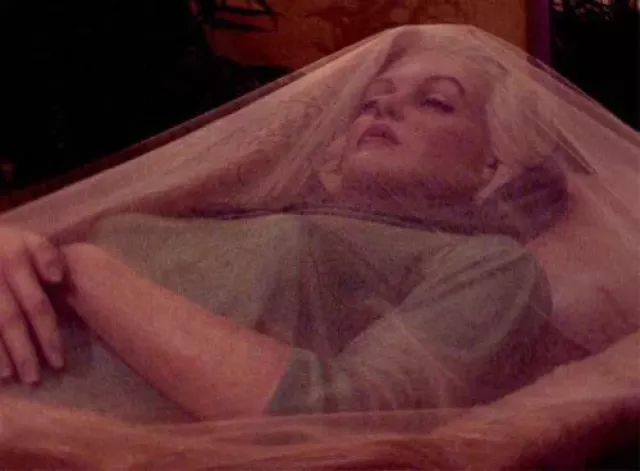
Allan Abbott, one of the principals, later described Monroe in his book Pardon My Hearse as an ordinary aging woman who had not maintained herself — commenting specifically on her manicure, hair roots, and unshaved legs. He and a colleague openly discussed the condition of her body, including her breasts, which had changed shape following the chest incisions made during autopsy.
One worker’s exclamation upon seeing her post-autopsy was recorded in the book. A colleague then stuffed her bra with cotton wool and declared the result looked more like the real Marilyn Monroe — a comment that distills decades of projection onto her physical form into a single, revealing sentence.
The Auction That Should Never Have Happened
Abbott did not keep these violations private. He later auctioned items brought to the funeral home by Monroe’s executrix — including what were described as prosthetic breast inserts and locks of her hair removed during the embalming process.
The legality was murky. The ethics were not. Selling physical remnants of a deceased person’s body for profit, without any descendant consent, represents a failure of professional and moral standards that the industry has never formally reckoned with.
Why This Still Matters in 2026
Monroe’s post-death treatment is not a historical curiosity. It is a documented case study in how fame strips individuals of bodily autonomy — not just during life, but permanently after it. The photographers, funeral workers, and auction participants all operated within systems that placed commercial and voyeuristic value above basic human dignity.
Modern celebrity death coverage has evolved in tone but not entirely in practice. Paparazzi still converge on death scenes. Leaked autopsy images still circulate online. The infrastructure that failed Monroe has been upgraded, not dismantled.
Her story deserves to be told not as entertainment but as evidence — of what happens when a culture decides that a woman’s body is public property, and nobody in the room disagrees.
Catch all the Entertainment News, Breaking News Event and Trending News Updates on GTV News
Join Our Whatsapp Channel GTV Whatsapp Official Channel to get the Daily News Update & Follow us on Google News.
Must Read