
Finance Minister Presents Rs18.7 Trillion Federal Budget 2026-27 — Check Details

Finance Minister Presents Rs18.7 Trillion Federal Budget 2026-27
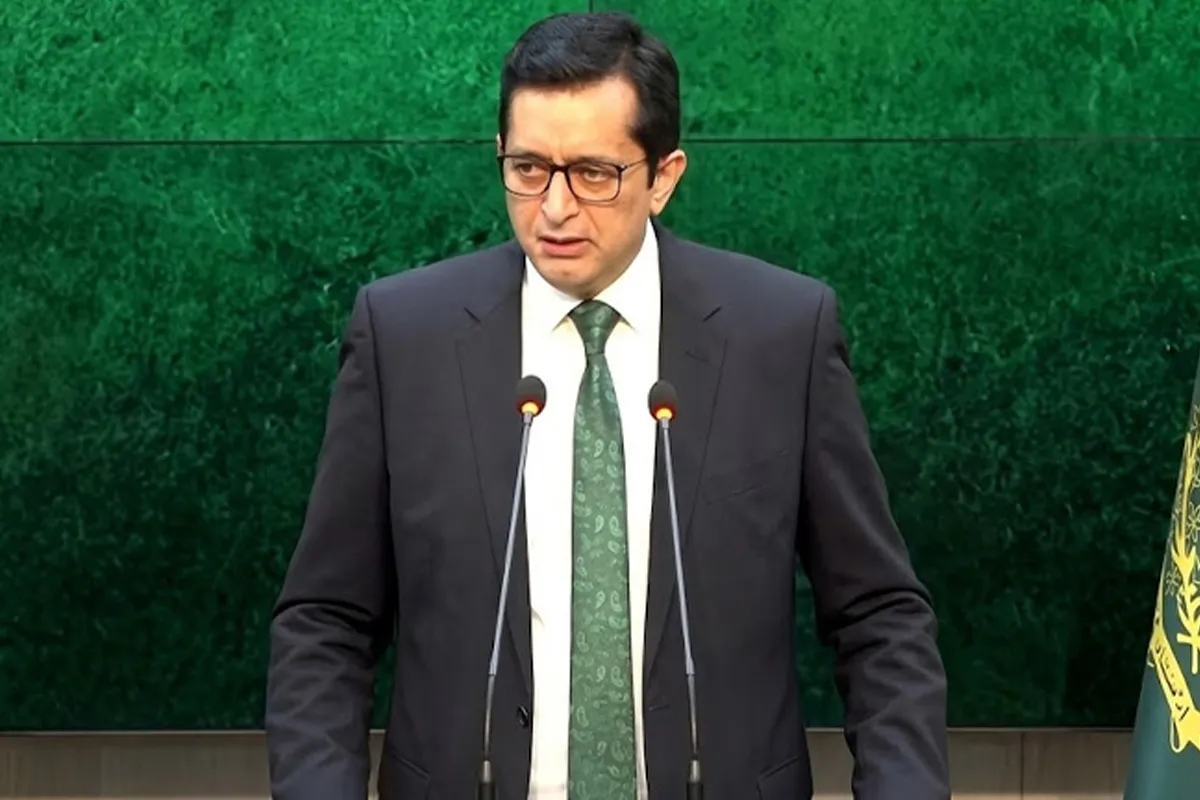
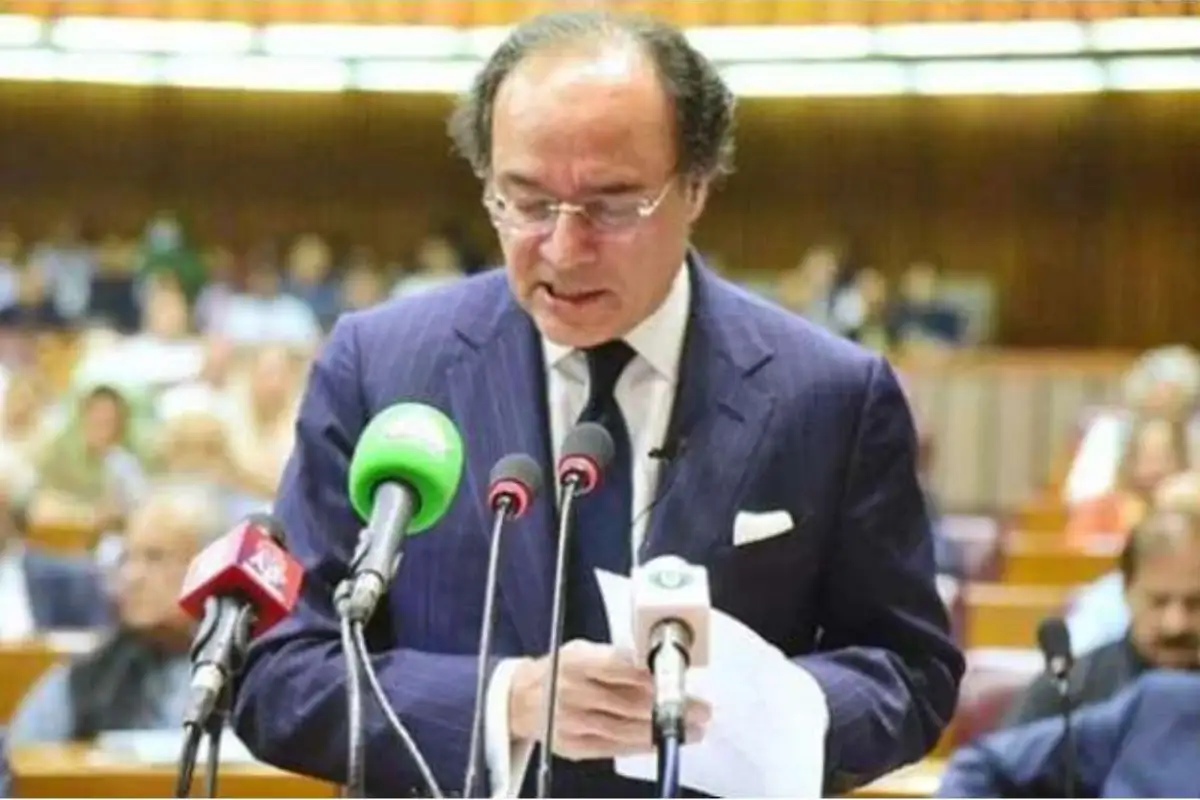
Pakistan’s Finance Minister Muhammad Aurangzeb is presenting the federal budget for the fiscal year 2026-27 in the National Assembly.
Finance Minister Muhammad Aurangzeb opened his budget speech by paying tribute to Pakistan’s armed forces for their decisive victory against a much larger adversary in May 2025. He also acknowledged the efforts of the country’s civil and military leadership, crediting them with elevating Pakistan’s standing in international diplomacy, particularly during the ongoing Iran conflict, where both the US and Iran have placed their trust in Pakistan’s mediation role.
He noted that the closure of the Strait of Hormuz and the resulting spike in oil prices had impacted Pakistan’s economy, just as it had affected other nations worldwide. However, he emphasized that the government chose not to pass this burden directly onto the public. Aurangzeb pledged that once international oil prices decline, the government would correspondingly reduce the prices of petroleum products domestically.
Key Highlights from the Speech
- The finance minister announced that the total budget outlay stands at Rs18.77 trillion for the upcoming fiscal year.
- He highlighted that remittances have witnessed a significant surge, reaching $38 billion over the past 11 months.
- While inflation has risen in recent months, Aurangzeb said it is expected to remain at around 7.5 percent.
- He noted growing international investment interest, with more than 200 international companies having invested in the government’s technology park.
- According to Aurangzeb, a number of DISCOs, banks, and airports will soon be privatized, following the same approach used for PIA’s privatisation.
- The finance minister projected that tax collection will reach Rs13,000 billion by the end of the current financial year, marking a substantial increase from Rs7,200 billion in 2022-23.
- He also pointed to the success of the Digital Pakistan program, noting that more than 1.6 million traders have joined digital payment systems, while 133 million people are now part of digital banking systems, up from 95 million the previous year.
Key Allocations
- The budget allocates Rs3,675 billion for the Public Sector Development Programme (PSDP).
- A sum of Rs54.6 billion has been set aside for sustainable urban development projects.
- Rs103.1 billion has been allocated for water availability projects across the country.
- Specific water and power projects include Rs14 billion for the Diamer Bhasha Dam, Rs22 billion for the Dasu Dam, Rs15 billion for Dasu hydropower, and Rs10 billion for Karachi’s K-4 water project.
- The trade and industry sector has received an allocation of Rs6.6 billion, while the health sector has been allocated Rs25.1 billion.
- For higher education, the government has set aside Rs46 billion, while Rs22 billion has been allocated for the Danish Schools Program.
- The school and college education sector, including early childhood training programmes, has received Rs26.3 billion.
- A total of Rs144.9 billion has been allocated for Azad Jammu and Kashmir (AJK) and Gilgit-Baltistan. This includes Rs45 billion for AJK, Rs44 billion for GB, and Rs56 billion for the erstwhile FATA region.
- On the taxation front, withholding tax on international credit and debit card transactions has been reduced from 5 percent to 0.5 percent, while the contraceptive tax has been brought down to zero.
- In terms of relief measures, government employees will receive a 7 percent salary increase, and retired employees’ pensions will also rise by 7 percent. The minimum monthly wage has been increased by 10 percent.
- The defence sector has been allocated Rs3,000 billion in the new budget.
- To shield citizens from international oil price shocks, the government has set aside Rs128 billion for general and targeted petroleum subsidies. The Benazir Income Support Program has received an allocation of Rs838 billion.
- For transport and communication infrastructure, the budget allocates Rs365 billion. Among the major projects, the N-25 Pakistan Expressway, which involves dualling the Balochistan highway connecting Karachi to Chaman, has received Rs100 billion. The M-6 Motorway (Sukkur-Hyderabad section) has been allocated Rs30 billion, while the ML-I Karachi-Rohri railway section gets Rs25 billion. The Thar Coal Connectivity Project has been allocated Rs2 billion, and Gwadar Port infrastructure along with provincial transport projects will receive Rs93 billion.
- In the energy sector, Rs116.2 billion has been allocated for clean energy and hydropower projects, including Dasu, the Tarbela 5th Extension, and the Mohand Hydro Project. This also covers modern grid systems such as STATCOM (Rs10.2 billion), battery storage (Rs3 billion), and hydropower projects in AJK and GB (Rs13.1 billion).
- Additionally, the Prime Minister’s “Apna Ghar” Scheme, a low-cost housing finance initiative, has been allocated Rs71 billion.
Tax Relief for Salaried Class
The government has proposed direct income tax relief for salaried individuals across four income brackets. Additionally, the 10 percent tax surcharge on the salaried class has been completely abolished.
For annual incomes between Rs2,200,000 and Rs3,200,000, the tax rate has been reduced from 23 percent to 20 percent. For the bracket between Rs3,200,000 and Rs4,100,000, the rate drops from 30 percent to 25 percent. Those earning between Rs4,100,000 and Rs5,600,000 will see their rate fall from 35 percent to 29 percent, while individuals in the Rs5,600,000 to Rs7,000,000 bracket will have their rate reduced from 35 percent to 32 percent.
The finance minister noted that the surcharge on the salaried class was reduced from 10 percent to 9 percent in the previous budget, and this year it is proposed to be removed entirely to fulfill the government’s commitment to easing the tax burden on employees.
| Annual Income Bracket (Slabs) | Previous Tax Rate | Proposed New Tax Rate |
Rs. 2,200,000 to Rs. 3,200,000 (22 to 32 Lakh) | 23% | 20% |
Rs. 3,200,000 to Rs. 4,100,000 (32 to 41 Lakh) | 30% | 25% |
Rs. 4,100,000 to Rs. 5,600,000 (41 to 56 Lakh) | 35% | 29% |
Rs. 5,600,000 to Rs. 7,000,000 (56 to 70 Lakh) | 35% | 32% |
FED on Vehicles
The government has proposed imposing Federal Excise Duty (FED) on imported cars and SUVs with engine capacities ranging from 2000cc to 3000cc.
For vehicles with engine capacities greater than 3000cc, the existing FED rates are being increased.
The tax has also been extended to luxury electric vehicles valued at more than Rs20 million.
However, the existing concessional tax regime for electric motorcycles and rickshaws will remain unchanged for the coming year, and current concessions for locally assembled electric cars and buses will also continue.
Additionally, a new relief measure has been proposed offering a 1 percent sales tax facility on imported electric trucks.
Catch all the Pakistan News, Breaking News Event and Trending News Updates on GTV News
Join Our Whatsapp Channel GTV Whatsapp Official Channel to get the Daily News Update & Follow us on Google News.
Must Read