Pakistan Transparency Report Reveals Key Findings on Public Trust and Accountability

Pakistan Transparency Report Reveals Key Findings on Public Trust and Accountability
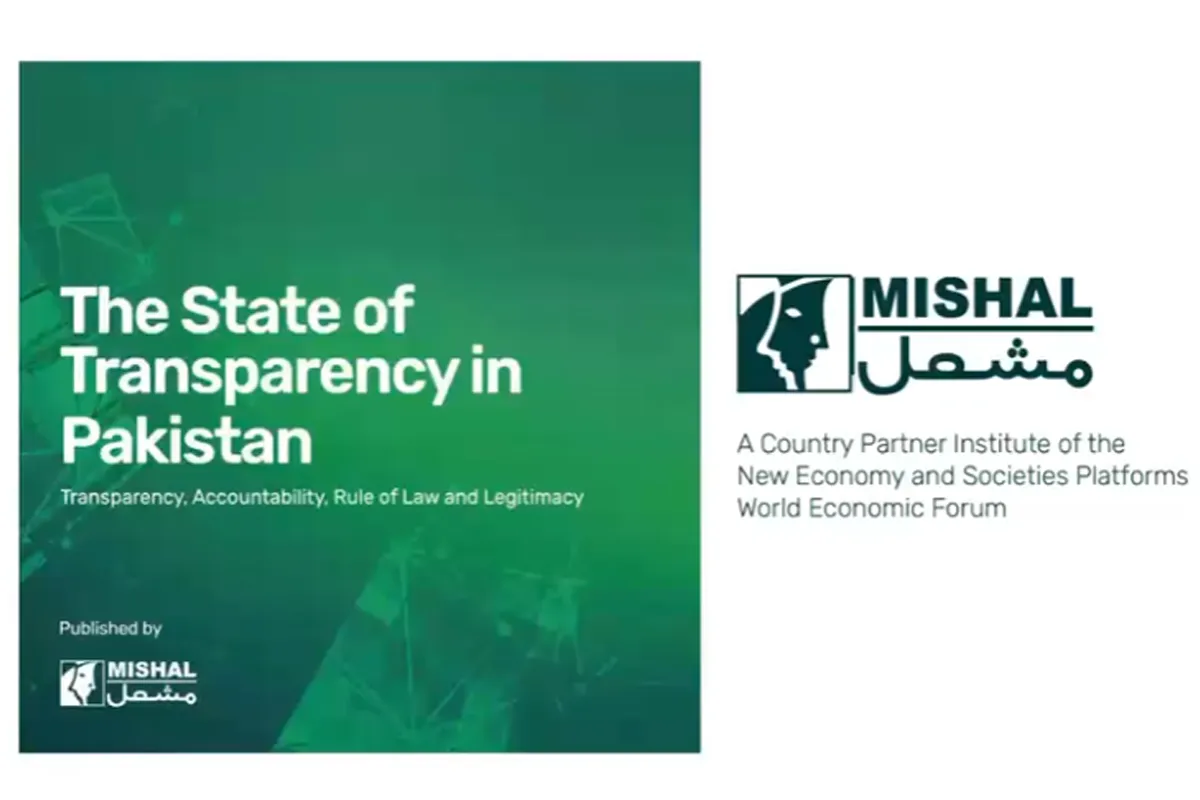
ISLAMABAD: Mishal Pakistan has released its Pakistan Transparency Report 2026, examining transparency, accountability, public trust in institutions and digital governance in the country.
The report is based on the views of 2,000 people from different parts of Pakistan. Among those surveyed, 45 percent were aged 18 to 25, while 35 percent were between 26 and 35 years old. Around 67 percent were graduates, 32 percent held master’s degrees and 1 percent had PhDs.
According to the report, Pakistan has various legal and institutional mechanisms for accountability. Laws providing citizens with access to information are in place at the federal and provincial levels, while the Public Accounts Committee reviews the performance of government departments based on reports by the Auditor General of Pakistan.
The report said the Auditor General completed 683 audits through its 29 field offices, identifying irregularities worth Rs224 billion.
It added that institutions including the State Bank of Pakistan, Securities and Exchange Commission of Pakistan, Federal Board of Revenue, NEPRA, NAB, Auditor General of Pakistan and Higher Education Commission regularly publish annual performance reports.
The survey also examined how people get information. Around 25 percent of respondents said Facebook was their main source of information, followed by WhatsApp at 20 percent and television at 15 percent. No respondent identified newspapers as their primary source of information.
The report found that 58 percent of respondents considered news on social media misleading, highlighting concerns about the reliability and quality of online information.
Public trust in different institutions varied. Around 34 percent of respondents expressed confidence in Parliament’s efforts to improve financial discipline, while the same percentage trusted parliamentary efforts to make Pakistan an Islamic welfare state.
Meanwhile, 52 percent believed the government was working according to a long-term vision, while 36 percent said public opinion influenced government decisions. About 43 percent expressed confidence in policymakers’ capabilities, 39 percent in police reforms and 40 percent in the higher judiciary.
Trust in the armed forces was significantly higher, with 82 percent of respondents expressing confidence in their role in protecting Pakistan’s borders.
The survey also measured awareness of regulatory institutions. Around 90 percent of respondents were aware of the role of the Pakistan Telecommunication Authority, while 95 percent knew about the FBR and 90 percent were familiar with the Higher Education Commission.
On digital governance, 52 percent said e-governance platforms were improving public service delivery. Around 54 percent believed Pakistan was moving towards a digital future, while 52 percent were optimistic about the country’s long-term direction.
Overall, the report highlights mixed public views on transparency, accountability, institutional trust and digital governance. Its findings also show that citizens consider institutional reforms, access to reliable information and better public services important for Pakistan’s future.
Catch all the Pakistan News, Breaking News Event and Trending News Updates on GTV News
Join Our Whatsapp Channel GTV Whatsapp Official Channel to get the Daily News Update & Follow us on Google News.
Must Read