Iran’s leadership council holds second session; vowing continuity

Web Desk
02 March, 2026 10:07
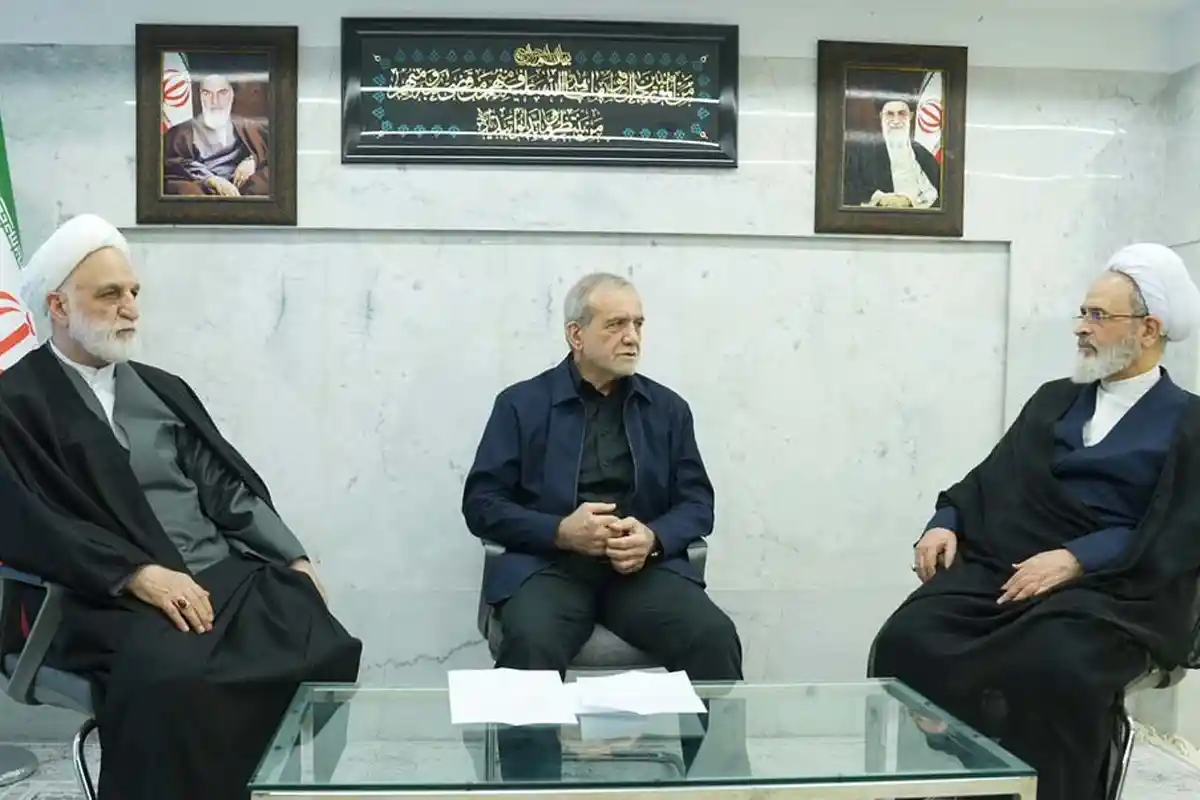
Iran’s leadership council holds second session; vowing continuity
Iran’s Temporary Leadership Council held its second official meeting, reaffirming its commitment to ensure continuity of governance following the martyrdom of Iran’s Leader, Ali Khamenei.
The council was formed after the early Saturday US-Israeli strikes that Iranian state media say led to his martyrdom while he was carrying out official duties at his office.
The establishment of the Temporary Leadership Council was announced by Ali Larijani, Secretary of Iran’s Supreme National Security Council.
Under Article 111 of Iran’s Constitution, in the event of the death, resignation, or dismissal of the Leader, the Assembly of Experts must take immediate steps to appoint a successor. Until that process is completed, a council assumes leadership responsibilities.
The council includes Judiciary Chief Gholamhossein Mohseni Ejei, Iranian President Masoud Pezeshkian, and senior cleric Alireza Arafi.
During the meeting, Ejei stressed that the council will fully carry out its constitutional duties during the transitional period. He said new commanders would immediately take charge of positions left vacant by martyred leaders.
He added that Iran’s enemies would soon realize that the Iranian people would not surrender to what he described as terrorist and psychological pressure.
Iranian state television reported that Ali Khamenei was martyred at his workplace while performing official responsibilities.
The report said this development dismissed claims by certain foreign media outlets that the Leader had been in a secret location. According to the broadcast, he remained present among his people and at the forefront of national responsibility.
The Temporary Leadership Council is expected to oversee state affairs until the Assembly of Experts selects a new Supreme Leader. No official timeline has yet been announced for the appointment process.
Authorities have assured the public that state institutions remain functional and that security and governance systems are operating without interruption.
Iranian officials have described the current period as a test of national unity and resilience, vowing that the country’s political and military structure will remain stable during the transition.
Catch all the World News, Breaking News Event and Trending News Updates on GTV News
Join Our Whatsapp Channel GTV Whatsapp Official Channel to get the Daily News Update & Follow us on Google News.
Must Read