
Alaska mega Tsunami spread fear among tourists

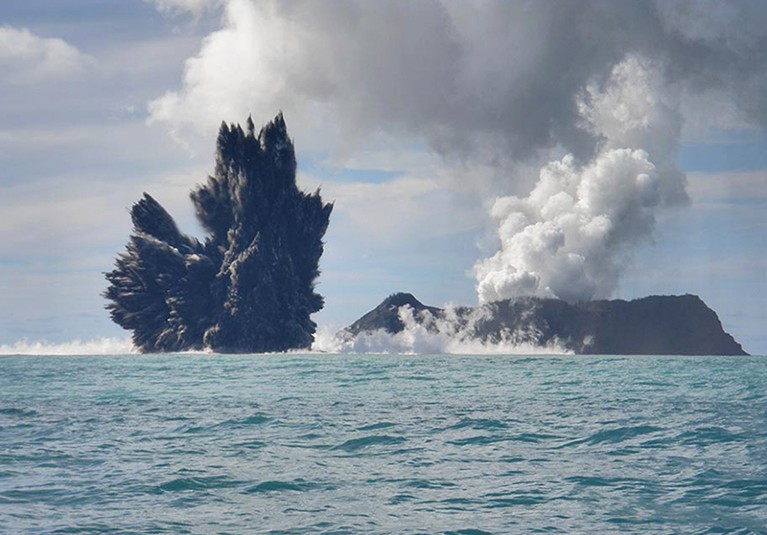
NUKU'ALOFA, TONGA - MARCH 18: An undersea volcano is seen erupting off the coast of Tonga, sending plumes of steam, ash and smoke up to 100 metres into the air, on March 18, 2009 off the coast of Nuku'Alofa, Tonga. The volcano, which is situated approximately 6 miles off of the main Tongan island of Tongatapu, is one of around 36 undersea volcanos clustered in the area. There is currently no danger to residents of the island as the gases are blown offshore, and residents noted the eruptions began on Monday after a series of sharp earthquakes were felt in the capital. (Photo by Dana Stephenson//Getty Images)
A Tsunami at a popular tourist spot in Alaska was the second highest ever recorded and it was “unbelievably lucky” no one was hurt, researchers have said. The wave at the “Tracy Arm Fjord” in the Tongass National Forest was triggered by a rock landslide which was driven by “Climate Change”.
Only the timing of the event, 5.30am on 10 August last year, meant no cruise ships or boats were in the area when the tsunami happened – but experts fear next time “we may not be so lucky”.
Researcher’s said the wave was up to 1,578ft (481m) tall, making it far bigger than The Shard in London and comfortably higher than New York City’s Empire State Building.
It was so powerful it violently stripped away vegetation and left behind scarring on the rock walls.
Climate change meant the glacier supporting the mountain had retreated amid warming temperatures, eventually leaving the rock unsupported and triggering a landslide.
Such huge waves are triggered by landslides, volcanic eruptions or meteors; rather than earthquakes – are sometimes termed as mega tsunamis.
Catch all the Trending News, World News, Breaking News Event and Trending News Updates on GTV News
Join Our Whatsapp Channel GTV Whatsapp Official Channel to get the Daily News Update & Follow us on Google News.
Must Read

Pakistan
Security Forces Kill Kohat Attack Mastermind in Joint Operation: Lakki Marwat
16-October،2026