
Jeffrey Sachs Says Netanyahu Manipulated Trump Into Killing the Iran Deal, and Has Been Lying About Iran’s Nukes for 40 Years

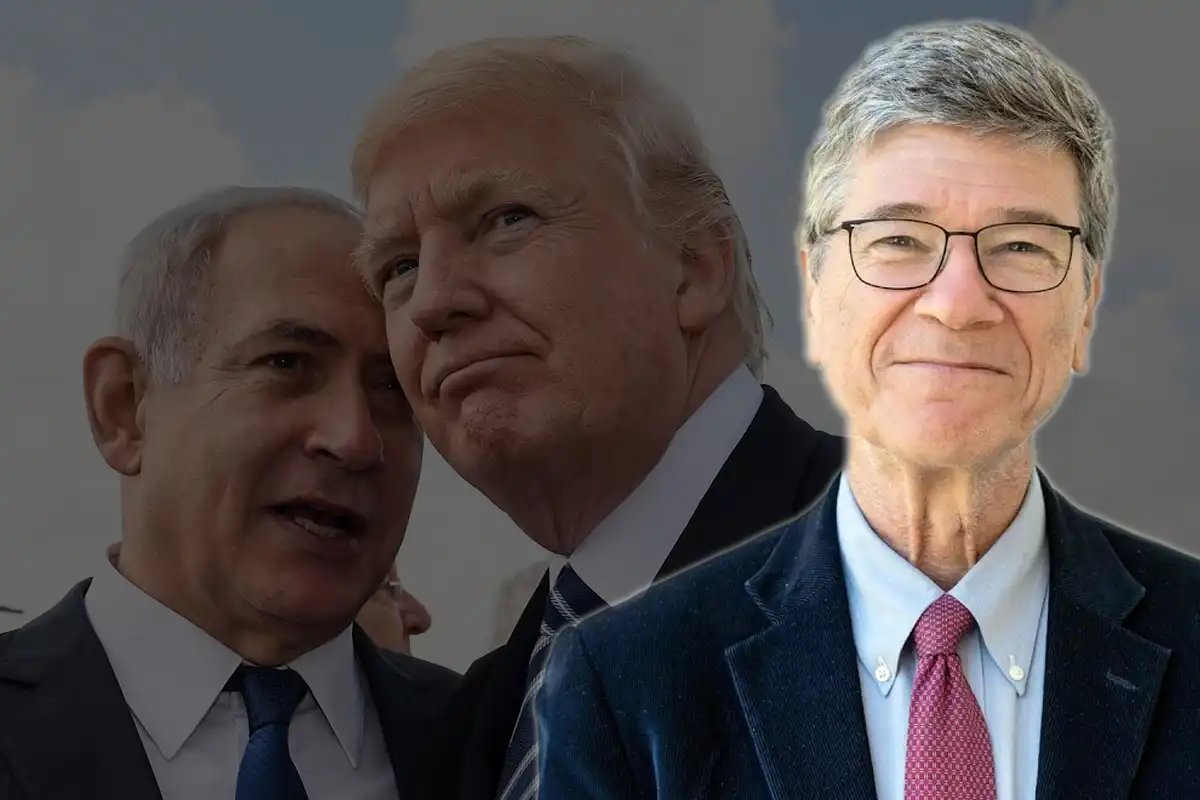
One of America’s most prominent economists is making an argument that reframes the entire trajectory of the Iran crisis. The evidence he cites is harder to dismiss than the messenger.
Professor Jeffrey Sachs — Columbia University economist, former UN advisor, and one of the most credentialed voices in American public policy — has delivered a pointed assessment of how the current Iran conflict became inevitable: Benjamin Netanyahu spent decades manufacturing a nuclear threat that did not exist, then used that manufactured threat to pressure Donald Trump into destroying the diplomatic framework that was actually containing Iran’s nuclear program.
The argument is not new in academic circles. But Sachs saying it publicly, with his institutional standing, gives it a weight that demands engagement rather than dismissal.
The Forty-Year Lie Sachs Describes
Sachs’ core claim is historically specific: Netanyahu has been telling the world that Iran is weeks or months away from a nuclear weapon for approximately four decades. This assertion is documentable. Netanyahu made versions of this argument to the UN General Assembly in 1996, 2012, 2013, and repeatedly thereafter. The weapon never materialized. The timeline kept resetting.
Intelligence assessments from the US, EU, and IAEA have repeatedly concluded that Iran has not made the political decision to build a nuclear weapon, even while developing enrichment capabilities. The 2007 US National Intelligence Estimate explicitly stated Iran had halted weapons-specific work in 2003. Subsequent assessments have maintained that no definitive decision to weaponize has been detected.
Netanyahu’s counter-narrative — that Iran is always on the verge — has driven policy regardless of what the intelligence showed.
The JCPOA Destruction and Its Consequences
The 2015 Joint Comprehensive Plan of Action was signed by Iran, the United States, United Kingdom, France, Germany, Russia, and China. It imposed the most intrusive nuclear inspection regime ever negotiated, capped enrichment levels, reduced centrifuge numbers, and required the redesign of the Arak reactor to prevent plutonium production. In exchange, sanctions were lifted.
IAEA inspectors consistently certified Iranian compliance until Trump withdrew in May 2018. Sachs argues that withdrawal was not driven by American strategic assessment but by Netanyahu’s direct lobbying of Trump — a campaign that exploited Trump’s personal hostility toward Obama-era agreements and his susceptibility to Netanyahu’s framing of Iran as an existential threat requiring maximum pressure.
The result, as Sachs frames it: a working diplomatic containment mechanism was destroyed, Iran progressively rebuilt its nuclear program in response, and the conditions for the February 2026 conflict were set in motion.
The Regime Change Agenda Sachs Identifies
Sachs goes further than JCPOA criticism. He argues Netanyahu’s actual objective has never been nuclear non-proliferation — it has been Iranian regime change, with nuclear threat as the justifying narrative. Sanctions, isolation, and ultimately military action are instruments toward that end, not responses to a genuine weapons program.
Whether one accepts this framing fully, the policy outcome it describes — maximum pressure producing maximum instability rather than Iranian capitulation — matches the observable record.
The deal worked. Killing it did not.
Disclaimer; Based on Professor Jeffrey Sachs’ publicly available statements and open-source arms control documentation.
Catch all the World News, Breaking News Event and Trending News Updates on GTV News
Join Our Whatsapp Channel GTV Whatsapp Official Channel to get the Daily News Update & Follow us on Google News.
Must Read


World
Iraqi Resistance Groups Welcome US Withdrawal, Call for Air Defense Strengthening
30-September،2026