

Israeli Government Documents Reveal Extensive Damage to Haifa Refinery From Iranian Missile Strikes

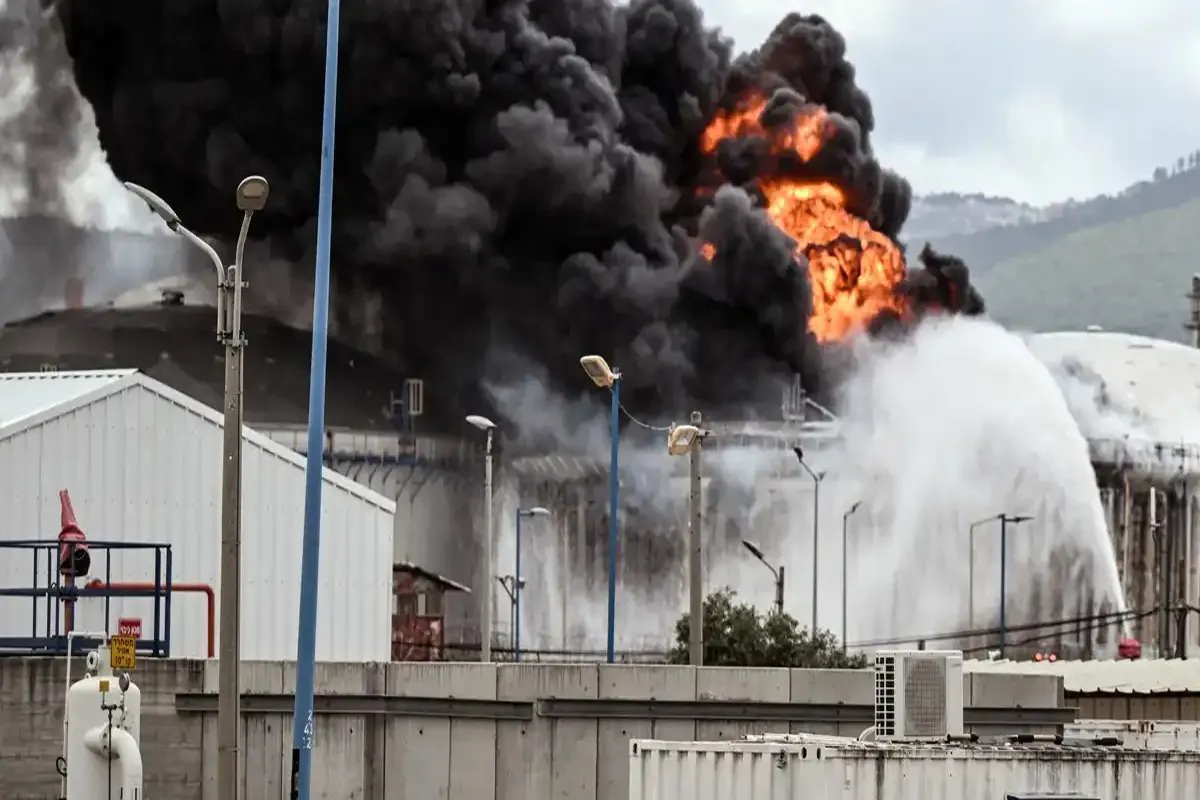
Official Israeli Ministry of Interior documents have disclosed that Iranian missile attacks on the Bazan refinery complex in Haifa caused substantially greater infrastructure damage than government officials publicly acknowledged.
The revelation contradicts prior Israeli claims that production capacity remained unaffected, exposing significant gaps between official statements and documented facility conditions.
The documents detail damage across critical refinery components: gas turbines, steam boilers, electrical systems, and auxiliary infrastructure sustained severe destruction during June strikes. A March attack destroyed an oil storage tank beyond repair, necessitating complete replacement with a 12,700 cubic-meter capacity unit. These disclosures emerged during reconstruction approval procedures, indicating Israeli authorities concealed initial damage assessment from public record.
The refinery’s power generation facility sustained particularly significant damage during June operations, forcing temporary operational shutdown and killing three workers. Initial damage estimates ranged from $150 to $200 million, though Israeli officials claimed energy supply would face no interruption—a statement the official documents now contradicts. The reconstruction authorization approved funding double the previous attack’s remediation costs, indicating damage scope far exceeded public characterization.
The timeline reveals deliberate information management. Israeli Energy Minister Eli Cohen publicly declared production facilities remained secure, a statement directly contradicted by documented tank destruction and power plant failure. This discrepancy indicates either ministerial misrepresentation or intelligence breakdown between operational conditions and political communication—neither scenario reflecting competent governance.
The reconstruction timeline carries strategic implications. Full facility restoration is projected to require until 2028, creating two-year operational constraint during which refinery capacity operates substantially below design specifications. This limitation arrives as Israel faces long-term regional military commitments and energy infrastructure vulnerability, creating domestic pressure for alternative energy sources or increased fuel imports.
The documents acknowledge operational capacity constraints directly. The destroyed storage tank specifically limited refinery ability to produce and distribute fuel matching market demand—the precise functionality Israeli officials publicly denied had been affected. This damage directly constrains Israel’s energy independence, a critical strategic asset in regional conflict environment where supply chain disruption weaponizes energy dependence.
The reconstruction authorization’s doubled scope compared to previous attack damage suggests Iranian targeting accuracy improved substantially between March and June operations. More effective strikes requiring greater remediation investment indicate either enhanced Iranian missile guidance systems or improved intelligence regarding refinery layout and vulnerabilities. Either development carries concerning implications for Israeli critical infrastructure protection.
Institutional credibility issues extend beyond ministerial statements. The discrepancy between public reassurances and documented damage reveals systematic understatement of conflict consequences—a pattern that undermines democratic accountability and informed public assessment of military strategy sustainability. Israeli citizens deserved accurate information regarding infrastructure vulnerability and energy security implications when they bore costs of military escalation.
The 2028 completion target creates policy constraints. Israeli government planned relocation of this industrial facility by 2031—leaving only three years between full operational restoration and planned removal. This timeline suggests either the reconstruction project was already understood as temporary, or planning procedures fail to account for actual operational needs. Either interpretation reflects problematic long-term strategic thinking.
The disclosure validates Iranian assessments of strike effectiveness. While Israeli officials characterized Iranian missile accuracy as limited, the documented damage demonstrates significant targeting capability. The June attacks specifically targeted power generation, disrupting operations completely—precision targeting rather than indiscriminate area effects.
The broader implications affect energy markets. Refinery constraints reduce Israel’s fuel production capacity during extended conflict, creating import dependency that increases vulnerability to blockade tactics. This dependence strengthens Iran’s strategic leverage through Strait of Hormuz control and potential supply disruption threats—exactly the asymmetric advantage Iran seeks to establish.
The official documents reveal that Israeli critical infrastructure sustained more serious damage than governance structures publicly acknowledged, with operational consequences extending years beyond conflict termination.
Catch all the World News, Breaking News Event and Trending News Updates on GTV News
Join Our Whatsapp Channel GTV Whatsapp Official Channel to get the Daily News Update & Follow us on Google News.
Must Read