Thu, 20 Aug 2026
Thu 1448/03/07AH (20-08-2026AD)

Latest News

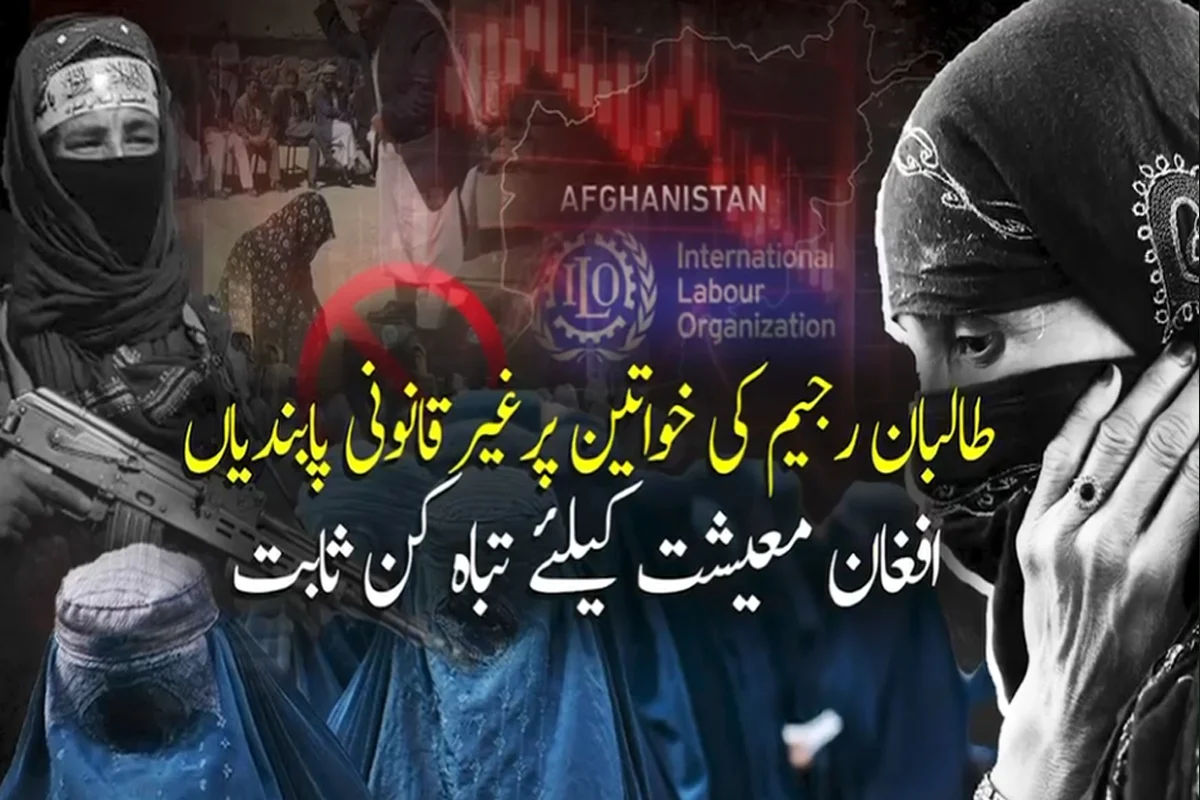
Taliban Restrictions on Women Deepen Afghanistan’s Economic Crisis, ILO Report Reveals

20 August, 2026 08:04

The Taliban regime’s restrictions on women’s education, employment and participation in social and economic activities are increasingly creating serious consequences for Afghanistan’s already struggling economy.

According to a new report by the International Labour Organization (ILO), Afghanistan’s economy has experienced significant contraction since the Taliban returned to power, while the country’s labour market continues to face severe challenges.

The report highlights a sharp decline in women’s participation in Afghanistan’s workforce. Women’s share of the labour force has reportedly fallen from 16.5 percent to just 5 percent under the Taliban regime.

The ILO has described Afghanistan as having one of the lowest rates of female labour-force participation in the world, reflecting the growing impact of restrictions imposed on women.

According to the report, restrictions on women’s access to education and employment have further widened the employment gap between Afghan women and men, depriving the economy of a significant part of its potential workforce.

The report also shows a decline in Afghanistan’s employment-to-population ratio. The figure fell from 36.7 percent in 2020 to around 32.5 percent in 2026, indicating growing difficulties in generating sufficient employment opportunities.

The situation is particularly concerning for Afghan women. According to the ILO figures, the proportion of women who are neither in education, employment nor training increased from 76 percent in 2020 to 84 percent in 2026.

The figures highlight how restrictions on women’s participation in economic life are becoming an additional burden on Afghanistan’s struggling economy.

Afghanistan was already facing serious challenges, including poverty, unemployment, weak investment and limited economic opportunities. The exclusion of women from education and employment is further reducing the country’s ability to utilise its human resources.

Experts say that restricting women from economic activities does not only affect women and their families. It also reduces household incomes, weakens productivity and limits the development of human capital needed for long-term economic growth.

The latest ILO figures therefore present a concerning picture of Afghanistan’s labour market under the Taliban regime, with women facing increasingly limited opportunities to study, work and contribute to the national economy.

The continuing exclusion of women from education, employment and training could make Afghanistan’s economic recovery even more difficult and further undermine prospects for sustainable development.

The report indicates that without greater participation of women in education and the workforce, Afghanistan will struggle to fully utilise its human potential and overcome its deepening economic challenges.

Catch all the World News, Breaking News Event and Trending News Updates on GTV News


Join Our Whatsapp Channel GTV Whatsapp Official Channel to get the Daily News Update & Follow us on Google News.

Scroll to Top