
Who was Jurgen Habermas? Influential Frankfurt School Philosopher, Dies at 96

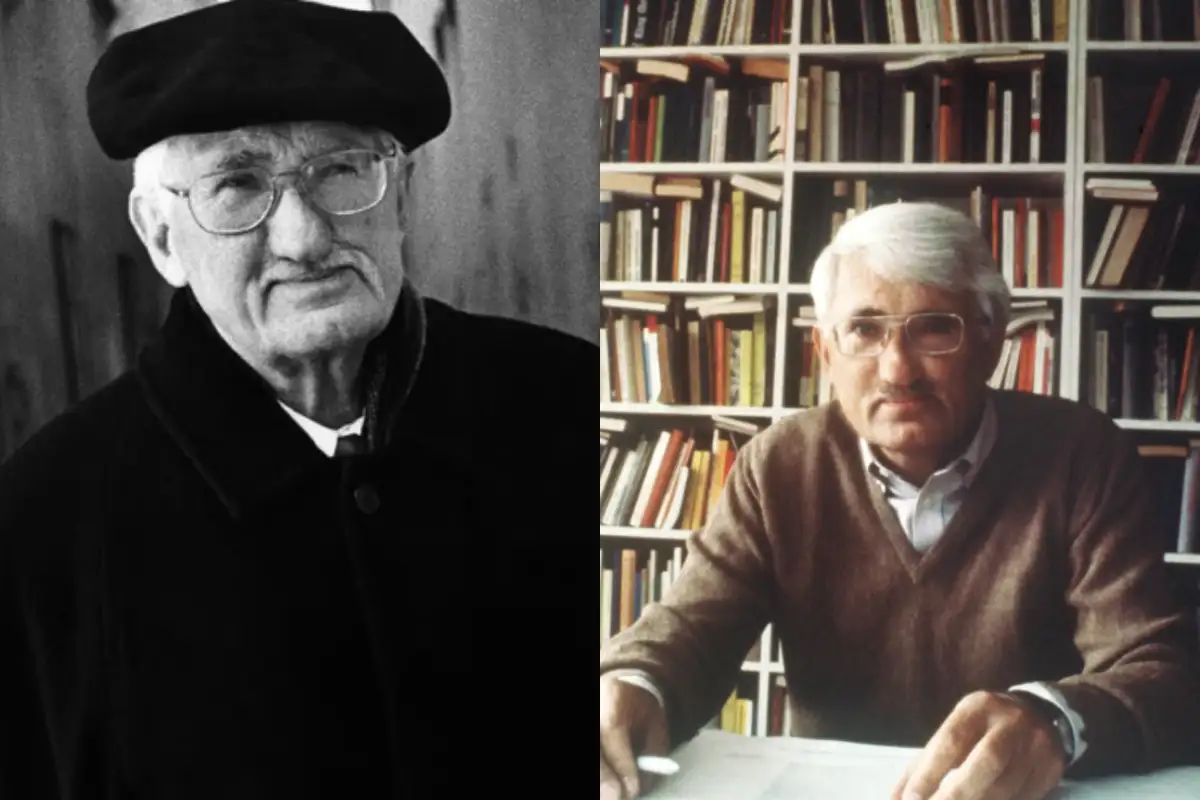
Who was Jurgen Habermas? Influential Frankfurt School Philosopher, Dies at 96
German philosopher and sociologist Jurgen Habermas, a leading figure of the Frankfurt School, has died at the age of 96 in Starnberg, Germany, confirmed by his publisher Suhrkamp Verlag. His passing marks the conclusion of a remarkable intellectual life spanning more than six decades, during which he profoundly shaped political philosophy, sociology, and communication studies.
Habermas was widely recognized for his theories on strengthening democratic societies through open discussion and rational debate. His work influenced European social movements, policymakers, and academics worldwide. “Juergen Habermas was a German philosopher and sociologist who had made his mark in the field of democracy, communication and the debate. One of the brightest representatives of the Frankfurt School, he influenced the theory of politics and social life in modern times by his concepts of the reasonable dialogue and democratic involvement,” experts note.
Born on June 18, 1929, in Düsseldorf, Germany, Habermas grew up during the Nazi era and World War II, experiences that shaped his lifelong focus on preventing authoritarianism and promoting democratic participation. He studied philosophy, sociology, and economics at the University of Bonn and the University of Göttingen, earning a doctorate in philosophy in 1954.
Habermas began his career as a journalist before joining the Institute for Social Research, linked to the Frankfurt School. He became a professor of philosophy and sociology at the University of Frankfurt in 1964, later serving as co-director of the Max Planck Institute in Starnberg. Even after retiring in 1994, he remained active in public debates and continued writing well into his nineties.
Among Habermas’s most influential contributions were the concept of the public sphere, highlighting how citizens deliberate on societal issues, and his Theory of Communicative Action, published in 1981, which argued that dialogue based on reason and understanding is central to social cooperation. He also championed European unity and encouraged citizen participation in policymaking to reinforce democratic legitimacy.
His scholarly impact is reflected in more than 14,000 publications exploring his work, including seminal books like The Structural Transformation of the Public Sphere and The Theory of Communicative Action. He received numerous prestigious awards during his lifetime, including the Holberg International Memorial Prize, Kyoto Prize in Arts and Philosophy, Prince of Asturias Award for Social Sciences, Peace Prize of the German Book Trade, and the Johan Skytte Prize in Political Science, often regarded as the “Nobel Prize of political science.”
Habermas remained intellectually active until his death on March 14, 2026. He leaves behind a lasting legacy in philosophy, social theory, and democratic thought. “The most remarkable works of Habermas are the theory of communicative action and the concept of the public sphere. The concepts hold that democratic society requires open debate and discussion among citizens,” scholars note, highlighting the enduring relevance of his ideas in contemporary political and social discourse.
Catch all the World News, Breaking News Event and Trending News Updates on GTV News
Join Our Whatsapp Channel GTV Whatsapp Official Channel to get the Daily News Update & Follow us on Google News.
Must Read