
Hong Kong’s First Astronaut Joins China’s Shenzhou-23 Mission Launching Sunday

Hong Kong's First Astronaut Joins China's Shenzhou-23 Mission Launching Sunday
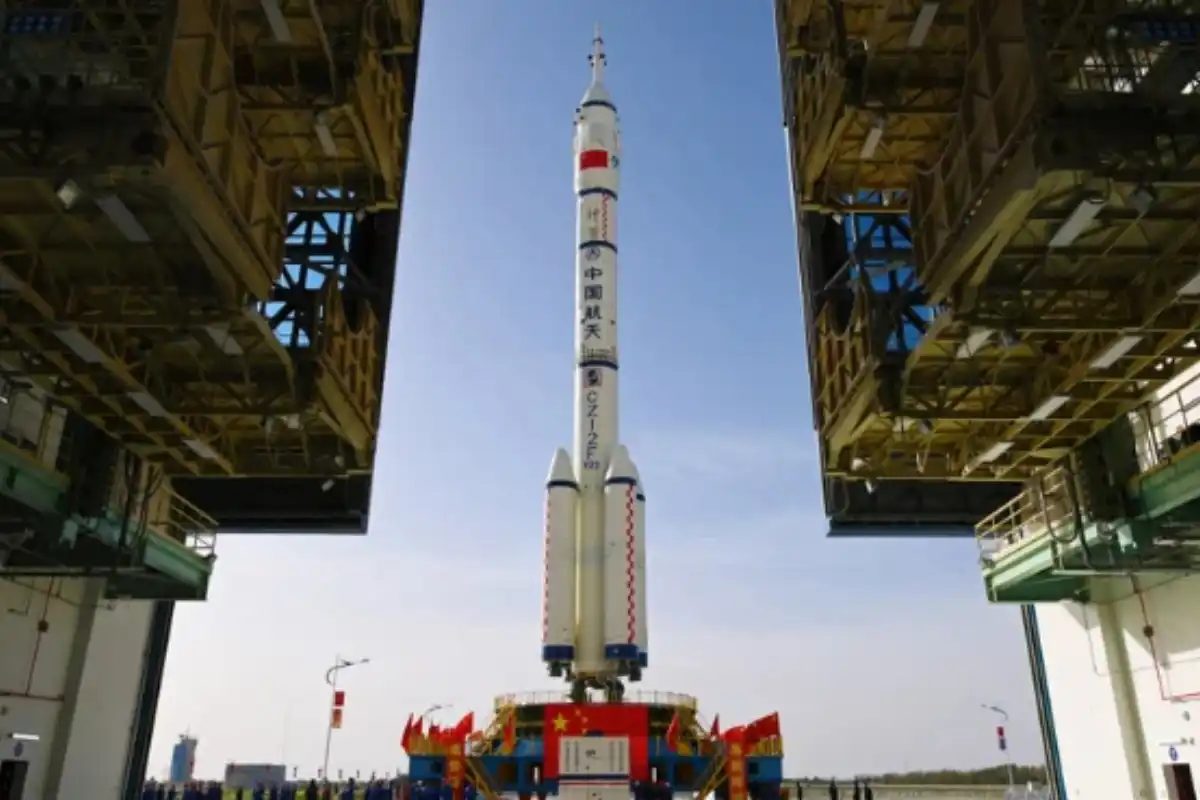
China is preparing to launch its latest crewed space mission on Sunday, with the historic addition of Hong Kong’s first-ever astronaut among the three-person crew heading to the Tiangong space station, as Beijing continues its ambitious push toward landing humans on the Moon by 2030.
The Shenzhou-23 spacecraft is scheduled to lift off at 11:08 pm local time from the Jiuquan Satellite Launch Center in northwestern China, China Manned Space Agency spokesman Zhang Jingbo confirmed to reporters on Saturday. The crew consists of Lai Ka-ying, celebrated by state media as Hong Kong’s first astronaut, alongside Zhu Yangzhu, who previously served on the Shenzhou-16 mission in 2023 and will command this flight, and Zhang Zhiyuan as the third crew member.
Hong Kong’s Chief Executive John Lee offered his congratulations to Lai, praising her for successfully completing what he described as a rigorous selection and training process. Commander Zhu told reporters that the mission represents a comprehensive test of the crew’s physical and psychological endurance, emergency response capabilities, and ability to coordinate effectively while living and working in orbit. He emphasized his personal commitment to thorough preparation and leading the team to complete every aspect of the mission without error.
Among the mission’s primary objectives are the continuation of space science and application experiments, conducting extravehicular activities, and managing cargo transfers in and out of the station. Notably, one member of the crew will remain aboard the Tiangong station for an entire year — a significant first for China’s space program. CMSA spokesman Zhang stressed that a full year in orbit is far more complex than simply combining two six-month rotations, and that the extended residency will generate critical data on the long-term effects of spaceflight on the human body while also testing health support systems for future deep-space missions.
Richard de Grijs, Professor of Physics and Astronomy at Macquarie University, told AFP that year-long missions push both hardware and crew members into an entirely different operational regime compared to shorter Shenzhou flights, and represent a vital step in building the experience needed for sustained lunar and deep-space exploration.
China’s space program, the third in history to place humans in orbit, has already achieved significant milestones including landing robotic rovers on both Mars and the Moon. Under President Xi Jinping, Beijing has dramatically accelerated its space ambitions, setting a formal goal of sending a crewed mission to the Moon by 2030 and ultimately establishing a permanent base on the lunar surface. The CMSA reaffirmed on Saturday its commitment to pursuing that goal with every available resource.
Catch all the World News, Breaking News Event and Trending News Updates on GTV News
Join Our Whatsapp Channel GTV Whatsapp Official Channel to get the Daily News Update & Follow us on Google News.
Must Read


Pakistan
BOP Shareholders Unanimously Approve PKR 30 Billion Equity Injection by Government of the Punjab
8-September،2026