
Washington Indicts a 94-Year-Old for a 30-Year-Old Incident; The Real Target Is Havana, Not History

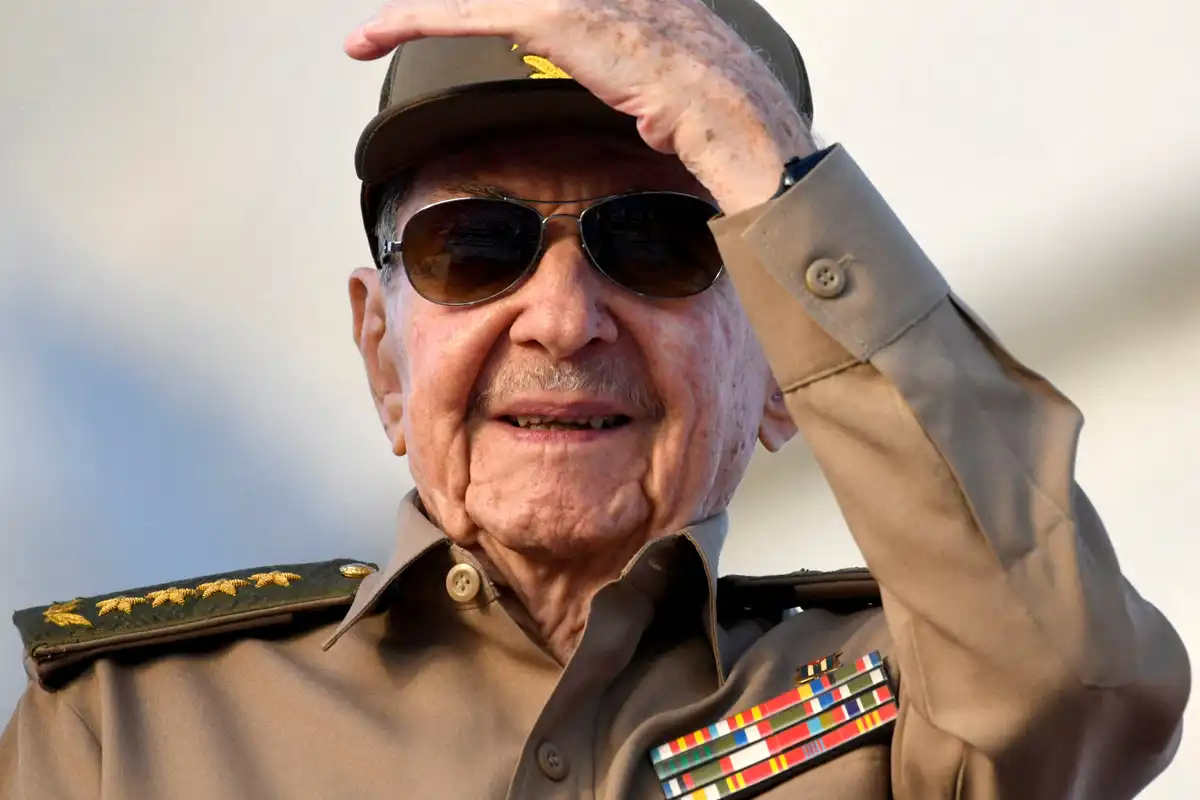
The United States Department of Justice has formally indicted Raúl Castro on charges including murder, conspiracy to kill American citizens, and destruction of aircraft — all stemming from a 1996 incident in which Cuban MiG fighters shot down two civilian planes operated by the anti-Castro exile group Brothers to the Rescue, killing four people.
Castro is 94 years old. The incident happened three decades ago. The timing of this indictment is not accidental.
Who Raúl Castro Is — And Why It Matters
Raúl Castro is not a peripheral figure in Cuban history. He served as Defense Minister for nearly five decades after the 1959 revolution, architecting Cuba’s military and security apparatus from its earliest days. From 2008 to 2018 he served as President, succeeding his brother Fidel and guiding the island through a brief but significant diplomatic thaw with Washington under the Obama administration.
He is, by any measure, one of the most consequential political figures the Western Hemisphere has produced in the last century. Indicting him is not a routine prosecutorial act. It is a geopolitical statement.
The 1996 Shootdown — What Actually Happened
Brothers to the Rescue was a Miami-based Cuban exile organization that flew small civilian aircraft over the Florida Straits, originally to locate and assist Cuban rafters attempting dangerous sea crossings. By 1996, the group had also begun conducting flights that Havana considered provocative incursions into its sovereign airspace or near-boundary operations designed to distribute anti-government leaflets.
On February 24, 1996, Cuban MiG fighters intercepted and destroyed two of the group’s Cessna aircraft in an incident that killed four men — three Cuban-Americans and one Cuban national. The question of whether the planes were over international waters or Cuban airspace at the moment of interception has never been definitively resolved to both sides’ satisfaction. Cuba maintained the aircraft had violated its airspace. The US maintained the shootdown occurred over international waters.
That unresolved factual dispute sat dormant for three decades. It has now been converted into a federal indictment.
Why Now — The Political Architecture
The Trump administration’s decision to pursue this indictment at this particular moment requires explanation that goes beyond a sudden commitment to 1996 justice.
Washington recently failed to achieve its stated objectives in the Iran pressure campaign, leaving the administration seeking visible foreign policy wins ahead of midterm elections. Cuba has historically served Republican administrations as a reliable political instrument — particularly in Florida, where the Cuban-American exile community represents a significant and reliably Republican voting bloc.
The strategic template being applied here closely mirrors the approach used against Venezuelan President Nicolás Maduro, where criminal indictments were layered alongside sanctions, diplomatic pressure, and implied threats of forced removal. The Maduro indictment did not remove him from power. It did generate sustained domestic political value.
The Forced Arrest Suggestion
Perhaps the most extraordinary detail to emerge is that certain American officials and political figures have openly floated the possibility of attempting to forcibly apprehend Castro if circumstances permitted. This suggestion, directed at a 94-year-old former head of state living in his own country, reveals the extent to which the indictment is conceived as a pressure instrument rather than a realistic prosecution.
No mechanism exists for extraditing Raúl Castro. Cuba has no extradition treaty with the United States and has shown no inclination toward cooperation. The indictment cannot result in a trial unless Castro leaves Cuban territory — which he has no reason to do.
What Havana and the Region Are Watching
For Latin American governments observing this development, the message carries implications beyond Cuba. An American administration willing to indict a 94-year-old former president for a three-decade-old incident — with timing calibrated to domestic political cycles — signals that criminal charges have become normalized tools of foreign policy pressure rather than instruments of impartial justice.
That perception, whether or not it is entirely fair, reshapes how governments in the region calculate their exposure to American legal jurisdiction when relations deteriorate.
The Indictment’s Real Verdict
The charges against Raúl Castro will almost certainly never reach a courtroom. They will never produce a conviction. They will never return justice to the four men killed in 1996, whose families deserved a reckoning that three decades of inaction denied them.
What the indictment will produce is headlines, political momentum in Florida, and a sustained pressure campaign against Havana — which appears to have been the actual objective from the beginning.
Justice and geopolitics occasionally overlap. In this case, the overlap appears thin.
Catch all the World News, Breaking News Event and Trending News Updates on GTV News
Join Our Whatsapp Channel GTV Whatsapp Official Channel to get the Daily News Update & Follow us on Google News.
Must Read
Pakistan
Bilawal Bhutto Pays Tribute to Karsaz Martyrs, Calls for Unity Against Terrorism
18-October،2026