
Pakistan Is Quietly Becoming a Global Investment Story – And Bloomberg Just Noticed

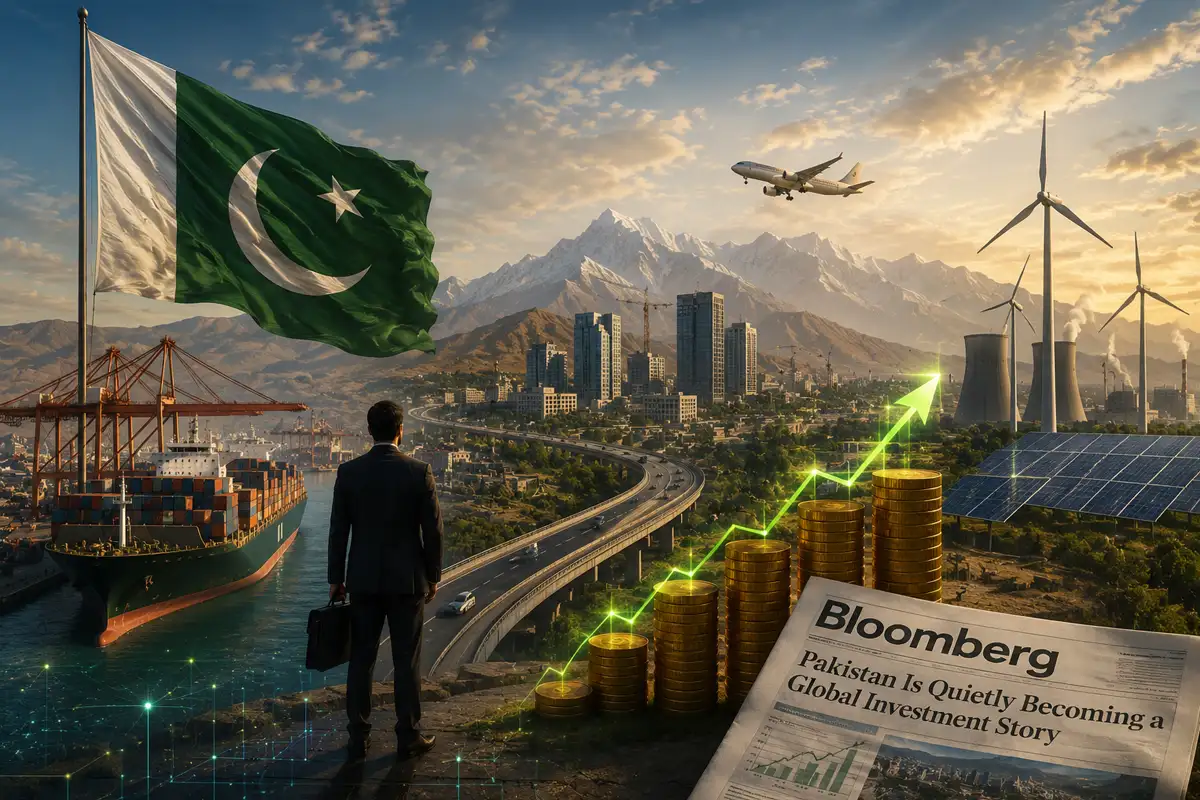
While much of the world focused on regional conflicts and energy market volatility, something significant was happening in Islamabad’s economic data and foreign ministry corridors simultaneously. Pakistan — a country written off by international investors as recently as 2023 — is now attracting serious attention from global capital markets and diplomatic analysts alike.
Bloomberg, not known for generous assessments of frontier markets under IMF supervision, has taken note.
The Numbers That Changed the Narrative
In a regional environment defined by currency collapses, sovereign defaults, and energy-driven inflation, Pakistan’s macroeconomic indicators have held with unexpected stability. The rupee has stabilized at approximately 280 per dollar — a far cry from the freefall that characterized 2022 and early 2023. The KSE-100 index recorded only a 1.3 percent decline across the full year, a remarkably contained correction given the scale of regional turbulence surrounding it.
These are not spectacular growth numbers. But in the context of what Pakistan was experiencing eighteen months ago — foreign exchange reserves near depletion, import restrictions crippling industry, and a default scenario being openly discussed — stability itself is the story.
Bloomberg’s acknowledgment that Pakistan has succeeded in building confidence in global financial markets despite difficult regional and economic challenges carries weight precisely because that institution applies the same analytical framework to every frontier economy without diplomatic sentiment.
The Three Pillars Holding the Economy Up
Bloomberg’s analysis identifies three structural supports behind Pakistan’s stabilization: IMF program compliance, Gulf diplomacy, and financial backing from Saudi Arabia and China.
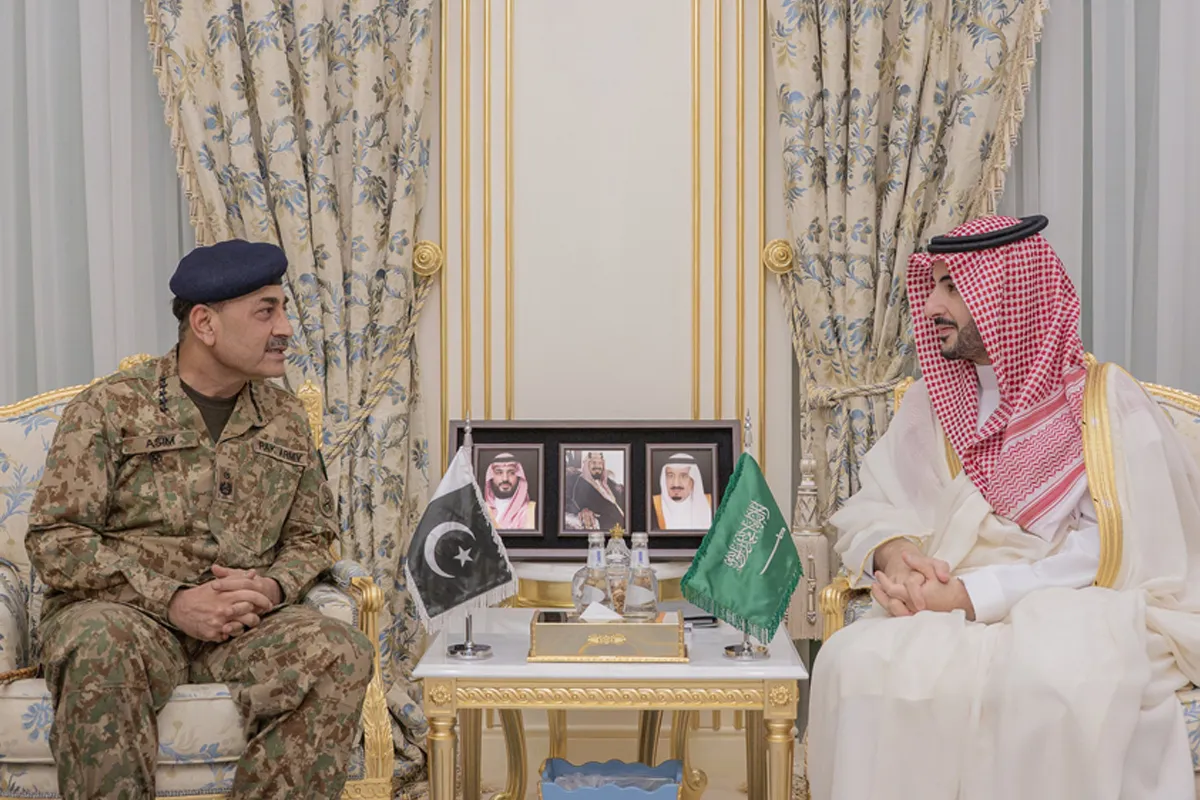
Saudi Arabia extended its $3 billion reserve deposit and provided an additional $5 billion credit facility — a commitment that signals Riyadh’s long-term confidence in Pakistan’s trajectory, not merely emergency crisis management. That distinction matters to bond markets and sovereign credit analysts who model rollover risk as a core variable.
China’s participation in Pakistan’s first Panda Bond — a $257 million investment in yuan-denominated debt issued in Chinese capital markets — represents a genuinely new financial instrument for Pakistan. Panda Bonds are not charity. Chinese institutional investors purchased this paper because the risk-return profile was acceptable, which implies an independent market assessment of Pakistan’s creditworthiness that diplomatic relationships alone cannot manufacture.
The IMF dimension provides the governance framework that makes both Gulf and Chinese support politically sustainable. Without program compliance, neither bilateral partner can justify continued exposure to domestic constituencies or international financial institutions.
Gwadar and the Geography Premium
Bloomberg’s identification of Gwadar Port as a potential future strategic logistics hub reflects an analytical shift that has been developing quietly among infrastructure investors and shipping analysts. The port’s geographic position — at the intersection of Central Asian trade routes, the Arabian Sea, and overland CPEC connectivity — creates a logistics premium that no amount of political turbulence fully eliminates.
The China-Pakistan Economic Corridor 2.0 framework, formalized during Prime Minister Shehbaz Sharif’s recent Beijing visit, explicitly repositions Gwadar as a regional connectivity hub open to third-party participation. That opening — inviting Gulf states, Central Asian nations, and others into the project’s economic upside — transforms Gwadar from a bilateral Chinese project into a multilateral commercial proposition.
For international investors evaluating infrastructure exposure in the broader Indian Ocean region, that distinction changes the risk calculus meaningfully.
Diplomacy as Economic Infrastructure
Perhaps the most underappreciated driver of investor confidence in Pakistan is the country’s emerging diplomatic role. Facilitating the US-Iran ceasefire and hosting the Islamabad Talks demonstrated operational diplomatic capacity that translates directly into economic value — reduced regional conflict risk, strengthened relationships with Gulf financial backers, and elevated standing in multilateral institutions where investment decisions are influenced by geopolitical relationships.
A country that both Washington and Tehran trust enough to use as a communication channel occupies a rare and valuable position. That position does not appear on a balance sheet, but it is reflected in the willingness of Saudi Arabia to extend credit facilities and China to purchase sovereign bonds.
The Conditions That Must Hold
Experts are careful to frame this optimism conditionally. Pakistan’s trajectory toward becoming a regionally significant emerging economy depends on the continuation of three interdependent factors: sustained IMF program compliance, uninterrupted financial support from allied nations, and export-oriented structural reforms that reduce the import dependency that has repeatedly destabilized Pakistan’s current account.
None of these conditions is guaranteed. Pakistan’s political environment remains volatile. Energy sector circular debt and fiscal consolidation pressures create ongoing reform fatigue. And the regional security environment — with Iran tensions, Afghan instability, and India-Pakistan dynamics all simultaneously active — can shift investor sentiment rapidly.
What the Bloomberg Recognition Actually Means
When a financial data institution with Bloomberg’s credibility and reach frames Pakistan as a market where global investors are paying attention, it creates a self-reinforcing dynamic. Analysts update models. Fund managers revisit exposure limits. Sovereign wealth funds reconsider allocation decisions they deferred during the crisis period.
Pakistan has not yet arrived at the destination its government is describing. But it has demonstrably moved from a country managing collapse to a country managing recovery — and in frontier market investing, that transition is precisely where the most significant returns are built.
The world noticed. The question now is whether Pakistan’s policymakers can hold the conditions that made the world notice long enough for that attention to convert into sustained capital flows.
Catch all the Pakistan News, Breaking News Event and Trending News Updates on GTV News
Join Our Whatsapp Channel GTV Whatsapp Official Channel to get the Daily News Update & Follow us on Google News.
Must Read