Karachi Launches Faceless Challan System: 96 Fines Issued on Day One – Motorcyclists Top the List

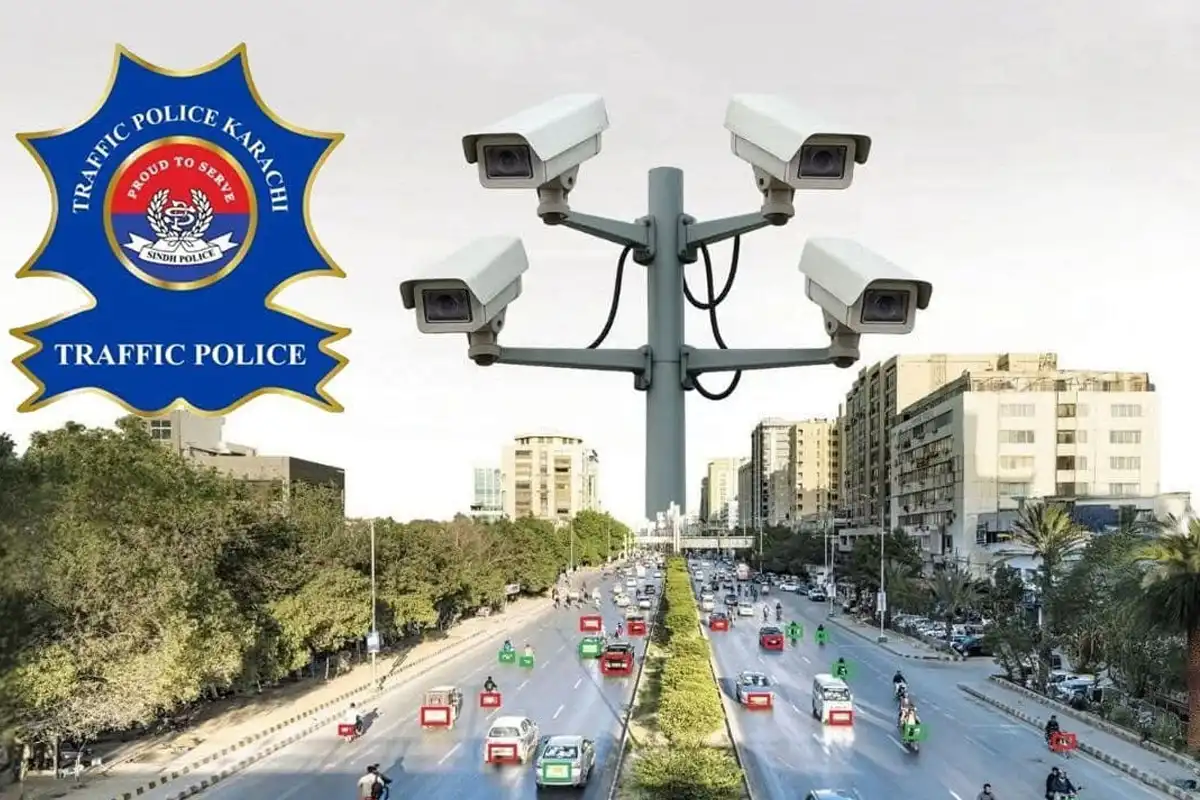
Karachi has taken a decisive step toward automated traffic enforcement, but the real test begins now — can technology succeed where human officers repeatedly failed?
Karachi’s traffic authorities officially launched a faceless, camera-based challan system targeting lane violations, issuing 96 automated fines on its very first day of operation. All violations were recorded on Sharea Faisal — the high-traffic artery connecting Metropole to the airport — making it the city’s first real-world stress test for surveillance-driven traffic management.
How the System Works
Unlike traditional enforcement where a traffic warden physically stops a vehicle, the faceless challan system uses mounted cameras to automatically detect lane violations. The fine is then issued directly — without any face-to-face interaction between officers and drivers. This eliminates the single biggest loophole in Karachi’s traffic enforcement history: on-the-spot bribery.
The absence of human discretion is the system’s greatest strength. No negotiation. No cash exchange. Just an automated record and a legally issued challan.
Day One Breakdown: Who Got Caught?
Eleven vehicle categories received fines across the first operational day:
- Motorcycles dominated with 43 challan — nearly 45% of all violations
- Suzuki pickups followed with 21 fines
- Cars received 9 challans
- Mini buses — 6, vans — 4, trucks and mini trucks — 3 each
- Large buses, coasters, and water tankers — 2 each
- Double cabin vehicles — 1
Motorcyclists topping the list is unsurprising. Karachi’s two-wheeler culture has long operated with near-total disregard for lane discipline — a behavioral pattern that conventional policing never meaningfully corrected.
Why This Matters Beyond the Numbers
Karachi’s traffic crisis isn’t just inconvenient — it’s economically costly. Daily gridlock on key corridors like Sharea Faisal burns fuel, delays commerce, and increases accident rates. Lane indiscipline is a primary trigger for bottleneck collisions, particularly involving heavy vehicles and motorcycles sharing the same road space.
Previous enforcement drives produced short-term compliance followed by immediate regression. The faceless system removes the human variable entirely, creating consistent, fear-based deterrence rather than selective enforcement.
Comparing Regional Models
Cities like Lahore have experimented with camera-based enforcement with mixed results — largely due to inconsistent fine recovery and weak legal follow-through. Karachi’s success depends entirely on whether the backend infrastructure — fine notification, payment systems, and legal consequences for non-payment — actually functions.
Technology at the camera end means nothing if the challan dies in bureaucratic limbo.
Future Outlook
Authorities are expected to expand camera coverage beyond Sharea Faisal to other high-violation corridors. If Day One numbers hold, monthly violations could exceed 2,500 on this single road alone.
The faceless challan system represents Karachi’s most credible attempt at modern traffic governance. Whether it reshapes driver behavior — or simply generates ignored fines — will define its legacy.
Catch all the Pakistan News, Breaking News Event and Trending News Updates on GTV News
Join Our Whatsapp Channel GTV Whatsapp Official Channel to get the Daily News Update & Follow us on Google News.
Must Read

Entertainment
Roma Michael and Shan Baig Announce Wedding Date in Dreamy Save-the-Date Video
27-September،2026