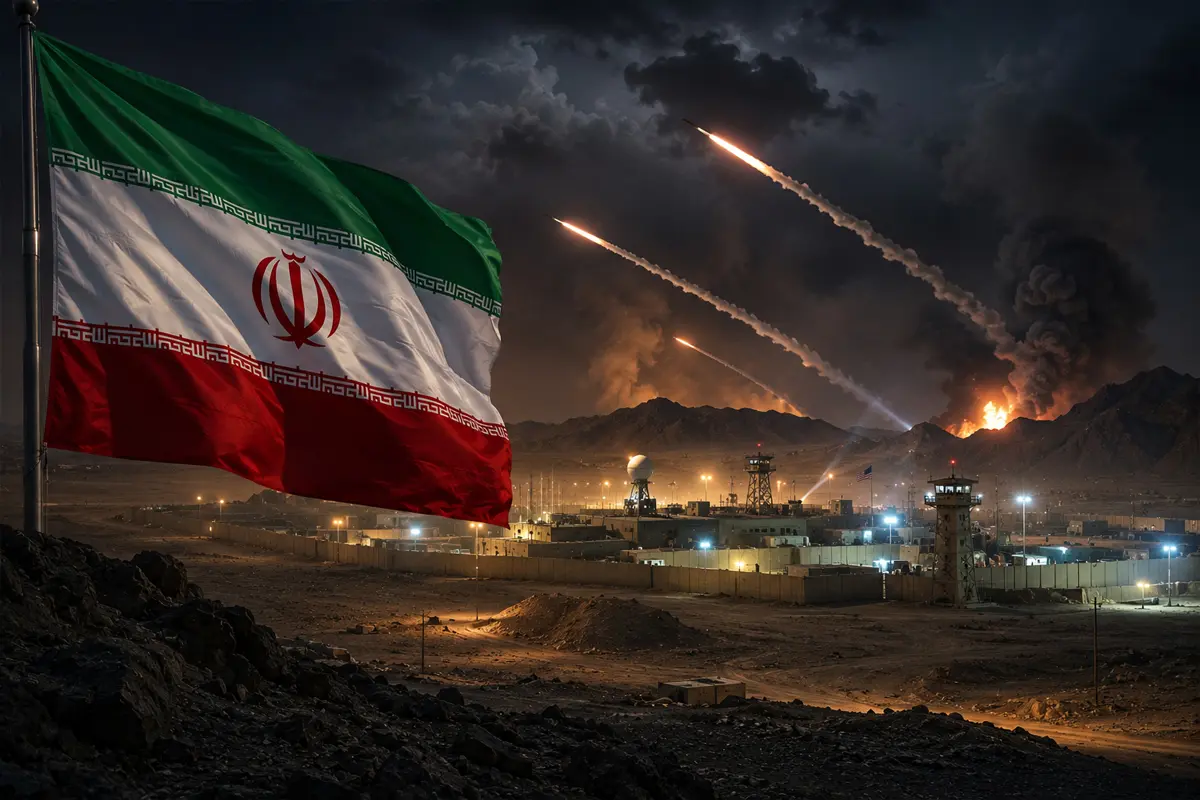

Iran Accepts Nuclear Monitoring in Push for Final Peace Deal, Vance Says

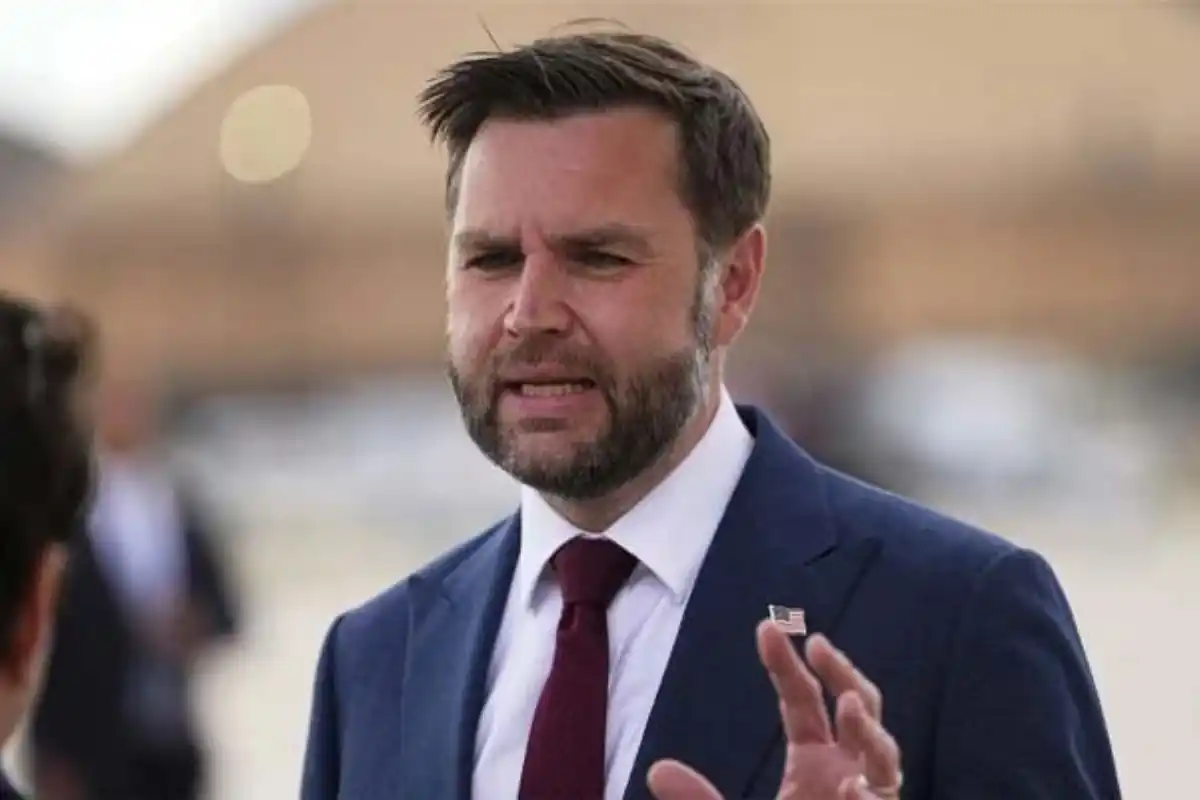
Iran Accepts Nuclear Monitoring in Push for Final Peace Deal, Vance Says
US Vice President JD Vance said on Monday that talks with Iranian officials in Switzerland had laid a “good foundation” for a final peace deal, even as tensions persisted over the Strait of Hormuz and Lebanon.
Building on an interim agreement signed last week, the two sides agreed to a 60-day roadmap toward a permanent deal during talks held at the Qatari-owned Swiss mountain resort of Buergenstock, mediators Pakistan and Qatar said.
They also reached an understanding on a mechanism to halt fighting in Lebanon between U.S. ally Israel and Iran-aligned Hezbollah, and established a communications channel to help ensure the safe passage of commercial vessels through the strait, a key route for global oil supplies.
Vance Delivers Upbeat Assessment
Vance said Tehran had agreed to allow nuclear inspectors back in and to set up mechanisms for handling its frozen overseas assets and managing ceasefires.
“We laid a very good foundation for a successful final deal,” he told reporters after the talks.
Since the U.S. struck Iran’s nuclear facilities in June last year, Iran has permitted the International Atomic Energy Agency to inspect only the sites that were not hit in those strikes. The IAEA suspended all inspections after the U.S.-Israeli strikes that triggered the war with Iran on February 28, and inspections have not resumed since.
Vance downplayed tensions stemming from a threat made on Sunday by U.S. President Donald Trump to resume the war after Iran once again shut the Strait of Hormuz, citing Washington’s failure to stop the fighting in Lebanon.
“There was a little bit of threatening, there was a little bit of whining, but at the end of the day the talks continued and we made great progress,” Vance said.
Iranian Foreign Minister Abbas Araqchi said on social media that Tehran had secured waivers for oil and petrochemical exports, the release of some of its frozen overseas assets, and the launch of a reconstruction and development plan for Iran.
Vance said White House envoy Jared Kushner, Trump’s son-in-law, had devised a process under which the U.S. and Qatar would oversee Iranian funds once unfrozen, allowing the money to be spent on U.S. corn, soy and wheat.
Following last week’s interim deal, the U.S. Treasury Department issued a general license for Iran on Monday, authorizing the production, delivery and sale of Iranian-origin crude oil, petrochemical and petroleum products through August 21.
Oil Prices Drop
Technical talks were set to continue through the rest of the week, and Pakistani Prime Minister Shehbaz Sharif wrote on X that the first round of talks had “concluded successfully.”
“The discussions were held in a positive and constructive atmosphere and yielded encouraging progress,” he said.
Oil prices had spiked when Tehran began blockading the Strait of Hormuz, prompting a U.S. blockade of Iranian ports, but fell to their lowest level since the war began following the interim deal.
Prices dipped further after Monday’s joint statement from Qatar and Pakistan, as concerns over a global supply shortage eased and benchmark Brent crude traded below $80 a barrel.
Before Sunday’s talks officially got under way, Fox News quoted Trump as telling Iranian officials “you won’t have a country” if they attempted to close the strait again.
Iran’s semi-official Tasnim news agency, citing an informed source, reported that after Trump’s threats became public, the Iranian delegation refused to return to the negotiating room, although messages continued to be exchanged through the mediators.
The memorandum of understanding calls for reopening the Strait of Hormuz and ending all hostilities, including in Lebanon, where violence persisted even after a ceasefire was declared on Friday.
Accusing Washington of failing to honor its commitment to halt the fighting in Lebanon, Iran said over the weekend that it had once again suspended maritime traffic through the strait.
Still, ship-tracking data showed two crude tankers carrying just under 2 million barrels of oil passed through the strait on Monday, signaling that traffic is gradually resuming, though crossings remain a fraction of the roughly 125 vessels that transited daily before the war began.
Violence in Lebanon Abates
Thousands of people have died in the U.S.-Israeli war against Iran, most of them in Iran and Lebanon, where Hezbollah opened fire in support of Iran on March 2.
Violence in Lebanon has eased since late Saturday, with security sources saying Israel’s last airstrike took place Saturday evening.
Reflecting the reduced tensions, the Israeli military lifted safety restrictions in eight communities near the Lebanese border starting at 6 a.m. (0300 GMT) on Monday.
Lebanese President Joseph Aoun discussed efforts to maintain the ceasefire and halt further Israeli military escalation during a phone call with Vance, Qatar’s prime minister and Kushner, the Lebanese presidency said.
Israeli President Isaac Herzog said Israel was not opposed to a diplomatic resolution of the war with Iran, but stressed that any agreement must ensure Tehran cannot use funds received under the deal for military purposes or to support regional proxy groups.
Catch all the World News, Breaking News Event and Trending News Updates on GTV News
Join Our Whatsapp Channel GTV Whatsapp Official Channel to get the Daily News Update & Follow us on Google News.
Must Read
Pakistan
Pakistan, Kyrgyzstan Reaffirm Commitment to Stronger Bilateral Ties and SCO Cooperation
2-September،2026