
Sindh Man Arrested for Impersonating National Assembly Official, Forging Government Documents

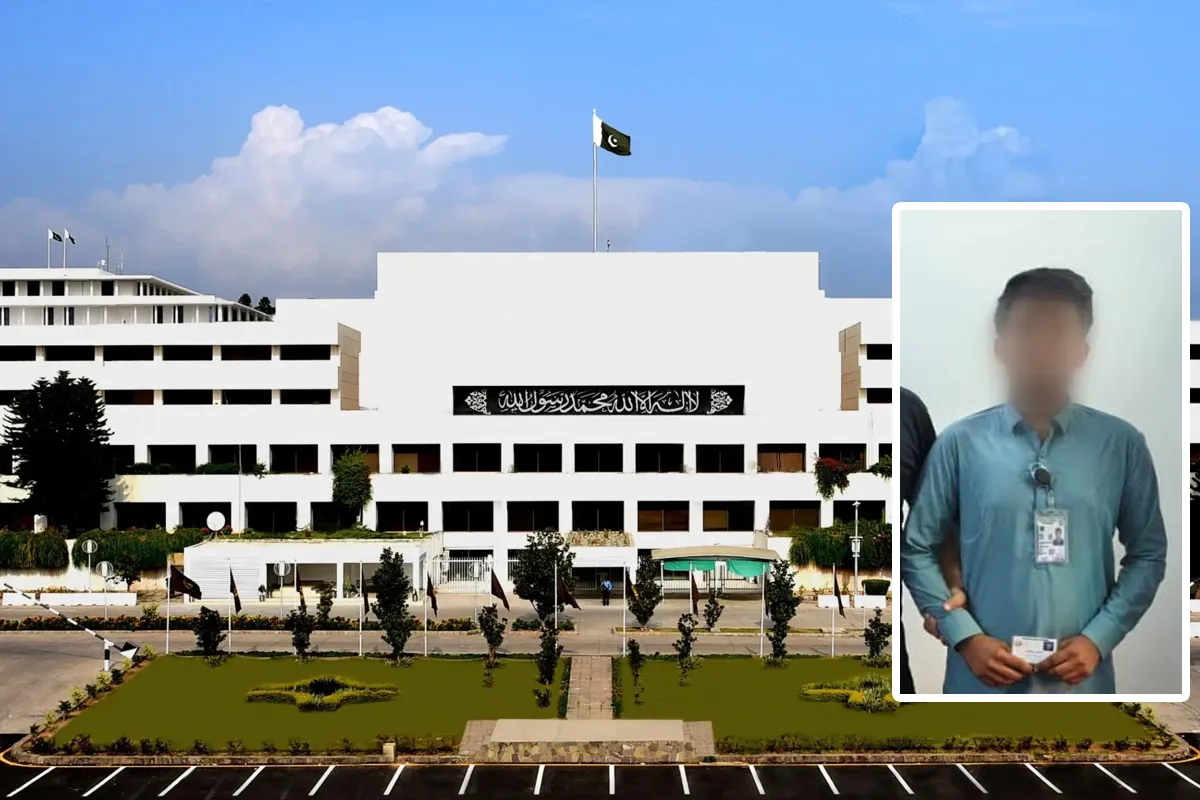
Police arrested a Ghothki resident for impersonating a National Assembly Secretariat officer and forging official documents bearing forged signatures of the National Assembly Speaker.
The case exposed vulnerabilities in document verification systems while highlighting how fraudulent credentials enable access to unwarranted government privileges and official protocols.
The arrested suspect, identified as Abdul Wajid, claimed Grade-17 officer status at the National Assembly Secretariat. Investigation revealed he possessed fabricated appointment letters and illegally obtained government benefits by presenting false credentials. The forgery extended to fabricating the National Assembly Speaker’s signature on official documents—a federal-level security breach requiring institutional response.
National Assembly Speaker Sardar Ayaz Sadiq immediately ordered investigations upon learning of the fraud. The Speaker’s directive prompted the Acting Secretary of the National Assembly to contact federal investigative authorities and provincial law enforcement. Formal communications were issued to the Federal Investigation Agency (FIA) and Inspector General Sindh, resulting in coordinated action culminating in the suspect’s arrest.
The scheme’s operational details reveal systematic deception. The suspect used fabricated identity documentation to obtain government facilities, protocols, and presumed benefits associated with National Assembly staff positions. Over an extended period, he successfully presented himself as legitimate official to various individuals and entities, suggesting inadequate verification mechanisms for validating government credentials at institutional interfaces.
A National Assembly Secretariat spokesperson confirmed that the appointment letter was entirely fraudulent with no corresponding official records. The suspect maintained no legitimate connection to the National Assembly despite his sustained impersonation. The spokesperson emphasized that forging documents in the Speaker’s name or other officials’ names constitutes serious criminal offense warranting strict legal action.
The institutional response addressed both immediate security concerns and public awareness. Officials warned citizens to verify government documents and employment claims directly with relevant institutions before accepting credential authenticity. This guidance acknowledges that sophisticated forgery can deceive ordinary citizens lacking institutional access for verification.
Investigation authorities are reportedly pursuing leads regarding potential accomplices or networks supporting the suspect’s fraudulent operations. Whether additional individuals participated in document creation, credential forgery, or benefit distribution remains subject to ongoing inquiry. The investigation’s scope suggests officials suspect organizational complexity beyond single-individual operation.
The case highlights systemic vulnerabilities in document security and credential verification across Pakistani government institutions. If a single individual could successfully impersonate a senior official across extended timeframe while obtaining material benefits, broader institutional practices require examination.
Institutional safeguards typically include secure document production facilities, limited signature authorization, verification protocols, and database systems tracking legitimate personnel. The fraud suggests that either these safeguards operated inadequately or the suspect successfully circumvented existing systems through sophisticated forgery techniques or institutional access facilitated by accomplices.
The National Assembly Secretariat indicated that institutional security reviews would examine how unverified credentials gained institutional acceptance. Such reviews typically address training standards for personnel responsible for credential verification, document security procedures, and database access controls.
The case also raises questions about public verification mechanisms. Citizens claiming government employment should possess documentation verifiable through official channels. The National Assembly’s public appeal encouraging credential verification directly addresses this vulnerability by encouraging individual verification behavior.
Catch all the Pakistan News, Breaking News Event and Trending News Updates on GTV News
Join Our Whatsapp Channel GTV Whatsapp Official Channel to get the Daily News Update & Follow us on Google News.
Must Read