
Hindu Extremism Deepens Pressure on Christian Families in India’s Bihar

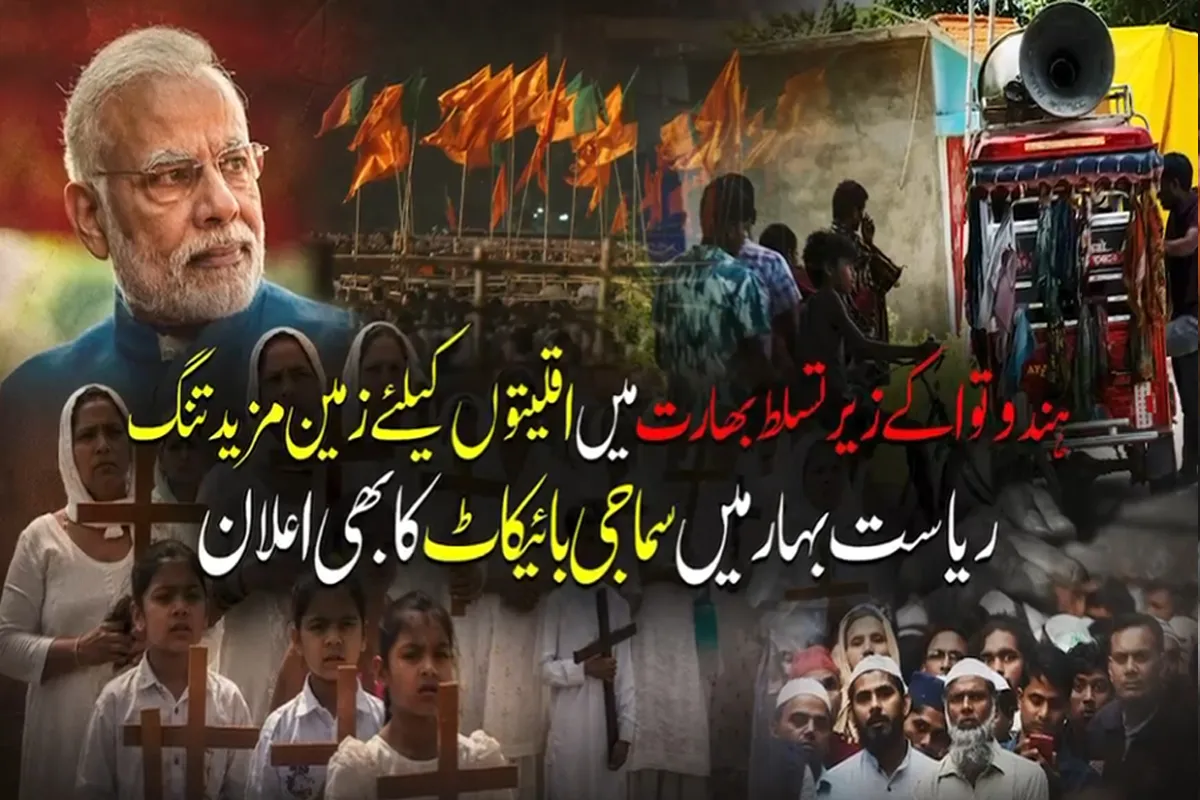
The space for religious minorities in India appears to be narrowing further, with Christian families in the eastern state of Bihar reportedly facing social exclusion, religious pressure and restrictions on their religious practices.
According to a report by TRT World, Christian families in parts of Bihar have allegedly faced pressure from Hindu extremist elements to abandon Christianity and adopt Hinduism. The report also highlights allegations that members of the Christian community have been subjected to social boycotts and obstacles in carrying out religious activities.
The developments have once again raised concerns over the treatment of religious minorities in India, where allegations of discrimination and intimidation have increasingly become part of the broader debate surrounding religious freedom.
TRT World reported that Christian families in Bihar were facing pressure from Hindu extremist groups and that some members of the community had encountered difficulties in practicing their faith. The reported incidents include attempts to isolate Christian families socially and discourage them from conducting religious activities.
In footage cited by TRT World, Hindu extremist individuals were heard making openly exclusionary statements against Muslims and Christians. One individual reportedly said that Muslims and Christians were not accepted in their society and alleged that they were “polluting” the community.
Another statement cited in the report expressed opposition to Christians receiving equal rights and suggested that the establishment of a church could eventually lead to the establishment of a mosque.
Such rhetoric reflects a deeply troubling form of religious intolerance in which minority communities are portrayed as outsiders despite being citizens with equal constitutional rights.
The situation in Bihar has also renewed questions about the wider environment faced by religious minorities under the political dominance of the Bharatiya Janata Party (BJP). Critics and rights advocates have repeatedly raised concerns over the growth of majoritarian politics and the alleged use of religious polarization for political purposes.
The issue is particularly significant in a country that constitutionally describes itself as secular and guarantees freedom of religion. Any attempt to force individuals to change their faith, prevent them from observing religious practices or socially isolate them because of their religion raises serious concerns about these constitutional guarantees.
Experts and critics of India’s majoritarian politics argue that religious polarization has increasingly been used as a political tool, with Muslims and other minorities frequently becoming targets of inflammatory rhetoric and social pressure.
The reported treatment of Christian families in Bihar therefore represents more than an isolated local dispute. It has become part of a wider discussion about whether India’s religious minorities can exercise their faith freely and live with equal dignity and security.
India’s democratic institutions and constitutional framework place an obligation on authorities to protect citizens regardless of their religion. Allegations of intimidation, forced religious conversion, social boycotts or denial of equal rights consequently warrant serious scrutiny and an impartial response from the relevant authorities.
For minority communities, equality before the law is not merely a political slogan. It is a fundamental right. Any environment in which religious identity becomes a reason for exclusion threatens not only minorities but also the democratic and secular character India claims to uphold.
Catch all the World News, Breaking News Event and Trending News Updates on GTV News
Join Our Whatsapp Channel GTV Whatsapp Official Channel to get the Daily News Update & Follow us on Google News.
Must Read