
India-Taliban Nexus Behind Terrorism in Pakistan Exposed Once Again

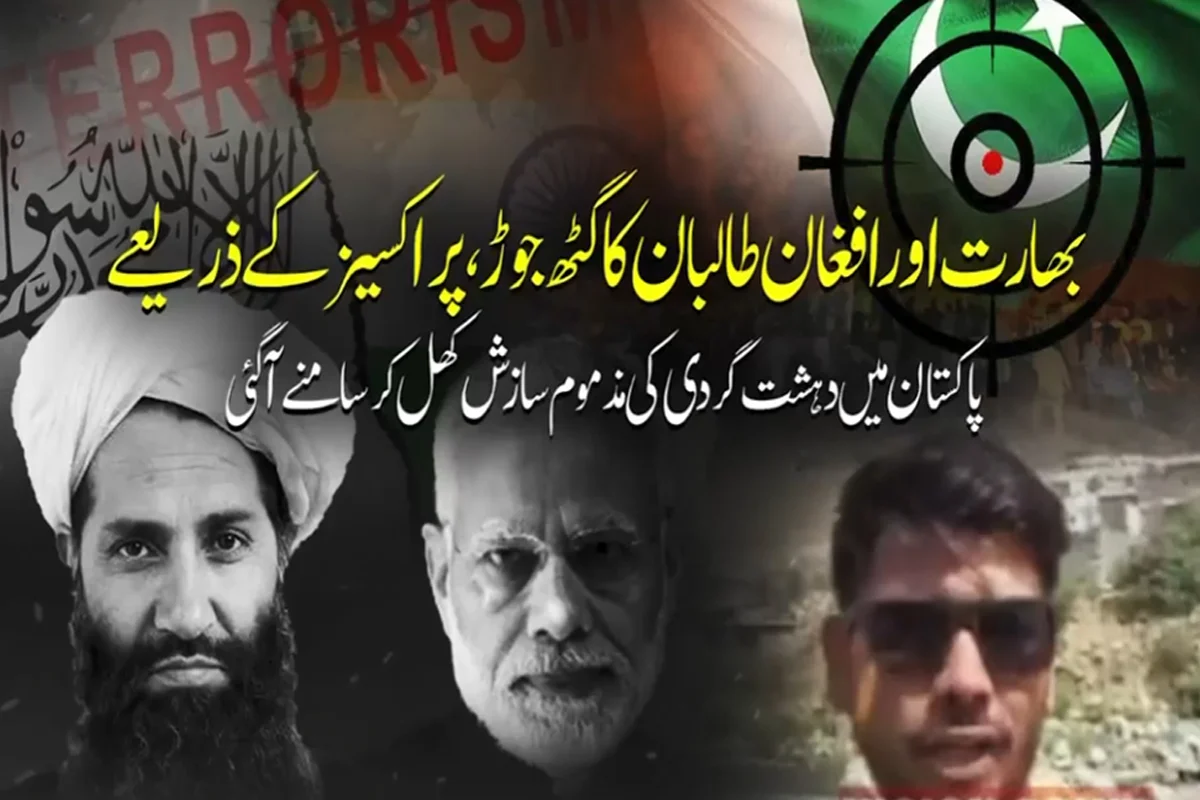
Islamabad: Pakistan has once again raised serious concerns over what it describes as a growing nexus between India and the Afghan Taliban regime, alleging that hostile networks operating from Afghan soil are being supported to fuel terrorism and instability inside Pakistan.
According to the information presented by Pakistani authorities, the alleged links between Indian actors, the Taliban regime and militant proxies have raised fresh questions about the security situation along the Pakistan-Afghanistan border.
A key development highlighted by Pakistani officials is the reported access of an Indian YouTuber to sensitive areas along the Pakistan-Afghanistan border.
According to the Pakistani narrative, the individual was allegedly granted access by the Taliban authorities on the basis of Indian nationality and was also allowed to meet members of Fitna al-Khawarij, raising serious concerns in Islamabad over how sensitive border areas are being accessed.
Pakistan maintains that such access could not be viewed in isolation from the broader security situation and alleged Indian activities in the region.
Pakistan has also pointed to statements by Afghan and Indian figures as evidence of increasingly close ties between New Delhi and the Taliban authorities.
During a visit to India, Afghanistan’s Agriculture Minister Mawlawi Ataullah Omari reportedly described Afghanistan and India as having the same “DNA”, a statement that has attracted attention in Pakistan amid growing security concerns.
Pakistan has also cited statements attributed to a former Indian military officer regarding alleged Indian support for militant elements operating from Afghan territory against Pakistan.
According to the Pakistani position, India has been providing modern equipment, including drones and weapons, as well as intelligence support to elements operating against Pakistan.
Pakistan has further alleged that Indian institutions are assisting hostile networks with propaganda and information operations as part of a broader hybrid warfare strategy.
These claims form part of Islamabad’s wider argument that the threat to Pakistan is no longer limited to conventional security challenges but also involves coordinated information, intelligence and proxy operations.
Pakistan has also referred to statements by former Afghan officials who have previously alleged that Indian actors played a role in supporting activities directed against Pakistan from Afghan territory.
Islamabad argues that these statements, when viewed alongside developments along the border, warrant serious international attention.
Pakistan has consistently maintained that Afghan territory must not be allowed to become a launching pad for attacks against neighbouring countries.
Pakistan’s military leadership has also publicly highlighted what it considers a growing convergence between India and the Afghan Taliban authorities.
According to the statement attributed to the Director General of Inter-Services Public Relations, India and the Afghan Taliban regime have a similar “DNA” in the context of activities that Pakistan says are contributing to terrorism and instability in the region.
Pakistan argues that the alleged convergence between New Delhi and elements operating from Afghanistan represents a serious security challenge.
Security analysts cited in the Pakistani narrative believe that alleged cooperation between Indian institutions and hostile militant networks could extend beyond conventional support.
They argue that propaganda campaigns, digital influence operations and disinformation could be used alongside militant activity to create instability and undermine Pakistan’s security environment.
According to this assessment, the alleged use of information warfare alongside militant networks represents a broader form of hybrid warfare aimed at putting additional pressure on Pakistan.
The allegations come amid continuing security challenges along Pakistan’s western border and Islamabad’s repeated calls for the Afghan authorities to prevent militant groups from using Afghan territory against Pakistan.
Pakistan maintains that regional peace cannot be achieved while militant networks continue to operate from neighbouring territory.
Islamabad’s position is that any alleged cooperation between Indian actors, the Taliban authorities and militant groups must be examined seriously, particularly where it concerns Pakistan’s national security.
The developments have further intensified concerns in Pakistan over what authorities describe as a coordinated effort to create instability through militant proxies, intelligence operations and information warfare.
Catch all the World News, Breaking News Event and Trending News Updates on GTV News
Join Our Whatsapp Channel GTV Whatsapp Official Channel to get the Daily News Update & Follow us on Google News.
Must Read
Pakistan
Maryam Nawaz Vows to Empower Women and Provide Students with a Safe Environment
20-October،2026