India’s Dying Culture and the Politics of Hate in last Decade

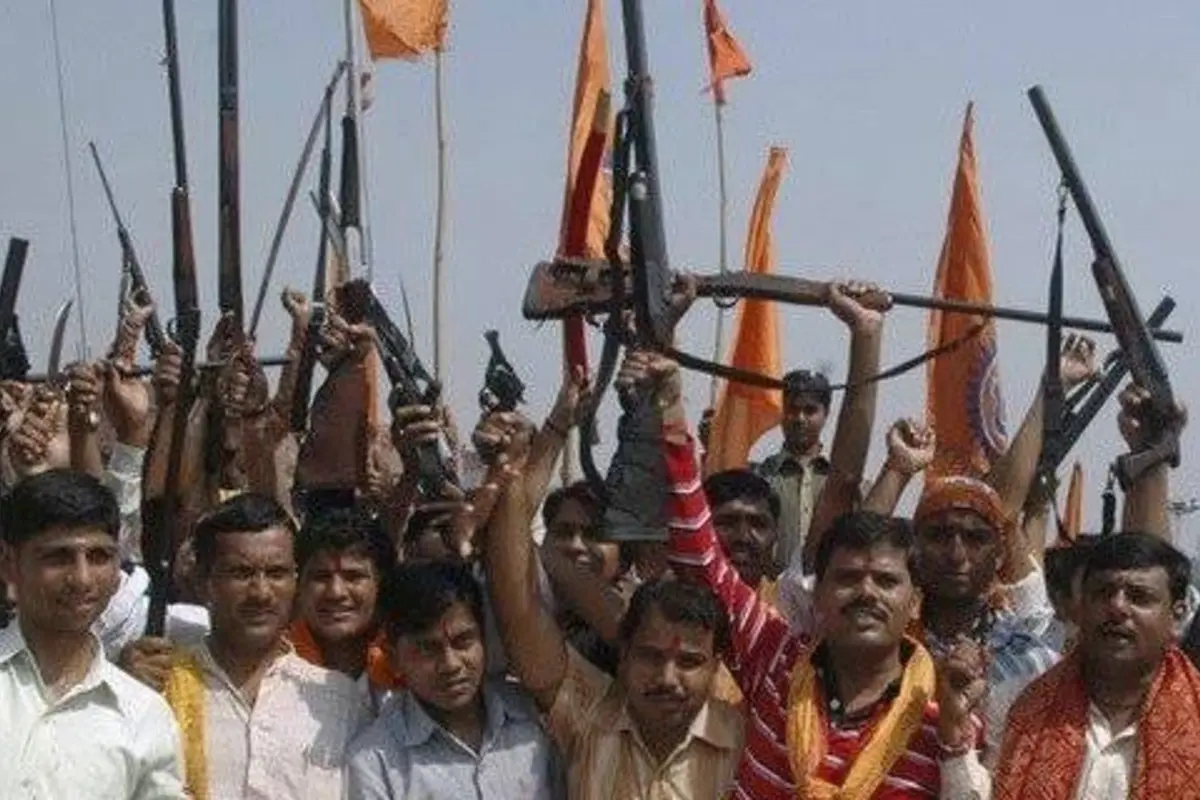
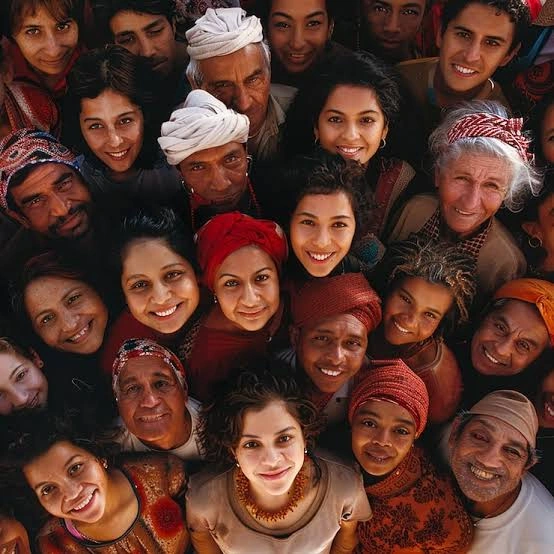
India’s contemporary crisis cannot be understood merely as a conflict between political parties or as a temporary disagreement over government policy. It represents a deeper transformation in the relationship between democracy, culture, religion, citizenship, historical memory, economic power and social identity. For much of the post-independence period, India attempted to construct a political identity capable of accommodating extraordinary linguistic, religious, caste, ethnic and regional diversity within one constitutional framework. This project was never perfect: communal violence, caste discrimination, political corruption, poverty and even authoritarian episodes existed long before the present era. Yet the growing influence of Hindu majoritarian politics has raised a more fundamental question about the future of Indian pluralism: what happens when the cultural identity of the majority increasingly becomes the basis for defining national belonging? India was never historically a homogeneous racial, ethnic or cultural entity. Its civilization emerged through centuries of interaction among Indo-Aryan and Dravidian-speaking populations, Adivasi communities, Buddhist and Jain traditions, Hindu traditions, Islamic and Persianate cultures, Sikh communities, Christians and countless regional societies. Kashmir was not Tamil Nadu, Bengal was not Gujarat, Punjab was not Kerala, and Assam was not Maharashtra. The political achievement of modern India was therefore not the creation of uniformity but the attempt to hold extraordinary diversity within a common constitutional order. When diversity begins to be portrayed as a threat rather than as a foundation of national life, the philosophical meaning of the nation itself begins to change.
The violence in Gujarat in 2002 remains one of the most important episodes for understanding the relationship between communal mobilization, political identity and state institutions in modern India. The burning of a train at Godhra on February 27, 2002, in which 59 people were killed, was followed by widespread communal violence across Gujarat, particularly affecting Muslims. Official figures recorded more than 1,000 deaths, with Muslims constituting the overwhelming majority of those killed, while human-rights investigations documented killings, sexual violence, destruction of homes and businesses and displacement. The historical importance of Gujarat is not confined to the number of victims; it lies in what communal violence reveals about political psychology. Large-scale violence requires more than anger: it requires a narrative capable of transforming neighbors into enemies and individuals into representatives of an imagined collective threat. Social psychology demonstrates how political mobilization can construct an “us” and “them,” allowing ordinary individuals to perceive another community as dangerous, inferior or collectively responsible for the actions of individuals. Once such a narrative becomes socially accepted, moral restraints can deteriorate rapidly. Allegations concerning political and administrative complicity in Gujarat have remained deeply contested in some respects, and an academically responsible account must distinguish judicial findings from allegations and political interpretations. Nevertheless, the documented human suffering demonstrates a broader truth: communal hatred can transform social differences into instruments of violence. The greatest danger is reached when violence becomes psychologically normalized when killing, humiliation, exclusion or destruction can be rationalized as necessary for the protection of the nation, religion or community.
The distinction between Hinduism and Hindutva is crucial to understanding this transformation. Hinduism is an ancient and internally diverse religious and philosophical tradition; Hindutva is a modern political ideology associated with a particular conception of Indian national identity. Treating the two as identical makes serious analysis impossible. The issue is not whether Hinduism should exist as an important component of Indian civilization it unquestionably is but whether political power should define citizenship and national belonging according to one religious cultural conception. Majoritarian nationalism becomes dangerous when the numerical majority begins to regard itself as possessing a special political ownership of the state. Democracy, however, is not simply majority rule. Constitutional democracy requires majority rule to operate within boundaries established by equality, individual rights, minority protections, judicial independence, freedom of expression and institutional accountability. If electoral victory becomes a justification for unlimited majoritarian authority, democracy may retain elections while gradually losing its liberal substance. This is the central philosophical danger of democratic erosion: institutions can remain formally intact while their ability to restrain power becomes progressively weaker. A parliament may continue to function, elections may continue to take place, and governments may continue to claim popular legitimacy, while journalists, academics, opposition groups and minorities experience shrinking space for independent action. In this sense, authoritarianism does not always arrive through a dramatic coup; it can emerge gradually through the normalization of political intolerance.
The erosion of independent journalism is therefore one of the clearest indicators of democratic decline. Journalism exists to investigate power, challenge official narratives and bring hidden information into public debate. When journalists are threatened, prosecuted, attacked or economically pressured, the consequences extend far beyond individual reporters. The result is self-censorship: journalists begin avoiding certain subjects not because every critical article will necessarily lead to punishment, but because the potential consequences become sufficiently intimidating. The same psychological process affects academics, activists, researchers, filmmakers and civil-society organizations. The danger of censorship is therefore not merely the removal of particular articles or programs; it is the gradual shrinking of the boundaries of permissible thought. A society may still possess thousands of newspapers, television channels and digital platforms, yet genuine media freedom can decline if ownership becomes concentrated, political pressure increases, journalists are intimidated and independent reporting becomes economically or legally dangerous. According to Reporters Without Borders, India ranked 151st out of 180 countries in the 2026 World Press Freedom Index, reflecting continuing concerns over political pressure, media ownership concentration, violence against journalists and the environment faced by independent media. The philosophical importance of journalism is therefore much greater than reporting daily events: without the freedom to investigate reality, citizens lose part of their ability to make informed democratic choices. Truth cannot remain democratic if access to truth becomes politically conditional.
The struggle over universities and historical memory represents another dimension of the same crisis. Academic freedom is fundamentally the freedom to question, research, teach and disagree without political intimidation. Universities are important precisely because they allow societies to challenge their own assumptions. A historian can question a national myth, a sociologist can investigate caste and inequality, an economist can challenge economic policy, a political scientist can study authoritarianism and a philosopher can question the moral foundations of political authority. When curricula, research and academic appointments become increasingly subject to ideological pressure, the damage is not limited to individual scholars; society loses its institutional capacity for self-correction. The same applies to historical monuments. India’s mosques, temples, churches, forts, graves, palaces and other historical structures represent layers of civilization rather than the property of a single generation. Attempts to erase, demolish, rename or politically reclaim monuments because they are associated with another community transform architecture into ideological warfare. History then stops being an investigation of what happened and becomes a struggle over which past society is permitted to remember. This is intellectually dangerous because Indian civilization itself is the product of continuous cultural encounters. A confident civilization does not need to erase uncomfortable chapters of its history; it possesses enough intellectual maturity to acknowledge complexity. Destroying historical memory in order to create a politically convenient past ultimately impoverishes the civilization that claims to be defending it.
The politics of hate also has a powerful economic dimension. When governments and political movements fail to adequately address unemployment, inequality, inadequate education, poor healthcare, environmental degradation and insecure livelihoods, political narratives can redirect social frustration toward cultural enemies. Instead of asking why employment opportunities are inadequate, citizens may be encouraged to ask which minority is taking their opportunities. Instead of questioning why public institutions fail, they may be encouraged to blame another community. Instead of examining structural inequality, they may be given a scapegoat. This is the political economy of resentment: economic insecurity becomes converted into cultural anger. Nationalism then provides psychological compensation for material insecurity by offering people a sense of belonging, pride and collective superiority. This does not mean India’s economic achievements are imaginary. India has developed major technological, industrial and service sector capabilities and has experienced substantial economic growth in the start of Modi regime but GDP growth alone cannot be equated with social development. A country’s development must also be measured through employment, education, healthcare, equality, environmental sustainability, institutional quality and human dignity. A young person without a stable livelihood can be easily attracted by a politics that offers identity in place of opportunity. The deeper tragedy is that hatred cannot create jobs, repair schools, clean rivers or strengthen public hospitals. It can, however, temporarily redirect public anger away from the structural causes of economic dissatisfaction, now the International position of India is questionable as extremist, hate mongers and fake narrative have been exposed funded by Modi and allies in India through lobbying firms.
The appeal of Narendra Modi and the Bharatiya Janata Party must therefore be examined through more than the language of religious nationalism. Modi’s rise also emerged from widespread dissatisfaction with corruption, political instability, weak governance and the failures associated with earlier political leadership. The image of the decisive leader who could deliver development, order, national pride and economic transformation proved politically powerful. This phenomenon is not unique to India; throughout history, societies experiencing institutional frustration have often become attracted to strong leaders who promise simple solutions to complicated problems. The problem begins when the leader becomes stronger than the institutions designed to restrain political power. Democracy requires leaders to operate within institutions; authoritarianism develops when institutions increasingly operate according to the preferences of leaders. This distinction is especially important because democratic erosion is rarely visible at its beginning. It can occur through incremental changes such as weakening opposition, politicizing institutions, restricting protest, pressuring journalists, delegitimizing critics and encouraging an atmosphere in which dissent is portrayed as disloyalty. Once political opponents are treated not as legitimate competitors but as enemies of the nation, democratic competition becomes morally corrupted. The citizen is then encouraged to choose not simply between alternative policies but between supposedly patriotic and unpatriotic identities.
India’s enormous regional and ethnic diversity also challenges any attempt to define the nation through a single cultural identity. Its political history contains movements demanding greater autonomy, linguistic recognition, regional sovereignty and, in some cases, separation.
Kashmir has experienced a prolonged conflict over sovereignty and political status; Sikh separatism produced one of the most violent periods in modern Indian history; movements among Naga, Manipuri and other communities in the Northeast have challenged the authority of the Indian state; Assam has experienced intense conflicts surrounding ethnicity, migration and indigenous identity; and Tamil linguistic nationalism historically resisted attempts to impose Hindi as a national language. These movements cannot simply be reduced to a single category such as “anti-India.” They emerged from different combinations of history, ethnicity, language, territory, economic grievances, political exclusion and competing understandings of sovereignty. This diversity demonstrates the central challenge of Indian nationhood: the larger and more complex a political society becomes, the more necessary pluralism becomes. A multinational or multiethnic state cannot achieve lasting stability by eliminating difference. It must construct institutions through which difference can coexist. The attempt to produce cultural uniformity in a historically diverse civilisation therefore contains a paradox: the more aggressively the state attempts to create one national identity, the more strongly excluded communities may defend their own identities.
Ultimately, India’s crisis is philosophical before it is merely political. The fundamental question is: who owns a nation? Does the majority own it? Does the government own it? Does one religion own it? Or does citizenship belong equally to every individual? The constitutional answer must be that citizens possess rights not because they belong to a particular religion, ethnicity, caste or linguistic community, but because they are citizens and human beings. When citizenship becomes conditional upon cultural conformity, democracy begins to change its meaning. The greatest danger of extremism is therefore not only the suffering imposed upon minorities; it is the transformation of the moral character of the entire society. A political movement that requires a permanent enemy must continually manufacture new enemies: minorities can become targets, then journalists, academics, activists, political opponents and eventually dissenters within the majority itself. History demonstrates that societies organized around permanent hostility eventually consume portions of their own population. India does not need to become less Indian; it needs to recover the intellectual confidence to acknowledge the complexity of what India has always been. Its civilization was never culturally pure, and its historical strength came precisely from its ability to absorb, interact and coexist. The real strength of a civilization is not demonstrated by how aggressively it defeats its minorities but by how securely minorities can live without fear. The strength of democracy is not measured merely by how many elections are held, but by whether the person who loses an election retains the same rights as the person who wins it. And the true test of culture is not how loudly a society celebrates its past, but whether it possesses enough wisdom to allow different religions, languages, ethnicities, memories and political opinions to coexist within the same future. The ultimate struggle in India is therefore not simply between political parties; it is between two visions of nationhood, one defined by the dominance of a single identity, and another defined by the equal dignity of many identities. The first may produce mobilization, but only the second can produce a durable democracy.
Catch all the Blogs News, Breaking News Event and Trending News Updates on GTV News
Join Our Whatsapp Channel GTV Whatsapp Official Channel to get the Daily News Update & Follow us on Google News.
Must Read
World
Iranian Air Defense Says Indigenous Systems Downed More Than 200 Enemy Aircraft
1-September،2026

World
Haitian Immigrant Dies After Entering Interstate Traffic Amid Deportation Fears
1-September،2026