Fidel Castro at 100: The Revolution, Resistance and the Questions That Remain

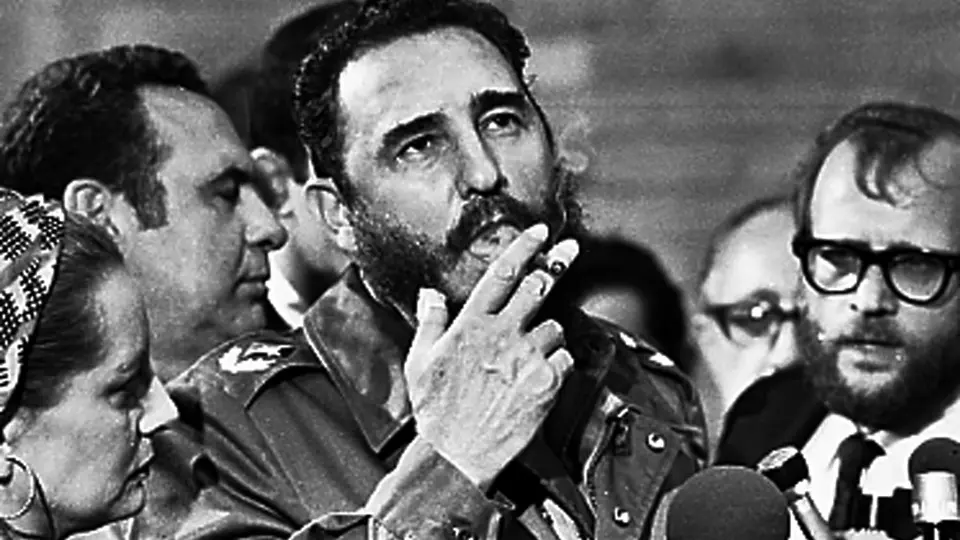
As Cuba marks the centenary of Fidel Castro’s birth on August 13, 2026, the world is once again confronted with a historical figure who refuses to fit comfortably into a single political category. To some, Castro remains a symbol of national sovereignty, anti-imperialism, social equality and resistance to great-power domination. To others, he represents authoritarianism, political repression, economic failure and the concentration of power in one man and one political organization. Between these interpretations lies a much more complicated historical reality. For political workers of the present generation, the importance of studying Fidel Castro is therefore not simply to decide whether he was a hero or a dictator. The more valuable question is what can be learned from the rise, achievements, contradictions and failures of a revolutionary leader who transformed a small country and influenced international politics for more than half a century.
Castro emerged politically during a period when Cuba was experiencing deep inequalities, political instability, foreign economic influence and authoritarian rule. When Fulgencio Batista seized power in 1952 and cancelled elections, Castro abandoned conventional electoral politics and eventually chose armed revolution. His failed attack on the Moncada Barracks in 1953 led to imprisonment, but his courtroom defense helped establish the political language of his movement. After his release, he went into exile in Mexico, organized the July 26 Movement and returned to Cuba aboard the Granma in 1956. A small surviving guerrilla force eventually grew into a revolutionary movement capable of defeating Batista’s government, which collapsed on January 1, 1959.
Castro’s original political program cannot be understood simply through the lens of the communism that later defined Cuba. His early revolutionary message contained strong elements of Cuban nationalism, constitutionalism, land reform, social justice and opposition to corruption and foreign domination. The political environment created by Batista’s coup had closed many conventional avenues for change, and Castro increasingly regarded armed struggle as the only viable path. This distinction matters because revolutionary movements frequently change once they move from opposition to government. It is one thing to mobilize people against an unjust system; it is another to build institutions capable of governing a society fairly.
After taking power, Castro pursued sweeping reforms. Land was redistributed, foreign-owned enterprises were nationalized, and the state assumed a dominant role in economic life. Education and healthcare were expanded dramatically. The government sought to reduce illiteracy, improve rural living standards and make social services available more broadly. Cuba subsequently developed a highly educated population and became particularly known for its medical personnel, many of whom were sent abroad to provide healthcare and technical assistance.
These achievements should not simply be dismissed because they occurred under a political system that many observers regarded as authoritarian. Nor should the achievements automatically justify the political system that produced them. A serious political analysis must be capable of holding two truths at the same time. A government can expand literacy while restricting political freedom. It can provide healthcare while suppressing dissent. It can defend national sovereignty while concentrating power. It can resist foreign intervention while creating institutions that leave citizens with little ability to challenge their own government. That tension is at the heart of the Castro legacy.
Perhaps the strongest argument made by Castro’s defenders concerns the social transformation of Cuba. The revolution attempted to change not merely who governed Cuba, but who benefited from Cuban society. The government attacked longstanding inequalities in land ownership, expanded education, improved access to healthcare and sought to reduce racial and gender discrimination. Cuba’s literacy rate rose dramatically, while its health indicators improved and the country developed a large pool of doctors, engineers, teachers and technicians.
For millions of people around the world who lived under colonialism, racial inequality or extreme poverty, this became an important example: a poor country did not necessarily have to accept permanent dependence on richer powers. Castro also understood the political power of education. An educated population is not merely an economic resource; it is a potential political force. Schools, universities, healthcare institutions and cultural organizations became instruments through which the revolution attempted to create a new Cuban citizen.
But this raises another question for today’s political workers: if education is supposed to liberate human beings, should the educated citizen also possess the freedom to disagree with the government that educated him?
This is where the Cuban experience becomes philosophically difficult. Social rights and political rights should not necessarily be treated as competing choices. A society that provides healthcare but denies political pluralism faces one problem; a society that provides political freedoms while leaving millions without education, healthcare or economic security faces another. The deeper challenge for modern politics is to build systems in which social justice and individual liberty reinforce one another rather than being presented as mutually exclusive.
Castro’s greatest political achievement was also one of his greatest contradictions. He built an extraordinarily durable political system. He survived armed opposition, assassination plots, economic pressure, diplomatic isolation and the collapse of the Soviet Union. He remained in power for decades while eleven American presidents came and went. Cuba maintained diplomatic relations with more than 150 countries and acquired an international influence far greater than its geographical size would suggest.
But political durability is not necessarily the same thing as political legitimacy. Castro established a one-party system in which the Communist Party monopolized political power. Opposition was restricted, independent journalism was constrained, and dissidents were imprisoned or persecuted. Economic difficulties and shortages persisted, while many Cubans left the country.
This is perhaps the most important lesson for political workers. A revolution that begins by challenging concentrated power must constantly ask whether it is reproducing the same concentration of power under a different ideology. The revolutionary may begin as the voice of the excluded. But once the revolutionary becomes the state, who speaks for those who disagree with him? That question cannot simply be dismissed as counter-revolutionary. It is a fundamental question of political morality. No examination of Castro can ignore the United States. Cuba’s geographical proximity to the United States placed the revolution directly inside the strategic calculations of the Cold War. Washington opposed Castro’s government, imposed an economic embargo and supported efforts to overthrow him. The Bay of Pigs invasion in 1961 failed, strengthening Castro’s position domestically and internationally. The confrontation eventually contributed to the Cuban Missile Crisis of 1962, when the world came dangerously close to nuclear war.
Castro consequently became a symbol of resistance to American power. For many developing countries, Cuba’s survival represented something larger than Fidel Castro himself: the possibility that a small state could refuse to surrender its political choices to a superpower. But opposition to American power also became one of the pillars of Castro’s political legitimacy. This creates another question worth considering: how much of a government’s legitimacy should come from an external enemy?
External pressure can strengthen national unity, but it can also become politically convenient. When a government faces permanent foreign hostility, criticism at home can easily be portrayed as assistance to the enemy. The challenge for any political movement is therefore to distinguish between genuine national security threats and the use of national security as a justification for suppressing legitimate disagreement. The Cuban Missile Crisis remains one of the most consequential episodes of Castro’s career. By the early 1960s, Cuba had become closely aligned with the Soviet Union. Soviet nuclear missiles were deployed on Cuban territory, bringing American and Soviet forces into direct confrontation. The crisis ended through an agreement between Washington and Moscow, but Castro discovered that the fate of Cuba could still be decided by superpowers negotiating over the heads of smaller nations.
There is a profound political lesson here. A small nation’s sovereignty can be threatened not only by military occupation but also by becoming an instrument in the rivalry of larger powers. Castro sought independence from American influence but entered a relationship of enormous dependence upon the Soviet Union. Cuba gained protection and economic assistance, but its economy became heavily dependent on Soviet support. The Soviet collapse in 1991 exposed this vulnerability. Cuba’s economy contracted sharply, fuel became scarce and food and other necessities became difficult to obtain. The government survived by introducing limited economic liberalization while retaining political control.
For political workers, this is a warning against confusing alliance with independence. A country may reject one powerful patron and become dependent upon another. True sovereignty requires political, economic and institutional capacity sufficient to make national decisions without becoming permanently dependent on any external power. Castro’s influence extended far beyond Cuba. Cuban doctors, teachers and technicians worked in numerous countries. Cuban forces became involved in conflicts in Africa, including Angola and Ethiopia. Castro also became an important voice within the Non-Aligned Movement and consistently presented himself as an advocate for poorer nations confronting colonialism, imperialism and unequal global economic structures. His internationalism was one of the reasons his influence exceeded Cuba’s material power. He demonstrated that a country does not need to be economically powerful to become politically influential. Ideas, diplomacy, symbolism, organization and ideological clarity can sometimes provide a small state with influence disproportionate to its size.
Yet international revolutionary activism also consumed resources and deepened Cuba’s involvement in Cold War conflicts. Again, the historical lesson is not simply that Castro was right or wrong. It is that foreign policy must ultimately be judged by whether it strengthens a nation’s people, independence and long-term capacity, not merely by how impressive its international image becomes. Here lies perhaps the greatest weakness in Castro’s record. The revolutionary government wanted to diversify Cuba’s economy and reduce dependency on sugar and foreign capital. Yet those goals were not fully achieved. Cuba continued to depend heavily on sugar exports and later became highly dependent on Soviet subsidies and technical assistance. Shortages and rationing became recurring features of economic life.
This raises a question that every young political worker should take seriously: can political idealism compensate for economic mismanagement? The answer is probably no, A political movement can inspire people with promises of justice, dignity and equality, but eventually it must produce food, energy, employment, housing, infrastructure and opportunities. Political slogans cannot substitute for competent administration. Nor can economic failure automatically prove that every principle behind a revolution was wrong. The more useful conclusion is that political morality and economic competence must coexist. A just political vision without competent management can produce hardship. Efficient administration without justice can produce an efficient form of oppression. Politics requires both.
Castro’s supporters often emphasize his achievements. His opponents emphasize imprisonment, censorship, restrictions on political organization and the exodus of Cubans. Both realities form part of the historical record. The danger for political movements begins when they stop allowing uncomfortable facts to exist. Every ideology has a temptation to create heroes who cannot be criticized and enemies who cannot be understood. Once this happens, political thought becomes religious rather than analytical. Castro himself became an enormous political symbol. His speeches, military uniform, beard and revolutionary language created an image of personal authority that became inseparable from the Cuban state. His charisma helped maintain political support despite economic difficulties and authoritarian institutions.
But charismatic leadership carries a structural danger: what happens to a revolution when its institutions become weaker than the personality of its leader? A movement may win because of one extraordinary individual, but a country must eventually function without that individual. The transition of power to Raul Castro in 2006 demonstrated that the system could survive Fidel’s departure. Yet it also demonstrated how deeply the Cuban political order had been associated with the Castro family. Fidel formally resigned the presidency in 2008.
Castro’s political philosophy can be understood through several recurring themes: sovereignty, anti-imperialism, social equality, revolutionary discipline, collectivism and resistance to capitalist domination. His political worldview rejected the idea that powerful states should determine the choices of smaller nations. He believed that economic inequality was not simply an unfortunate social condition but a consequence of political and international structures. There is intellectual strength in this argument. But there is also a philosophical weakness if equality is pursued without sufficient respect for pluralism.
Human beings do not become equal by becoming identical. A society can seek economic equality while permitting different political opinions. It can pursue social welfare while protecting freedom of speech. It can defend national sovereignty while respecting individual sovereignty. The central philosophical question raised by Castro’s experience is therefore whether a revolution can create collective freedom by restricting individual freedom. Castro’s defenders might answer that political freedom has little meaning for a hungry, uneducated or exploited person. His critics would respond that social welfare cannot compensate for the loss of political liberty. The wiser political worker should resist this false choice. The real objective should be a society where people have both bread and freedom, both dignity and dissent, both social protection and political agency.
Fidel Castro died on November 25, 2016, aged ninety. His death produced radically different reactions. Cuban supporters mourned the revolutionary leader, while opponents and many Cuban exiles celebrated the end of an authoritarian era. Even in death, Castro remained politically divisive. That division is unlikely to disappear with the centenary celebrations of 2026.
But perhaps the purpose of a centenary should not be to manufacture unanimity. A centenary should be an opportunity for historical examination. Those who admire Castro should be willing to acknowledge the political repression and economic failures associated with his government. Those who condemn Castro should be willing to acknowledge the genuine achievements of the Cuban revolution in literacy, healthcare, education, social mobility, international medical cooperation and national sovereignty. Otherwise, neither side is studying history. Both are simply defending identities.
The most valuable legacy of Fidel Castro may not be a particular ideology. It may be the questions his career forces us to ask. Never underestimate the power of a political idea. Castro transformed a small guerrilla movement into a government and made Cuba a central issue in global politics. Never confuse popularity with democracy. A leader can genuinely command popular support and still govern through institutions that restrict political competition. Never confuse revolution with administration. Overthrowing an old order is only the beginning. Building a functional economy, judiciary, education system, healthcare system and political institution is the harder task.
Never allow an external enemy to become the permanent justification for internal political control. Foreign threats can be real, but national security must not become a permanent excuse for silencing citizens. Do not reject social justice merely because an authoritarian government claimed it. Healthcare, education, equality and economic dignity remain legitimate political objectives regardless of who pursues them. At the same time, do not defend authoritarianism merely because it produces social services. Political freedom, accountability and human dignity are not luxuries to be postponed indefinitely. Build institutions stronger than personalities. The greatest test of a political movement is not whether its founder can dominate history, but whether its principles can survive without him.
And remember that economic independence is part of political independence. A country that cannot produce enough energy, food, employment and economic opportunity remains vulnerable to external pressure regardless of how powerful its political rhetoric may be. The centenary of Fidel Castro’s birth should therefore not merely be a celebration of a man. It should be an examination of a political experiment. Castro demonstrated how nationalism could become revolution, how revolution could become state power, how state power could become centralized authority, and how centralized authority could survive for generations. He also demonstrated the extraordinary possibilities of a small nation when it mobilizes education, healthcare, diplomacy and political organization. But he demonstrated something else: the danger of allowing the revolutionary struggle to become an excuse for permanent political control. Perhaps the most important lesson is that political workers should never surrender their capacity to think independently—not even to the leaders they admire most.
A young political worker should be able to say: I agree with Castro on sovereignty but disagree with his restrictions on political pluralism. I admire Cuba’s achievements in education and healthcare but question its economic model. I understand the historical context of American pressure but do not believe external hostility justifies every domestic policy. I recognize the achievements of the revolution without turning its leader into an infallible hero.
That is not political weakness. That is political maturity. History rarely gives us perfect heroes or perfect villains. It gives us human beings operating within difficult circumstances, making choices whose consequences extend far beyond their own lifetimes. Fidel Castro was one of those figures.
He was revolutionary and ruler, nationalist and Marxist-Leninist, internationalist and centralizer of power, defender of sovereignty and leader of an authoritarian state. He expanded social services while restricting political pluralism. He challenged one superpower while becoming heavily dependent upon another. He inspired millions while driving others into exile. He survived enormous external pressure while failing to solve many of the economic problems that confronted Cuba. The purpose of remembering him at 100 should therefore not be to decide what people must think about Fidel Castro. It should be to teach the next generation how to think about power itself.
For political workers, that may be the most enduring lesson of the Cuban Revolution: never become so committed to a leader, ideology or party that you lose the courage to question it. A revolution may begin with the promise that history will absolve its leaders. But history does not absolve anyone automatically. History asks questions. And it is the responsibility of every new generation to answer them honestly.
Catch all the Blogs News, Breaking News Event and Trending News Updates on GTV News
Join Our Whatsapp Channel GTV Whatsapp Official Channel to get the Daily News Update & Follow us on Google News.
Must Read

World
Iranian Guards Official Calls Trump a ‘big liar’ Over Nuclear Claims and Hormuz
29-September،2026
Pakistan
OGDCL, PINSTECH sign agreement to assess lithium, rare earth potential in produced water
29-September،2026