
Pakistan’s Remittance Engine Holds Strong at $3.53 Billion in April — But the $41 Billion Annual Target Demands a Difficult Final Sprint

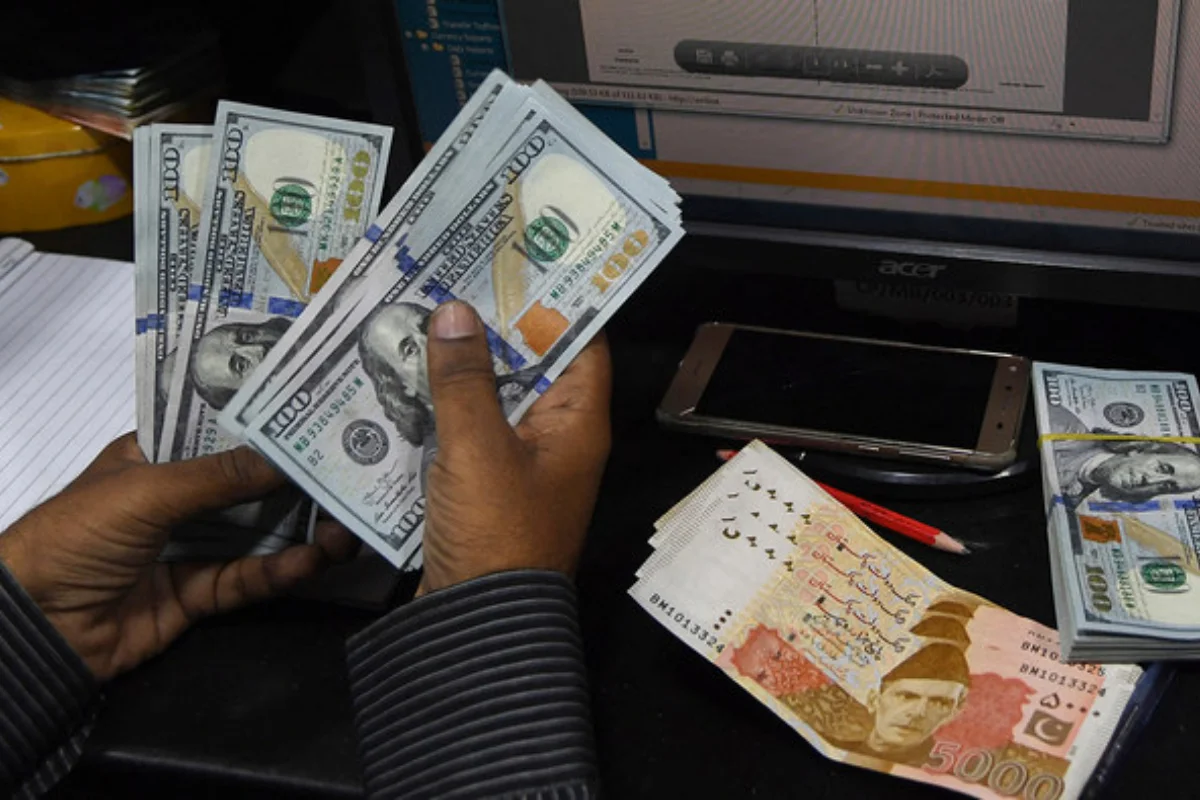
Pakistan Sees 26.6% Jump in Remittances to $38.3 Billion, Up 27%
The monthly dip is seasonal noise. The structural story is more interesting — and more complicated.
Every month, millions of Pakistanis working abroad in construction sites in Riyadh, hospitals in Dubai, factories in Manchester, and offices in New York quietly perform one of the most consequential economic acts available to them: they send money home. In April 2026, they sent $3.53 billion of it.
That figure, released by the State Bank of Pakistan on Monday, represents an 11.4 percent increase over the same month last year. It also represents a 7.6 percent decline from March’s $3.83 billion. Both numbers are true. Understanding which one matters more requires looking past the headline and into the mechanics of how remittance flows actually work — and what Pakistan’s economy actually needs them to do.
Reading the April Numbers Correctly
The month-on-month decline from March to April is real but largely expected. March 2026 captured elevated inflows driven by Eid-related transfers — a recurring seasonal pattern in which overseas Pakistanis send additional funds ahead of the holiday to support family celebrations, clothing purchases, and charitable giving. This creates a predictable spike in the months surrounding Eid that is followed by normalization. April’s $3.53 billion is not a retreat from strength. It is a return to baseline after an above-average month.
The more meaningful comparison is year-on-year: April 2026 versus April 2025. On that metric, the 11.4 percent growth is significant. It suggests that the underlying drivers of remittance growth — more Pakistanis working abroad, higher wages in Gulf labor markets, improved formal channel adoption, and a relatively stable exchange rate environment — remain intact.
The cumulative picture reinforces this reading. In the first ten months of fiscal year 2026, Pakistan received $33.86 billion in workers’ remittances, an 8 percent increase over the same period last year. Ten months of consistent year-on-year growth is not a statistical artifact. It is a trend.
Where the Money Is Actually Coming From
Saudi Arabia sent the largest single contribution in April at $841.7 million, followed by the United Arab Emirates at $734.7 million. Other GCC countries added $325 million, bringing the Middle East total to approximately $1.9 billion — meaning more than half of April’s remittances originated from a single geographic region.
This concentration is both a strength and a structural vulnerability that Pakistani policymakers rarely discuss openly.
The Gulf’s dominance in Pakistani remittances reflects decades of labor migration built on the region’s construction and services boom. Pakistan has one of the largest diaspora populations in the Gulf, with an estimated 4.5 million Pakistanis working in Saudi Arabia alone and roughly 1.7 million in the UAE. These workers are concentrated in sectors — construction, hospitality, domestic services, logistics — that are sensitive to regional economic cycles, oil price fluctuations, and nationalization policies like Saudi Vision 2030’s Saudization targets, which aim to increase the proportion of Saudi nationals in the workforce.
When Gulf economies contract or when nationalization quotas tighten, Pakistani remittances feel it — not immediately, but with a lag of one to two years as labor contracts expire and renewal rates drop. The current strong numbers reflect a Gulf that has been operating in an elevated oil revenue environment. How long that environment persists, and what happens to Pakistani labor demand when it changes, is the risk that the $1.9 billion monthly figure from the Middle East quietly carries.
The Formal Channel Question
One factor driving remittance growth that deserves more attention is the ongoing shift from informal to formal transfer channels. For decades, a significant portion of Pakistani remittance flows moved through the hawala system — an informal value transfer network that is faster and cheaper than bank transfers but invisible to official statistics, unregulated, and unavailable for foreign exchange reserve purposes.
The State Bank of Pakistan has invested substantially in making formal channels more competitive: reducing transfer fees, expanding mobile banking infrastructure, creating incentive schemes for overseas Pakistanis who remit through regulated channels, and negotiating arrangements with major money transfer operators. The result has been a gradual but meaningful shift toward formal flows.
This matters for interpreting the growth numbers. Some portion of the year-on-year increase in officially recorded remittances reflects not more money being sent, but more of the money being sent flowing through trackable channels. The total transfer volume from the diaspora may have grown less dramatically than the official figures suggest. Conversely, it means the formal channel growth has real staying power — once infrastructure is built and habits are changed, the shift tends to persist.
The $41 Billion Target: Ambition, Arithmetic, and Risk
Pakistan’s target for total remittances in fiscal year 2026 is approximately $41 billion — a substantial jump from the $38 billion recorded in FY25. With $33.86 billion received in the first ten months, Pakistan needs roughly $7.14 billion across May and June to reach the target. That requires an average of approximately $3.57 billion per month in the final two months of the fiscal year.
April’s $3.53 billion, while slightly below that threshold, suggests the target is achievable but not comfortable. May typically benefits from continued post-Eid normalization and summer travel season transfers, when overseas workers send additional funds before family members travel or school fees come due. June historically sees some softening before the fiscal year closes.
The more significant risk to the target is not seasonal but geopolitical. Pakistan’s remittance inflows are sensitive to conditions in the Gulf, and the Gulf is currently navigating a period of elevated regional tension following the Iran-US conflict and its aftermath. If regional instability affects Gulf construction activity, energy investment, or expatriate labor conditions, the transmission to Pakistani remittance flows would be measurable within a quarter.
There is also a currency dynamic worth monitoring. Overseas Pakistanis respond to exchange rate signals when deciding whether to remit now or hold funds in foreign currency and transfer later. A period of rupee stability or appreciation tends to bring forward transfers, while depreciation expectations can delay them. The SBP’s management of exchange rate expectations over the next two months will influence whether the $41 billion target is reached as much as any labor market factor.
What Remittances Actually Do for Pakistan’s Economy
The $3.53 billion that arrived in April is not simply a welfare transfer — though it functions as that for millions of recipient households. At the macroeconomic level, remittances serve several distinct functions that make them uniquely valuable to Pakistan’s economic architecture.
They are the primary source of foreign exchange inflows that do not require debt. Unlike loans from the IMF, bilateral creditors, or international bond markets, remittances arrive without repayment obligations, without conditionality, and without interest costs. In a country that has spent much of the past three decades managing external debt pressure, this distinction is not minor.
They are countercyclical in a way that foreign direct investment and portfolio flows are not. When Pakistan’s economy contracts and domestic conditions deteriorate, the overseas diaspora often increases transfers to support family members who have lost income or face rising costs. This stabilizing dynamic was visible during the 2022-2023 economic crisis, when remittances remained resilient even as other capital flows dried up.
They directly sustain household consumption in provinces and districts that have limited formal employment. The remittance-to-GDP ratio for specific districts in Khyber Pakhtunkhwa, Azad Kashmir, and parts of Punjab is high enough that local economies are functionally dependent on overseas transfers in a way that aggregate national statistics obscure. In these communities, the monthly wire transfer is not supplementary income — it is the income.
The Human Infrastructure Behind the Numbers
What the SBP data cannot capture is the cost at which $33.86 billion is generated. Pakistani workers in the Gulf operate under kafala-style labor systems that tie their legal status to their employer, limiting their ability to change jobs or return home without permission. Working conditions in construction, where a significant proportion of Gulf-based Pakistanis are employed, involve heat exposure, long hours, limited healthcare access, and employer-controlled accommodation.
The remittance figure represents the net economic output of millions of hours of labor performed under these conditions, converted into dollars and transferred home. It is a number that deserves to be read with that context attached — not to diminish its economic significance, but to understand what it actually represents and what policy obligations it creates.
Pakistan’s government has a responsibility to its workers abroad that extends beyond facilitating transfers through formal channels. It includes labor attaché services in Gulf embassies, bilateral labor agreements that establish minimum wage and working condition floors, efficient grievance mechanisms for workers facing exploitation, and reintegration support for workers who return. The quality of these services has been inconsistent. The $41 billion target creates pressure to maximize flows. The welfare of the workers generating those flows requires equal institutional attention.
The Structural Question Pakistan Needs to Answer
Pakistan’s reliance on remittances as a primary macroeconomic stabilizer reflects a deeper structural reality: the domestic economy does not generate sufficient formal employment at wages competitive with what the Gulf pays for comparable labor. A young Pakistani engineer or accountant can earn multiples of their domestic salary in Dubai. A construction worker from Khyber Pakhtunkhwa can earn more in three months in Riyadh than in a year of available domestic work.
This wage differential drives emigration, which drives remittances, which partially compensates for the domestic employment deficit. It is a system that functions as long as Gulf demand for Pakistani labor remains high — and one that defers rather than resolves the underlying economic development challenge.
The $41 billion remittance target for FY26, if achieved, will be rightly celebrated as a macroeconomic success. But the conditions that make it necessary — the employment gap, the wage differential, the foreign exchange dependence — will remain. Pakistan’s long-term economic security requires building an economy that generates comparable opportunities domestically, reducing the pressure on its citizens to seek them abroad and reducing the economy’s structural dependence on the monthly transfers that result.
April’s $3.53 billion is evidence that the diaspora continues to deliver. The question of whether Pakistan’s domestic economy is building the conditions that would eventually make such dependence optional is a different question — and one that a single month’s remittance figure cannot answer.
Strong Numbers, Incomplete Story
April 2026’s remittance data is, by any reasonable standard, positive. Year-on-year growth of 11.4 percent in a month without a major seasonal driver indicates genuine underlying strength. The cumulative $33.86 billion in ten months represents the highest ten-month total in Pakistan’s history. The $41 billion annual target, while demanding, is within reach.
But remittance statistics, like all economic aggregates, flatten complexity into comfort. Behind the number are Gulf labor markets with their own vulnerabilities, exchange rate dynamics that the SBP manages carefully, millions of workers in conditions that Pakistan’s labor diplomacy has not adequately addressed, and a structural economic dependence that strong monthly figures make easier to defer confronting.
The overseas Pakistani who sent money home in April did not do so to contribute to a macroeconomic target. They did it because someone at home needed it. Understanding that is the beginning of understanding what the $3.53 billion actually represents — and what Pakistan owes the people who generated it.
Dislcaimer; Data referenced in this article is drawn from State Bank of Pakistan official releases, World Bank remittance and migration reports, and publicly available Gulf labor market research.
Catch all the Business News, Breaking News Event and Trending News Updates on GTV News
Join Our Whatsapp Channel GTV Whatsapp Official Channel to get the Daily News Update & Follow us on Google News.
Must Read