America’s Submarine Crisis: The Underwater Gap Nobody Wants to Talk About

America's Submarine Crisis: The Underwater Gap Nobody Wants to Talk About
Old boats are retiring. New ones are late. And China and Russia are not waiting for the production line to catch up.
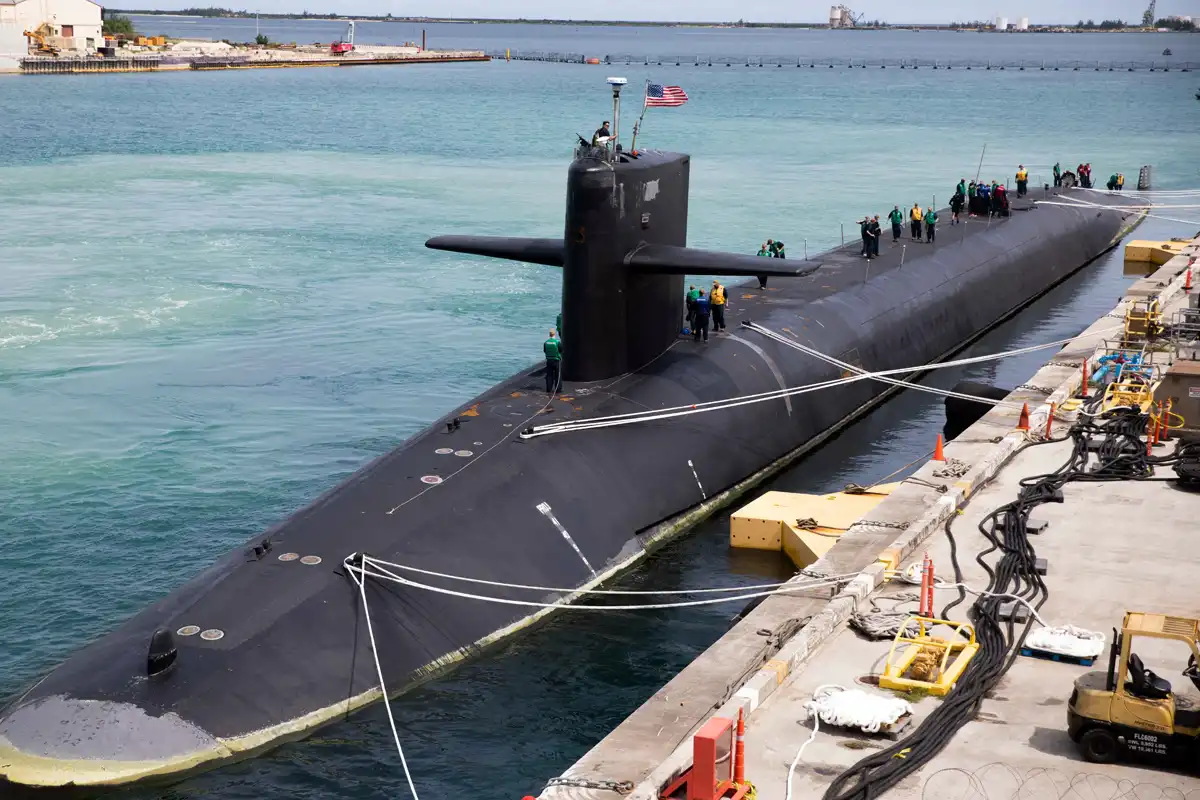
The United States Navy built its post-Cold War strategic dominance on one foundational assumption: American submarine superiority was so overwhelming that no adversary would seriously contest it. That assumption is now under measurable pressure — from aging hulls, industrial production failures, and rivals who have been building while Washington has been delaying.
The numbers tell the story without requiring interpretation.
The Production Problem
Virginia-class submarines — the backbone of America’s future undersea fleet — were supposed to be delivered at a rate of two per year. That target is not being met. Shipyard workforce shortages, supply chain constraints, and contractor capacity limitations have pushed delivery timelines back in ways that compound annually. Each missed boat is a capability gap that extends further into the future.
The Ohio-class ballistic missile submarines and Los Angeles-class attack boats they were meant to supplement are aging out of service on schedule. The replacement pipeline is not keeping pace. The result is a fleet that is shrinking in effective operational numbers even as the threat environment it faces is expanding.
The Seawolf Lesson Nobody Learned
At the Cold War’s end, the Navy planned to build 29 Seawolf-class submarines — assessed as the most capable attack submarines ever designed, built specifically to counter Soviet advances in underwater warfare. Budget pressure reduced that order to three boats. The decision seemed fiscally responsible in 1990. It looks like a strategic error in 2026.
The USS Boise, a Los Angeles-class boat commissioned in 1992, illustrates the cost of that decision’s legacy. Repairs already undertaken total $800 million. Completing the work requires an additional $1.9 billion — meaning a 34-year-old submarine will have consumed $2.7 billion in maintenance to remain marginally operational. That money is not building new submarines. It is preserving old ones past their useful life because the alternative is a smaller fleet.
What China and Russia Are Doing Instead
China has been systematically modernizing its submarine force with Type 093 attack submarines and Type 094 ballistic missile boats, while accelerating production of the more advanced Type 095 and Type 096 classes. The trajectory is deliberate: Beijing assessed American submarine dominance as the primary obstacle to any Taiwan contingency and has been investing to close that gap for two decades.
Russia has launched new Borei-class ballistic missile submarines carrying the Bulava SLBM, maintaining its second-strike credibility while developing the Yasen-class for attack missions.
The Strategic Consequence
Submarines are the most survivable nuclear deterrent platform, the most effective anti-ship weapon, and the primary tool for controlling sea lanes in a peer conflict. An America with fewer operational submarines than its fleet structure requires is an America with reduced deterrence credibility, reduced strike capacity, and reduced ability to defend the maritime access that its entire alliance system depends upon.
The Iran war consumed missiles. The submarine crisis is consuming time. Time is the one resource that cannot be replenished on any production schedule.
Disclaimer; Based on open-source US Navy procurement data and defense industry analysis.
Catch all the Blogs News, Breaking News Event and Trending News Updates on GTV News
Join Our Whatsapp Channel GTV Whatsapp Official Channel to get the Daily News Update & Follow us on Google News.
Must Read