
Redrawing Governance: Pakistan’s Provincial Question


The question of creating new provinces in Pakistan should not be viewed merely as a political debate or a constitutional amendment; it is fundamentally a question of justice, administrative efficiency, and the evolving relationship between the state and its citizens. Throughout history, wise nations have recognized that governments are not created to preserve maps but to improve lives. Borders within a federation are not sacred objects they are administrative instruments designed to ensure that governance remains responsive, accessible, and effective. Whenever institutions cease to serve the people efficiently, democratic societies reform those institutions rather than expecting citizens to endure permanent administrative shortcomings.
The Greek philosopher Aristotle wrote, “The state comes into existence for the sake of life and continues to exist for the sake of the good life.” This timeless observation reminds us that the legitimacy of any governmental structure depends not on its age but on its ability to improve the quality of life of its people. Likewise, the French philosopher Montesquieu argued that good government must be suited to the conditions of the people it governs. Administrative systems designed for populations of yesterday cannot indefinitely govern populations of tomorrow. A federation that refuses to evolve risks allowing bureaucracy to triumph over public welfare.
History repeatedly demonstrates that successful states adapt to demographic realities. No constitution is intended to become a museum piece frozen in time. Constitutions are living documents, designed to respond to changing social, economic, and political circumstances. Pakistan itself has modified its administrative structure before. The abolition of the One Unit Scheme in 1970 was not viewed as the disintegration of Pakistan; rather, it represented an acknowledgment that governance should reflect the country’s realities instead of imposing artificial administrative arrangements. If previous generations possessed the wisdom to reorganize government for better administration, future generations should not fear discussing similar reforms through constitutional and democratic means.
The discussion on new provinces is relevant across Pakistan, not just to one particular region. In Khyber Pakhtunkhwa, the size, geography and diverse needs of areas such as southern districts and Hazara can make more localized administration worth considering. Punjab, with its enormous population and wide economic and geographical diversity, could also benefit from administrative units that bring decision-making closer to its people. In Sindh, the distinct needs of rural and metropolitan areas raise similar questions of effective governance and representation. Balochistan, meanwhile, covers a vast territory with a relatively dispersed population, making accessible administration particularly important. Any discussion of new provinces in Gilgit-Baltistan and other regions should likewise consider geography, connectivity, population and local development needs. The objective should not be division for its own sake, but better administration, equitable development, stronger representation and a more responsive federation.
At the broader level of governance, smaller and more efficiently organized provinces can improve command, control, accountability and crisis management. When an administrative structure becomes excessively large, monitoring institutions, coordinating departments and responding to emergencies can become increasingly difficult. More manageable provinces allow governments to maintain closer oversight of law enforcement, disaster response, infrastructure, public health and social stability. They can also strengthen political representation by giving different regions a more direct voice in decision-making. The fundamental principle is not that smaller provinces are automatically better, but that governance must evolve alongside population, urbanization and economic expansion. When administrative boundaries no longer correspond to the realities of society, rational provincial reorganization can help create a state that is more responsive, efficient, economically productive and socially cohesive.
Among all regions of Pakistan, Karachi presents perhaps the strongest administrative case for reconsidering provincial governance. According to Pakistan’s official 2023 Population Census, Karachi is home to approximately 20.38 million people. This means that Karachi alone has a larger population than more than 100 of the world’s 193 sovereign states, including countries such as the Netherlands, Belgium, Greece, Portugal, Sweden, Jordan, the United Arab Emirates, Qatar, Bahrain, Kuwait, Ireland, New Zealand, Norway, Finland, Denmark, Singapore, Oman, Slovenia, Estonia, Latvia, Lithuania, Cyprus, Luxembourg, Malta, Iceland, Montenegro, and many others. In demographic terms, Karachi is no longer merely a city it is comparable to a medium sized nation.
The central philosophical question therefore becomes impossible to ignore that If independent nations with populations far smaller than Karachi can successfully manage their own legislatures, ministries, police, hospitals, transportation systems, taxation, urban planning, and economic development, why should a metropolitan region larger than over one hundred countries not receive an administrative structure specifically designed for its unique challenges? This is not an argument for separation or exceptionalism; it is an argument for administrative realism.
Political philosopher John Locke maintained that governments derive their legitimacy from serving the governed. American President Abraham Lincoln later summarized democratic governance as “government of the people, by the people, for the people.” These principles imply that government must remain close enough to citizens to understand their problems and capable enough to solve them. Excessive administrative centralization often creates distance between decision-makers and the communities they serve. Decentralization, when undertaken constitutionally, reduces this distance and strengthens democratic accountability rather than weakening national unity.
The British historian Lord Acton famously observed that “Liberty is not the power of doing what we like, but the right of being able to do what we ought.” In the context of governance, this means that administrative power should exist where it can most effectively fulfil public responsibilities. The purpose of creating a new province should never be ethnic superiority or political domination; it should be better governance, faster decision-making, improved service delivery, and equal opportunities for every citizen.
Karachi is Pakistan’s financial heart. It generates a significant share of national tax revenue, hosts the country’s principal seaport, accommodates the headquarters of major financial institutions, supports Pakistan’s largest industrial base, and serves as the primary gateway for international trade. Yet despite this extraordinary economic importance, the city continues to struggle with chronic water shortages, inadequate public transport, urban flooding, waste management problems, environmental degradation, housing shortages, traffic congestion, and immense pressure on healthcare and educational institutions. These are not merely municipal inconveniences; they are governance challenges associated with administering one of the world’s largest metropolitan regions through institutions that many analysts argue were not designed for a city of this scale.
Economically, new provinces can create more focused development strategies suited to the resources, industries and demographic realities of their respective regions. A large province may contain economically diverse areas whose priorities are difficult to address through a single policy framework, whereas smaller provinces can concentrate investment where it can generate the greatest impact. Dedicated budgets, development authorities and economic policies can help attract industries, improve infrastructure, develop human capital and create employment. Greater administrative proximity can also encourage competition among provinces for investment, better governance and improved public services. In this sense, provincial reorganization is not merely an administrative exercise; it can become a mechanism for unlocking economic potential and ensuring that population growth is accompanied by corresponding opportunities.
International evidence suggests that focused metropolitan governance often attracts greater domestic and foreign investment because regulatory authority becomes more coherent and decision-making more efficient. Cities such as Dubai, Singapore, Seoul, Tokyo, and London illustrate how specialized governance structures can transform metropolitan regions into engines of national prosperity. Although each operates under different constitutional arrangements, they share one principle: governments adapted institutions to match the complexity of their cities instead of expecting rapidly expanding cities to function indefinitely under outdated administrative models.
Ultimately, the debate over new provinces is not about drawing new lines on a map. It is about asking whether governance should evolve with society. As the philosopher Confucius wisely observed, “When prosperity comes, do not use old tools for new tasks.” Likewise, Edmund Burke reminded democratic societies that “A state without the means of some change is without the means of its conservation.” Reform, therefore, is not the enemy of stability; thoughtful reform is often the very foundation of lasting stability. Pakistan’s unity will not be measured by the number of its provinces but by the quality of governance, justice, and opportunity that every citizen receives, whether in Karachi, Lahore, Quetta, Peshawar, Gilgit, or any other part of the federation.
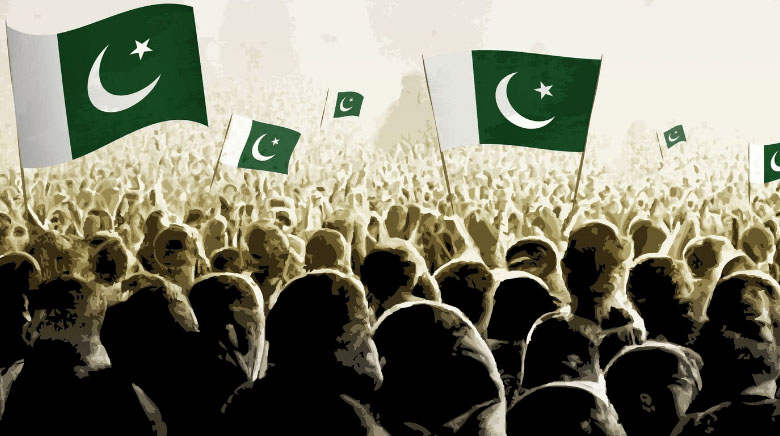
Pakistan’s growing population, expanding cities and increasingly complex economy demand governance structures that can keep pace with change. New provinces are not about dividing Pakistan; they are about strengthening Pakistan by bringing administration closer to the people, improving command and control, accelerating decision-making, and ensuring that resources and development reach neglected regions. Smaller, well managed provinces can develop policies according to their own economic strengths, create employment, attract investment and improve education, healthcare, infrastructure and law enforcement. As Edmund Burke wisely observed, “A state without the means of some change is without the means of its conservation.” The map of a country should serve its people, not become a barrier to their progress. If populations grow, economies transform and societies evolve, then governance must evolve with them. More provinces need not mean a weaker Pakistan; they can mean a more responsive, prosperous and united Pakistan because the strength of a federation lies not in the size of its administrative units, but in the quality of life it provides to its people.
Catch all the Blogs News, Breaking News Event and Trending News Updates on GTV News
Join Our Whatsapp Channel GTV Whatsapp Official Channel to get the Daily News Update & Follow us on Google News.
Must Read