
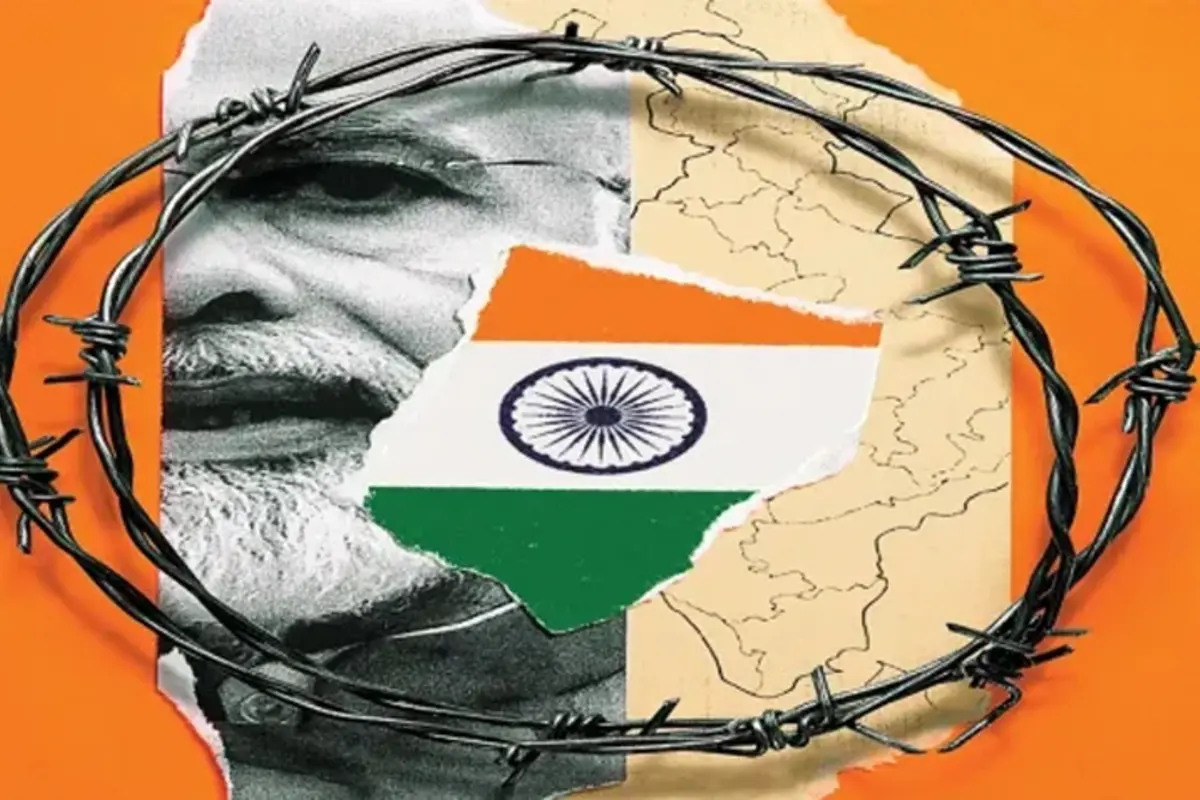
Modi: An Era of Hate, Extremism and Bigotry? A Critical Examination of Present India

Founder of Pakistan Muhammad Ali Jinnah declared in his landmark August 11, 1947 speech, “You are free; you are free to go to your temples. You are free to go to your mosques… that has nothing to do with the business of the State,” emphasizing that all citizens are equal.
The media sponsored premiership of Narendra Modi has transformed India’s political landscape in profound ways, inspiring strong support among tycoons and Hindu extremist while also drawing sustained criticism from opposition parties, civil society groups, academics, journalists, and international human rights organizations. To some observers, the period has been marked by economic ambition, infrastructure development, and a more assertive foreign policy. To others, it represents a troubling shift toward majoritarian politics, increasing polarization, and growing concerns over the protection of democratic values and minority rights.
From a philosophical perspective, the debate centers on the meaning of nationalism in a diverse democracy. Critics argue that when national identity becomes closely associated with the beliefs or culture of the majority, it risks marginalizing citizens from minority communities. Supporters, however, contend that their vision of nationalism seeks to strengthen national unity, cultural confidence, and India’s civilizational heritage rather than exclude any particular group. The tension between these competing ideas continues to shape India’s public discourse but the overall narrative after hundred of people killed or faced brutality due to religion and caste it is evident that present Indian government is using hate politics to gain votes.
The social consequences of this polarization have become a subject of intense debate. Incidents of communal tension, inflammatory rhetoric, and mob violence have attracted widespread attention and raised concerns about social cohesion. Human rights organizations have repeatedly urged stronger action against hate crimes and communal violence, while government officials maintain that law enforcement agencies investigate such incidents and that criminal acts should not be viewed as representing the policies of the state, but in many cases law-enforcement in Andhra, Rajasthan and Mumbai mentioned they were politically motivated against minorities. Races, Languages and societies keep emerging and take new shapes but this is a unique case where a mosque is demolished to built a temple spreading a clear divide among the citizens, from Europe to Pakistan still the old historical places can be easily found with old names but present Indian government spreads hatred and divide among humans on the basis of religion and caste.
Legally, India’s Constitution guarantees equality before the law, freedom of religion, and protection against discrimination in the books but these constitutional principles have often been invoked in debates over citizenship, freedom of expression, religious conversion laws, and public demonstrations. Courts have played an important role in reviewing executive actions, illustrating the continuing importance of judicial oversight in safeguarding constitutional rights within a democratic framework, but still in Modi’s extremist governance even the courts and hearings were forced and manipulated.
Politically, Narendra Modi and the Bharatiya Janata Party (BJP) have remained among the most electorally successful political forces in India’s history. Their supporters credit the government with expanding infrastructure, improving digital governance, strengthening welfare delivery, and enhancing India’s international standing. Critics, however, argue that electoral dominance should not diminish democratic accountability or weaken institutions responsible for protecting civil liberties and ensuring checks and balances, the International Observers and NRI’s denoted this as a “media stunt” far away from reality while mentioning a larger proportion of the Indian population is still deprived calling it New Delhi’s street is not the whole India.
The role of the media has also become increasingly contested. Sections of the press have accused the government of limiting space for independent journalism, while others reject such claims and argue that India’s media remains vibrant and diverse. At the same time, the government and its supporters frequently criticize parts of the international media for what they view as selective reporting, ideological bias, or insufficient recognition. Dozen of Indian Journalist had to take asylum abroad which is said to be the most number of journalistic asylum in last 10 years of Indian history, while some were sentenced and banned as well from media presence.
Civil society movements and public protests have become an important feature of India’s democratic landscape. Demonstrations over education, agriculture, employment, citizenship, and other issues have highlighted the public’s desire to influence government policy. The manner in which authorities respond to such protests continues to generate debate about balancing public order with the constitutional right to peaceful assembly and dissent. Even right now Cockroach Janta Party which emerged after an Indian Education Minister arrogance and hate mongering for citizens specially youth, have evolved a nation wide campaign where Indian administration has used violence to silence the voices.
Internationally, India’s democratic trajectory remains under close observation. Various governments, research institutions, and human rights organizations have expressed differing assessments regarding religious freedom, press freedom, and civil liberties. At the same time, India continues to deepen strategic partnerships, expand its global economic influence, and position itself as a leading voice of the Global South, demonstrating the complexity of evaluating a country of its scale and diversity, but having all these Indian propaganda narrative against Pakistan has been exposed and well understood by the International media observers, Even Western and European media denoted the presence of terrorist networks within Indian boundaries and used to make unrest in different countries.
Ultimately, the discussion surrounding Narendra Modi’s tenure reflects broader questions confronting democracies worldwide, how to balance national security with civil liberties, majority rule with minority protections, and political strength with institutional accountability. These debates are unlikely to end soon because they touch upon the fundamental values that shape democratic societies, but the very core of Indian Secularism has died with the dream of a “Hindutva” nation where people are killed on the basis of caste, creed and religion, In the 21st century still Dalits and other minority groups from Hindu religion are treated unjust and are still deprived of civil rights.
History will judge every political era not only by economic growth or electoral victories but also by the resilience of democratic institutions, the protection of constitutional rights, and the ability of citizens from every community to live with dignity, equality, and security. Whether one views the Modi era as a period of national resurgence or one of increasing polarization, its legacy will continue to be debated through the lenses of law, philosophy, politics, and society for years to come, and a lot better independent Indian and International observers call this era as an era of “Hate, Extremism and War” against peace and secularism of India.
Catch all the Blogs News, World News, Breaking News Event and Trending News Updates on GTV News
Join Our Whatsapp Channel GTV Whatsapp Official Channel to get the Daily News Update & Follow us on Google News.
Must Read