
Pakistan’s Green Revolution 2.0: How IVF Technology and Corporate Farming Are Quietly Transforming Agriculture

Pakistan's Green Revolution 2.0: How IVF Technology and Corporate Farming Are Quietly Transforming Agriculture
While policy debates dominate headlines, a quietly ambitious project is already turning barren land into productive farms — and bringing genetic technology to ordinary Pakistani farmers for the first time.
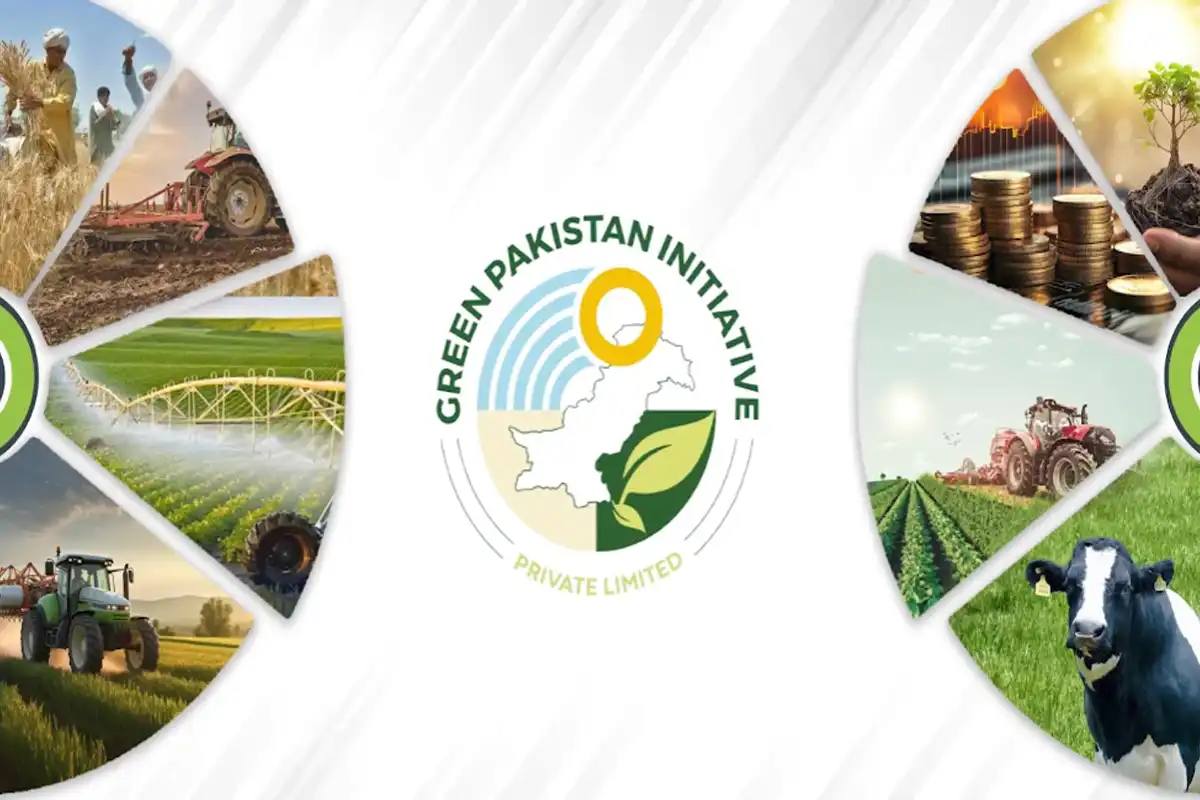
Pakistan’s agricultural sector has long underperformed its potential. With over 60 percent of the rural population dependent on farming and livestock, the sector contributes roughly 23 percent of GDP yet remains trapped in low productivity, outdated breeding practices, and fragmented smallholder structures. The Green Pakistan Initiative represents a deliberate attempt to break that cycle — not through subsidy distribution but through technology transfer, corporate farming models, and genetic science deployed at scale.
What Daisy Private Limited Is Actually Building
At the operational center of this initiative sits Daisy Private Limited, led by Professor Dr. Danish Salaheen. The company is currently developing agricultural and livestock projects across more than 6,500 acres in two primary locations — Rukh Ghulaman in Punjab and Bahawalpur — representing one of the largest coordinated private agricultural development efforts currently underway in Pakistan.
The Bahawalpur project, spanning 4,500 acres, has been completed. At Rukh Ghulaman, the Roha Farm development began in November and has already brought approximately 1,500 acres under cultivation, with an additional 500 acres in active development. Ten central pivot irrigation systems have been installed, with crops already mature on one pivot — a visible, measurable marker of progress on land that was previously unproductive.
Central pivot irrigation is itself significant. The technology enables precise, large-scale water application across circular fields, dramatically reducing water waste compared to traditional flood irrigation — a critical consideration in a country facing chronic water stress and projected supply shortfalls over the coming decades.
The IVF Livestock Revolution: Bringing Genetic Science to Small Farmers
The more transformative element of Daisy’s model may be its livestock component. The company is deploying in-vitro fertilization technology and advanced breed embryos to produce high-yield animals — and critically, making these animals accessible to ordinary farmers at low cost rather than restricting elite genetics to large commercial operations.
This matters because Pakistan’s dairy and meat productivity gap is fundamentally a genetics problem. The average Pakistani dairy cow produces a fraction of what breeds developed in the Netherlands, United States, or Israel produce under comparable management. Closing that gap through conventional breeding takes generations. IVF-based embryo transfer compresses the timeline dramatically, allowing high-genetic-merit females to produce far more offspring than natural reproduction permits.
Dr. Salaheen’s stated goal — accelerating growth in Pakistan’s dairy and meat industry through genetic technology — addresses a sector that currently costs Pakistan billions in import bills for dairy products and animal feed, while millions of smallholder farmers remain trapped in subsistence-level livestock keeping.
The Corporate Farming Model: Risks and Rewards
Pakistan’s agricultural structure has historically been dominated by smallholdings that lack the capital, technology access, and market connectivity to modernize efficiently. Corporate farming models consolidate these advantages but carry legitimate concerns about land rights, tenant farmer displacement, and whether productivity gains reach rural communities or concentrate in urban investor hands.
The Green Pakistan Initiative’s design attempts to address this tension by pairing large-scale demonstration farms — which prove technology viability and generate improved genetics — with outreach to small farmers through subsidized access to IVF-derived animals and technical support. Whether this model delivers on its inclusive promise will depend on implementation details that large infrastructure announcements rarely fully specify.
Comparable models in India’s dairy sector — particularly the cooperative structures pioneered by Amul in Gujarat — suggest that smallholder inclusion is achievable at scale, but requires sustained institutional commitment rather than one-time technology transfer.
The Broader Context: Why This Moment Matters
Pakistan faces a convergence of agricultural pressures that make initiatives like this genuinely urgent rather than aspirational. Climate change is reducing water availability and increasing heat stress on both crops and livestock. Population growth is expanding domestic food demand faster than traditional farming systems can meet. Foreign exchange constraints make food import substitution an economic priority. And rural unemployment is a persistent driver of the urbanization pressure that strains city infrastructure.
A successful large-scale demonstration of precision irrigation, high-yield crop production, and IVF-based livestock improvement on formerly barren land does not solve all of these problems. But it establishes proof of concept at a scale that changes the conversation about what Pakistani agriculture can achieve with modern tools and adequate investment.
Technology Transfer as National Strategy
The Roha Farm pivot crops and the Bahawalpur development are not just agricultural projects. They are arguments — made in soil and irrigation hardware and cattle genetics rather than policy papers — that Pakistan’s agricultural productivity gap is closeable within a realistic timeframe if the right technology reaches the right hands at the right cost.
Whether the Green Pakistan Initiative scales these early results into a national transformation will depend on whether the model attracts the private investment, institutional support, and smallholder trust needed to move from demonstration to mainstream. The foundation is being laid. The harder work comes next.
Disclaimer; This article is based on publicly available statements from Daisy Private Limited leadership and open-source agricultural sector analysis.
Catch all the Pakistan News, Breaking News Event and Trending News Updates on GTV News
Join Our Whatsapp Channel GTV Whatsapp Official Channel to get the Daily News Update & Follow us on Google News.
Must Read
Pakistan
PM Shehbaz Sharif Hails Pakistan-China Ties at Chinese National Day Ceremony
30-September،2026

World
Iraqi Resistance Groups Welcome US Withdrawal, Call for Air Defense Strengthening
30-September،2026