
The West’s Worst Nightmare; China and Russia Are Building a Parallel Science Superpower

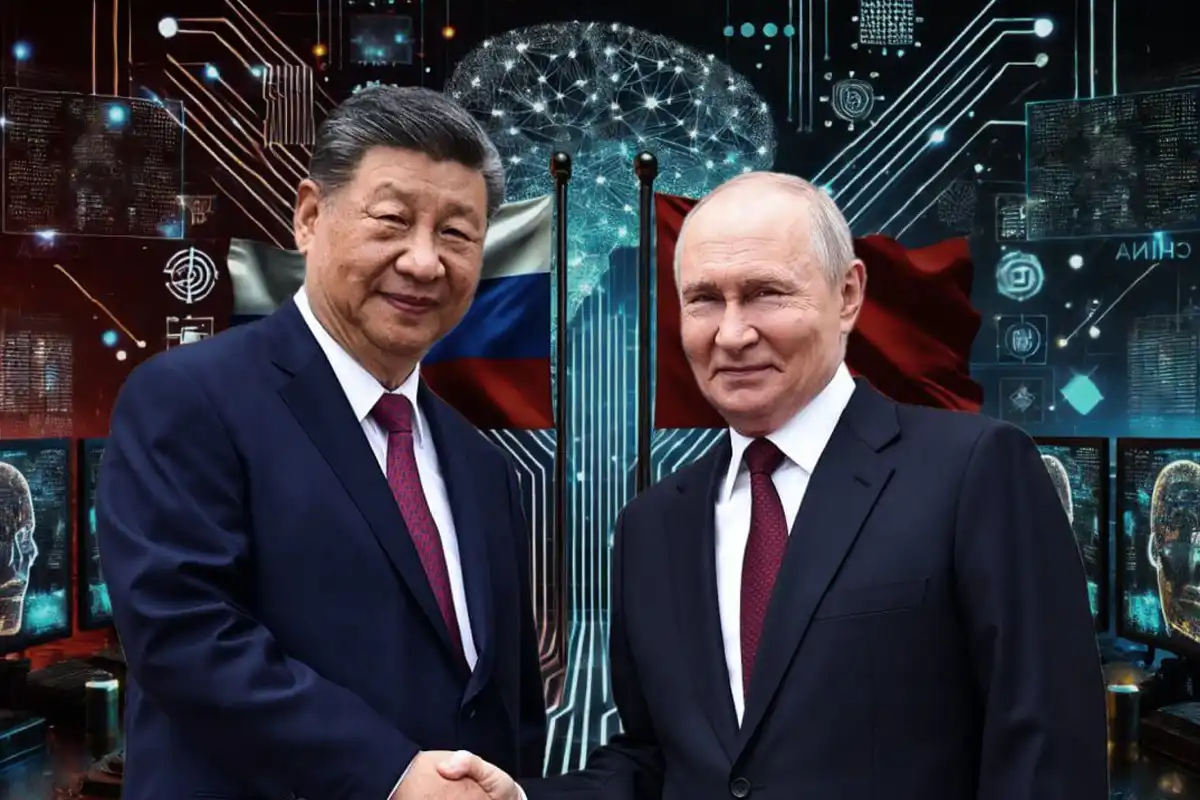
Western sanctions were supposed to isolate Russia and slow China. Instead, they accelerated one of the most consequential scientific alliances in modern history.
At a landmark Beijing summit, China and Russia signed 40 bilateral agreements spanning artificial intelligence, quantum computing, space research, biotechnology, energy, and advanced manufacturing. Analysts are no longer describing this as routine diplomatic cooperation. They are calling it the architecture of an alternative global science order.
Sanctions Backfired — Badly
The strategic logic behind Western technology restrictions was straightforward: limit access, slow progress, create dependency. The outcome has been the opposite. Cut off from Western research networks, capital markets, and semiconductor supply chains, both Moscow and Beijing accelerated efforts to build self-sufficient, interlocked technological ecosystems.
The 40 agreements signed in Beijing are not aspirational documents. They are the formalization of a partnership already producing results — joint laboratories, shared research funding, and a visa-free framework enabling Russian scientists to relocate and collaborate inside China’s rapidly expanding research infrastructure.
What Each Country Brings
Russia’s contribution is underestimated in Western commentary. Beyond its well-documented aerospace and defense science legacy, Russia holds deep reserves of fundamental research talent — mathematicians, physicists, and materials scientists trained in a Soviet academic tradition that emphasized theoretical rigor. Many of these researchers have found Beijing’s well-funded institutions far more welcoming than a sanctions-battered domestic environment.
China brings scale, capital, and applied technology momentum that no country currently matches. Its Jiuzhang 4.0 quantum computer represents a genuine frontier breakthrough — not incremental progress. In biomedicine, biotechnology, and satellite infrastructure, China has moved from fast-follower to genuine competitor within a single decade.
Together, the combination is qualitatively different from either nation working alone.
A Scientific Ecosystem Outside Western Rules
Perhaps the most strategically significant aspect of this alliance is institutional independence. Joint research outputs will not route through Western journals, funding bodies, or peer-review systems that have historically set global scientific norms. China and Russia are building parallel credentialing, publishing, and funding infrastructure — a scientific ecosystem that does not require Western validation to function or scale.
This matters beyond geopolitics. Standards set in quantum computing, AI safety frameworks, and biotechnology regulation will shape global industry for decades.
What the West Is Getting Wrong
Western policymakers continue to frame this as a temporary wartime alignment that will dissolve once Russian sanctions lift. That misreads the structural incentives. Both nations now have institutional, economic, and reputational stakes in the success of this parallel system. Reversal would require dismantling bureaucracies, funding streams, and research pipelines that are already operational.
The Decade Ahead
The Beijing summit does not mark the beginning of this shift — it marks its institutionalization. The era of American and European dominance over global science funding, publication, and standard-setting is entering a genuine challenge for the first time since World War II.
The question is no longer whether a parallel scientific order will emerge. It is how quickly Western institutions will recognize that it already has.
Catch all the Pakistan News, Breaking News Event and Trending News Updates on GTV News
Join Our Whatsapp Channel GTV Whatsapp Official Channel to get the Daily News Update & Follow us on Google News.
Must Read