

India Approves New Hydropower Project on Chenab River Despite Indus Waters Treaty Concerns

Web Desk
28 December, 2025 15:35
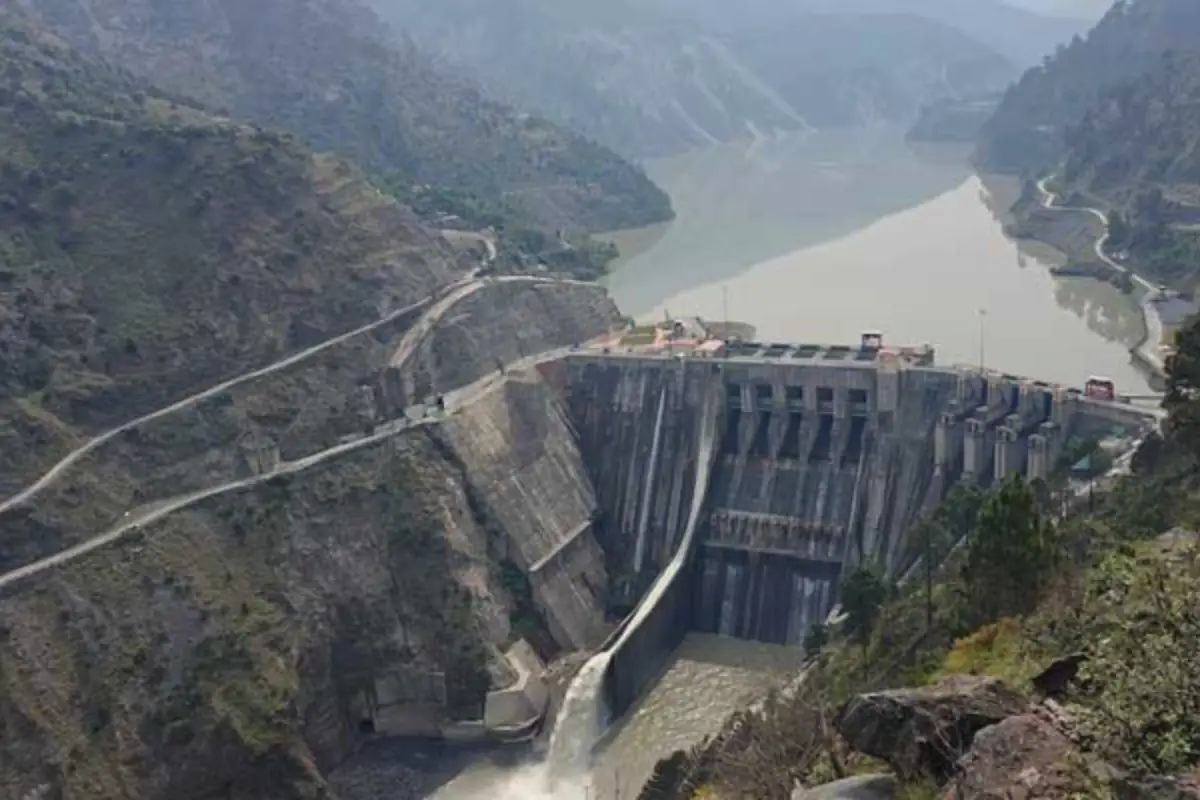
India Approves New Hydropower Project on Chenab River Despite Indus Waters Treaty Concerns
India has approved the Dulhasti Stage-II hydropower project on the Chenab River in Indian Illegally Occupied Jammu and Kashmir (IIOJ&K), a move being described as a clear violation of the Indus Waters Treaty (IWT), reported The News on Sunday.
According to the report, the project carries an estimated cost of ₹3,277.45 crore, with construction expected to begin early next year. The hydropower scheme will be developed by NHPC Limited, a public sector enterprise of India, and is projected to generate up to 260 megawatts of electricity, sources told the publication.
India’s decision comes amid heightened tensions following the Pahalgam incident, after which New Delhi announced that it would keep the Indus Waters Treaty in abeyance. The situation escalated into cross-border clashes between the two nuclear-armed neighbours after India carried out attacks inside Pakistan, prompting Islamabad to respond.
Despite India’s unilateral actions, Pakistan has reiterated its commitment to the treaty, confirming that it will continue to participate in the Neutral Expert proceedings in good faith. Earlier, in August, the Permanent Court of Arbitration ruled that India must “let flow” the waters of the western rivers for Pakistan’s unrestricted use.
Under the 1960 IWT, the waters of the Indus, Jhelum, and Chenab rivers were allocated to Pakistan, while India was granted control over the Ravi, Beas, and Sutlej rivers. However, the Dulhasti Stage-II project has reportedly transgressed the treaty’s provisions governing the western rivers.
Following what Pakistan terms the illegal suspension of the IWT, India has moved to fast-track several disputed hydropower projects in the Indus Basin. These include Sawalkot, Ratle, Bursar, Pakal Dul, Kwar, Kiru, and Kirthai-I and II, with Dulhasti Stage-II viewed as part of this broader strategy.
Security analysts have also raised concerns over the project’s defence and strategic implications for Pakistan, as the Chenab River flows directly into Pakistani territory. The construction of Dulhasti Stage-II is seen as undermining international agreements by disregarding treaty obligations.
The project will utilise the existing infrastructure of the 390 MW Dulhasti Stage-I, a run-of-the-river scheme commissioned in 2007. Stage-II will draw water from the Marusudar River, channelled to the Dulhasti Dam through the Pakal Dul project, aiming to maximise power generation using available water resources.
However, environmental authorities have cautioned that the altered water flow could impact the river’s natural ecology. A 25-kilometre stretch of the Marusudar River downstream of the Pakal Dul project is expected to undergo significant hydrological changes once the project becomes operational.
Background: Indus Waters Treaty
Pakistan and India have long-standing disagreements over the use of waters flowing from India into the Indus River basin in Pakistan. These disputes are governed by the Indus Waters Treaty, mediated by the World Bank and signed in September 1960.
The treaty divides the Indus basin rivers between the two countries and establishes mechanisms for dispute resolution. There is no provision allowing either side to unilaterally suspend or terminate the agreement.
Pakistan, which relies heavily on the river system for irrigation and hydropower, has repeatedly expressed concern that upstream Indian projects could reduce water flows critical to nearly 80 percent of its irrigated agriculture. While India denies these allegations, disagreements over dam construction and water diversion have persisted for decades.
Catch all the World News, Breaking News Event and Trending News Updates on GTV News
Join Our Whatsapp Channel GTV Whatsapp Official Channel to get the Daily News Update & Follow us on Google News.
Must Read