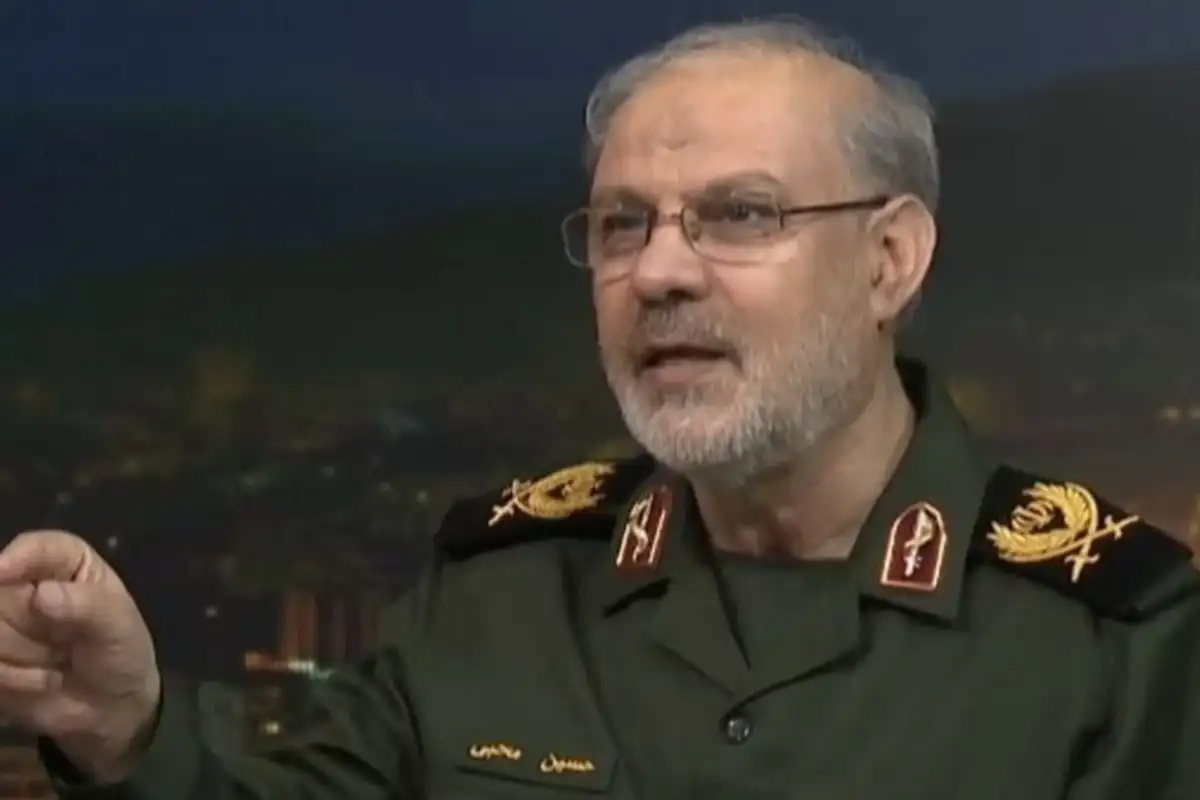
IRGC Calls US Sanctions Push Admission of Military Defeat

Iran Warns UK Against Supporting Possible US Military Action
Iran’s response to Washington’s “Economic D-Day” sanctions rollout arrived in two distinct registers within 24 hours: an IRGC spokesman framing the sanctions as a confession of battlefield failure, and the parliament speaker mocking the whole campaign with a boomerang meme.
Brigadier General Hossein Mohebbi told reporters that Trump’s own description of launching “economic warfare” against Iran amounts to “a tacit admission of the enemy’s humiliating defeat in the military arena” — arguing that a militarily successful United States would have no need to fall back on economic pressure. He called the sanctions themselves nothing new, noting Iran has faced restrictions on its core economic sectors for roughly 47 years, and said Tehran has contingency plans “for any hostile action by the enemy,” including economic measures. “We are developing economic ties right under the United States’ nose, bypassing them, and the results will be seen in the near future,” he said, adding there is “no concern regarding the economic situation.”
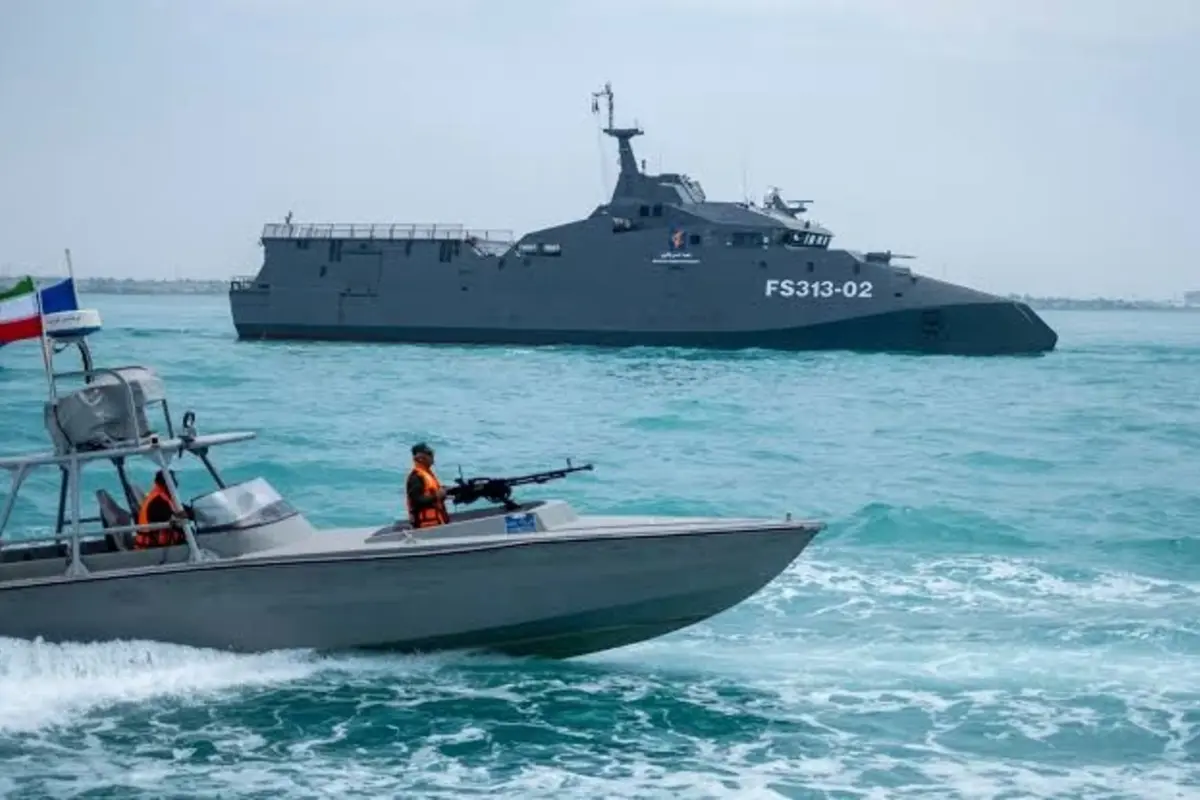
Mohebbi paired that confidence with renewed claims about the war’s military balance — that Iran struck 30 to 40 enemy warships in the Persian Gulf before the 40-day war last year, and that US forces have since “retreated to a distance of 400 kilometers” from Gulf waters. Neither claim carries independent verification, and Mohebbi has a documented pattern of making maximalist, unconfirmed assertions throughout this conflict — he’s previously claimed zero US warships remain anywhere in the Persian Gulf, a claim that directly contradicted Trump’s own “steel wall” description of the same waters weeks earlier. His retreat-distance figure should be read with the same caution applied to his past statements, none of which independent naval tracking has corroborated.
Parliament Speaker Mohammad Bagher Ghalibaf took a different approach the same weekend, posting a meme depicting a figure throwing a boomerang labeled “the most crushing economic operation ever” that loops back to strike the thrower in the face — mocking Bessent’s own D-Day framing as self-defeating rather than engaging its substance directly. Ghalibaf, who also serves as Iran’s chief negotiator, separately said the US has put its regional allies’ security at risk “for the sake of Israel” and argued a “homegrown, independent order” is what will actually deliver regional peace, not American-led security arrangements — a swipe aimed as much at Gulf states hedging their bets as at Washington itself.
The sharper edge came from Mohsen Rezaei, secretary of Iran’s Supreme National Security Council, who repeated his threat that “not a single drop of oil” would leave the Gulf or Strait of Hormuz if neighboring countries join the American sanctions push, explicitly extending the warning to alternative export routes as well. US Vice President JD Vance, for his part, characterized the moment as the war entering a “new phase” defined by economic rather than military pressure — an assessment that, notably, doesn’t contradict Mohebbi’s framing so much as confirm the tactical shift Iran is trying to spin as evidence of failure.
Whether Iranian officials’ confidence about weathering the new sanctions holds up will likely be tested well before their military claims are — Bessent’s measures take effect on a timeline Trump himself set, giving Tehran’s “results will be seen in the near future” pledge one of the shorter windows any Iranian official has offered all year.
Catch all the World News, Breaking News Event and Trending News Updates on GTV News
Join Our Whatsapp Channel GTV Whatsapp Official Channel to get the Daily News Update & Follow us on Google News.
Must Read