
Trump Explodes at CNN Reporter, Orders Mic Cut: ‘You Are the Enemy of the People’

Donald Trump calls on Israel and Iran to immediately stop attacks
The exchange lasted minutes. The implications for press freedom in America will last much longer.
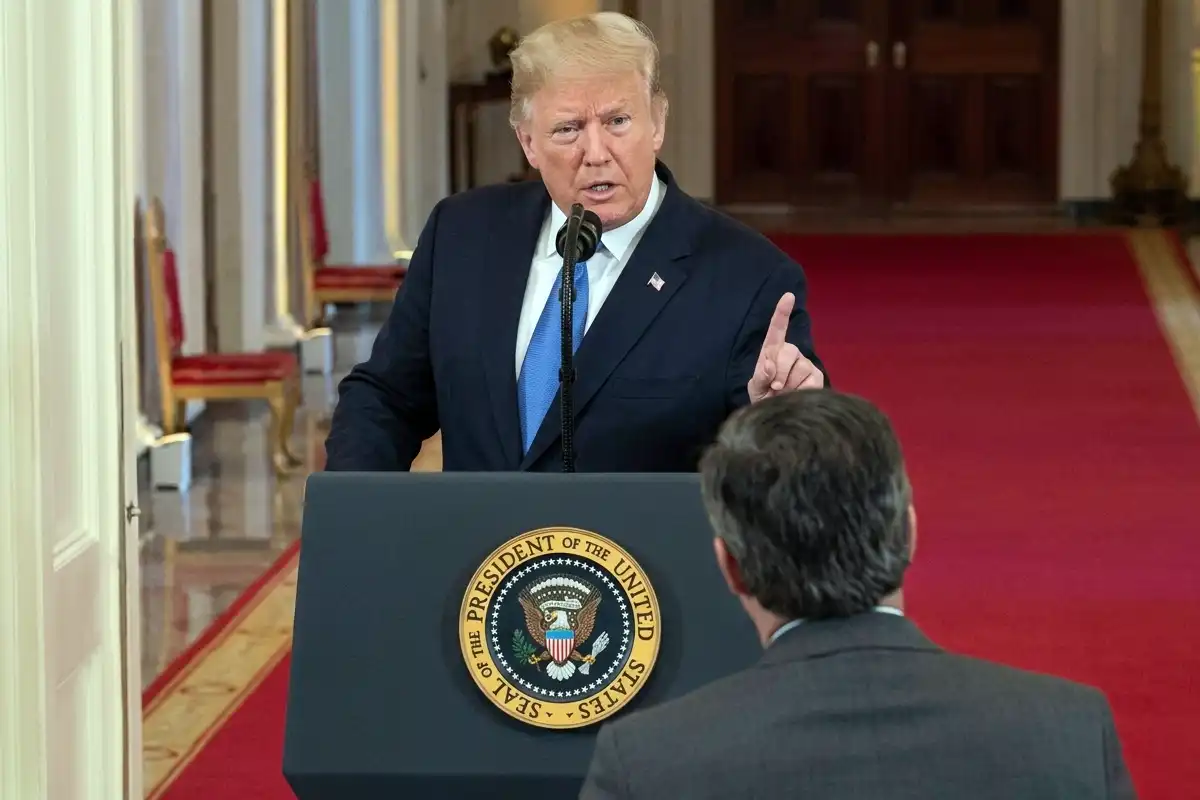
President Donald Trump lost his composure during a press conference after a CNN journalist pressed him with critical policy questions, erupting in a verbal attack, ordering the reporter’s microphone cut, and reviving his most aggressive anti-press rhetoric — calling journalists “enemies of the people” in one of his sharpest public confrontations with the media since returning to the White House.
What Happened
When the CNN correspondent attempted to ask direct, critical questions about Trump administration policies, the President responded not with answers but with anger. He shouted at the journalist, ordered White House staff to immediately cut the microphone, and described the reporter as “an extremely rude and terrible person.”
Trump then turned his fire on CNN as an institution, stating the network should be “ashamed” of its journalist’s conduct — framing aggressive questioning as a character failure rather than professional journalism.
The “Enemy of the People” Revival
The phrase Trump deployed — calling journalists enemies of the people — carries specific and serious historical weight. It is not casual political insult. The expression has roots in authoritarian political traditions and was previously used by Trump during his first term to widespread condemnation from press freedom organizations, foreign governments, and members of his own party.
Its reappearance signals that Trump’s second term posture toward critical media has not moderated. If anything, the willingness to deploy it at a formal press conference — and to physically silence a journalist mid-question — suggests escalation rather than continuity.
A Pattern, Not an Incident
This confrontation does not exist in isolation. Trump’s relationship with mainstream American media has been defined by systematic delegitimization — labeling unfavorable coverage as “fake news,” restricting press access, and treating adversarial questioning as personal attack rather than democratic function.
Ordering a microphone cut is qualitatively different from verbal sparring, however. It is a physical act of silencing — one that press freedom advocates argue crosses from political combat into suppression of the journalistic function itself.
CNN and the Broader Media Environment
Trump’s specific targeting of CNN continues a years-long antagonism with the network. But the broader implication extends beyond one outlet. When a sitting president calls journalists enemies of the public and instructs staff to silence them during official proceedings, it establishes a behavioral norm — one that other governments and political actors around the world observe and, in some cases, emulate.
The Committee to Protect Journalists and Reporters Without Borders have both previously cited Trump’s rhetoric as contributing to a global deterioration in press safety and freedom metrics.
The Democratic Stakes
A free press depends on the physical and institutional ability to ask uncomfortable questions of power. Press conferences exist precisely for that function. When the executive branch determines in real time which questions are permissible and enforces that determination by cutting microphones, the press conference ceases to serve its democratic purpose.
What Trump called rudeness, journalism ethics would call accountability reporting. The distinction between those two definitions is where press freedom is won or lost.
Catch all the World News, Breaking News Event and Trending News Updates on GTV News
Join Our Whatsapp Channel GTV Whatsapp Official Channel to get the Daily News Update & Follow us on Google News.
Must Read