
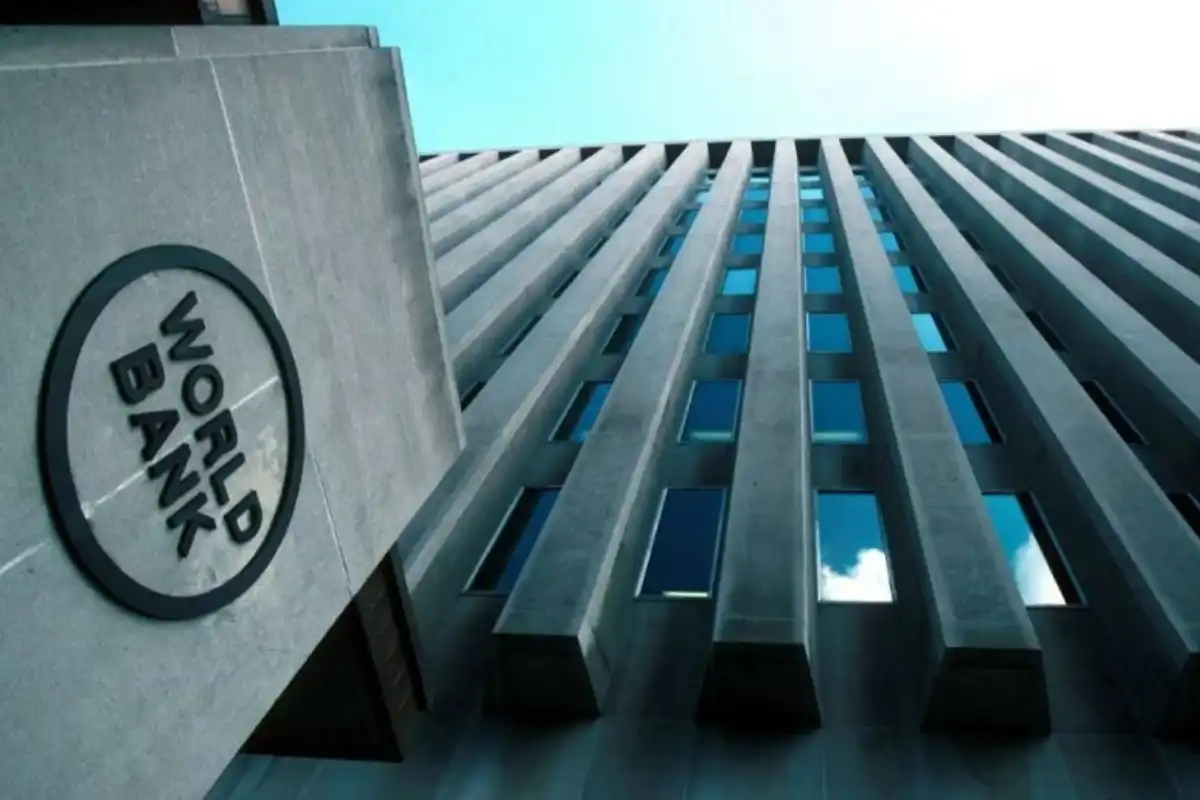
World Bank Calls for Major Overhaul of Pakistan’s NFC Award Formula to Address Structural Fiscal Deficit

World Bank Approves $375.9 Million Power Project for Pakistan
The World Bank recommended comprehensive restructuring of Pakistan’s National Finance Commission Award framework, proposing replacement of the current population-weighted formula with fiscal equalization mechanisms based on expenditure needs and revenue capacity.
The recommendations address fundamental misalignment between federal financing and functional responsibilities that the bank characterizes as material contributor to Pakistan’s persistent fiscal deficit and mounting public debt.
The core problem: devolution without corresponding budget adjustment. The 18th Constitutional Amendment transferred social services and economic functions to provinces while federal government failed to proportionally reduce expenditure responsibilities. This structural mismatch created federal deficit expansion—federal revenues declined by 1.9 percent of GDP while primary deficits increased 1.7 percent, nearly matching the revenue loss. The fiscal gap drives debt accumulation that constrains macroeconomic stability.
World Bank lead economist Tobias Haque highlighted that provincial revenue contributions remain minimal despite constitutional authority. Provinces contribute only 0.7 percent of GDP in own-source taxation against potential capacity of 1.15 percent. Meanwhile, the fragmented General Sales Tax system—split across five competing jurisdictions—imposes high compliance costs while discouraging interprovincial trade and constraining aggregate revenue performance. This fragmentation creates perverse incentives where provinces compete rather than cooperate on tax collection.
The current horizontal distribution formula fails to achieve genuine fiscal equalization. The system provides predictability protecting provincial revenue shares but creates disincentives for revenue effort and service delivery performance. Provinces face no meaningful rewards for closing taxation gaps or improving service delivery. Simultaneously, the automatic provincial transfer mechanism discourages federal revenue effort—the federal government loses incentive to expand its tax base when collected revenue automatically flows to provinces.
The World Bank’s proposed “fiscal gap approach” would allocate resources based on standardized assessments of expenditure needs versus own-source revenue capacity. This transparent methodology would eliminate penalties on fiscally efficient provinces while rewarding revenue effort. Several developed and developing economies—Australia, Canada, China, Nigeria, and South Africa—employ variations of this model successfully.
The recommendations extend to specific underutilized tax bases. Agricultural income tax remains largely uncollected despite agriculture constituting over 20 percent of GDP. Urban immovable property tax generates only 0.13 percent of GDP, substantially below comparable country norms of 0.3 to 0.6 percent. Property tax harmonization through common valuation systems could unlock substantial revenue without rate increases.
Provincial spending patterns reveal implementation gaps in devolution theory. While provinces increased basic service expenditure post-2010, administrative costs captured the largest spending increases. Approximately 80 percent of consolidated provincial expenditure remains absorbed by recurrent costs rather than capital investment in education or health. District allocations continue following historical precedent rather than poverty levels or service delivery gaps—geographic inequity contradicting devolution’s stated objective of matching spending to need.
Local government institutions face particular neglect. Despite constitutional recognition under Article 140A, local governments remain fiscally dependent and institutionally unstable. Provincial Finance Commission awards occur infrequently and non-binding status eliminates enforcement mechanisms. Local governments’ share of total government spending collapsed from 10 percent in 2005 to 4.7 percent in 2024—a decade-long institutional deterioration.
World Bank Country Director Bolormaa Amgaabazar noted disappointment that fiscal federalism had not delivered grassroots benefits despite constitutional reforms. The report provides options for policymakers, though implementation requires legislative changes addressing GST unification, property tax harmonization, and agricultural income tax implementation.
The bank’s conditional transfer recommendations would link resources to measurable service delivery outcomes verified by independent parties. This approach incentivizes performance while preserving provincial autonomy. Environmental goods, governance, climate adaptation, and disaster readiness could similarly align with conditional transfers.
Short-term improvements include increasing weight assigned to poverty and backwardness indicators, rewarding provinces for closing revenue collection gaps, and tying divisible pool shares to investments in critical services and local government devolution.
The recommendations ultimately require acknowledging that constitutional devolution without parallel budget restructuring cannot succeed. Pakistan’s fiscal sustainability depends on aligning revenue capacity with expenditure responsibility—the core issue the World Bank has identified as driving debt accumulation and macroeconomic instability.
Catch all the Pakistan News, Breaking News Event and Trending News Updates on GTV News
Join Our Whatsapp Channel GTV Whatsapp Official Channel to get the Daily News Update & Follow us on Google News.
Must Read