Generation Z, Political Narratives and RSS of Pakistan

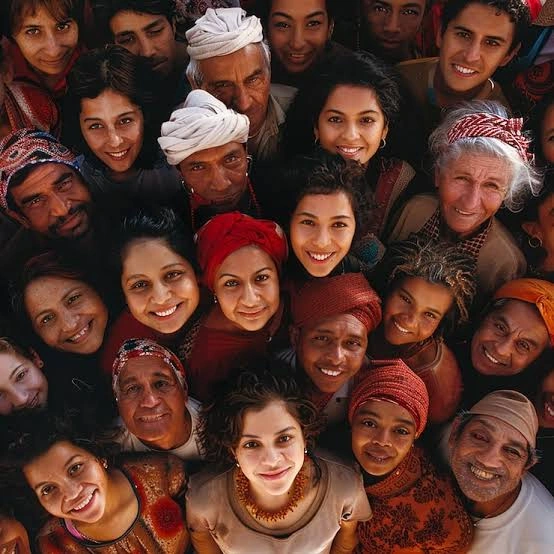
Generation Z is not simply another age group it is a generation formed by a fundamentally different technological, economic and social environment. Across the world, Gen Z has grown up with smartphones, social media, economic uncertainty, climate anxiety, political conflict and the disruptions of the COVID-19 pandemic. Research describes this generation as digitally native, pragmatic, financially conscious and increasingly interested in social and political questions. At the same time, studies caution against treating Gen Z as a homogeneous group. Their attitudes differ according to class, education, geography, family background and political environment. The researches supplied for this discussion similarly shows that young people frequently think about economics, social cohesion, technology and collective action when imagining their future.
The Pakistani experience of Gen Z has developed within an especially intense political-media environment. Social media transformed political communication by allowing parties to bypass traditional gatekeepers and communicate directly with millions of young citizens. Research on Pakistani youth found that frequent Facebook use was associated with greater political participation, demonstrating that digital platforms can turn political awareness into political engagement. This development was particularly significant for some political parties in Pakistan, which built an extensive digital communication strategy around a given narrative and successfully mobilized young and educated audiences. But the question remains the same on the recent past of such developments that after tenure the same social media force is used to hate the country as well, which was telling you a month ago that all is well.
Philosophically, however, political mobilization becomes problematic when political identity begins to replace independent judgment. Democracy is not merely the capacity to repeat the language of a political leader; it is the ability to examine competing claims, tolerate disagreement and distinguish evidence from propaganda. The danger of a permanently connected generation is therefore not technology itself but the possibility of political narratives becoming closed information systems. A young person may encounter thousands of political messages every day while hearing very little from people who disagree with them. Pakistani research has found relationships among mobile-media exposure, selective exposure and political polarization, illustrating how digital communication can simultaneously expand political participation and intensify divisions.
This is where the political legacy of some political parties more of PTI deserves serious examination rather than either unconditional praise or unconditional condemnation. Academic research has described PTI’s communication strategy as highly effective in creating political belonging among young voters, while other scholarship has argued that confrontational rhetoric contributed to an “us versus them” style of political polarization. These findings do not prove that every PTI supporter became intolerant, but PTI had alone created polarization in Pakistan on a larger scale. Pakistan’s political polarization predates PTI and involves multiple political parties, institutions, media organizations and social forces. But the million dollar question is why gen-z is not concerned to learn from the past specially from PTI who had no training, less political dignity and hate mongering to call everybody else corrupt and against Pakistan while right after the dismantling of PTI the story reversed.
The deeper philosophical question is what happens when political success becomes associated with personal loyalty rather than institutional principles. A healthy democratic culture teaches young citizens to ask What is the evidence? What does the Constitution say? What are the alternatives? What are the consequences of a policy? Can I criticize my own political leader? Can I recognize something valuable in an opponent’s argument? If political education instead becomes a contest between “our people” and “their people,” the citizen gradually becomes a political consumer. The individual stops evaluating ideas independently and begins defending an identity. Such a transformation can occur under any party, but social media makes it considerably easier because algorithms reward emotionally powerful content, repetition and conflict.
The question of money is similarly more complicated than simply saying that Gen Z has become “lustful for money.” International research suggests that Gen Z is actually strongly shaped by economic insecurity and therefore places considerable importance on financial stability, practical education, career flexibility and security. The supplied research notes that economic concerns are central to Gen Z’s understanding of both a successful and unsuccessful future. Another source describes Gen Z as financially pragmatic because many witnessed economic difficulties affecting their families. The philosophical problem, therefore, is not the desire for wealth itself. The problem arises when material success becomes the sole measure of human worth and public life is reduced to personal gain, status and consumption.
This distinction is particularly important in Pakistan, where young people face unemployment, inflation, educational inequality and limited economic opportunities. Political rhetoric promising prosperity, accountability or a transformed economic future can therefore possess enormous emotional power. Research on PTI’s youth voters after the 2018 election found that its supporters evaluated several policies differently, while monetary and exchange-rate policy was never seen by the followers before taking decision to vote. This illustrates an important point that young voters are not simply passive recipients of political narratives. They can support a political movement because they genuinely believe it represents change while simultaneously accepting all statements as true and defending it by all means .
DNA adds another dimension to understanding Gen Z, but it must be handled scientifically. There is no credible basis for claiming that social media or a political ideology has changed the DNA of Pakistan’s Gen Z. DNA determines biological inheritance; political attitudes are shaped primarily through socialization, education, family, economic circumstances, media exposure, institutions and personal experience. Even the broader concept of Gen Z is principally a social and historical category rather than a biological race. Research on Gen Z around the world instead emphasizes demographic diversity, technology, economic circumstances and formative experiences. For example, the supplied research describes Gen Z as substantially more racially and ethnically diverse than older American generations. Thus, the meaningful “DNA” of a generation is metaphorical the cultural DNA of its ideas, memories and habits not its biological DNA.
Socially, Pakistani Gen Z therefore stands at a crossroads. It possesses extraordinary access to information, unprecedented communication capabilities and a greater ability to organize outside traditional institutions. Pakistani research shows that social media can increase youth political participation, while other studies emphasize its potential to produce intolerance, isolation and harmful political behavior. International research likewise finds that Gen Z can be deeply concerned about social cohesion, economic security, technology and the future. In one recent study, Gen Z participants frequently identified individual and collective action as mechanisms through which the future could be changed, while government and law were also prominent. This suggests that the generation should not be understood as politically lost; rather, it is searching for a political philosophy capable of matching the complexity of its world.
Ultimately, the challenge facing Pakistan is larger than political parties. The real question is whether the country can educate a generation of citizens who are capable of thinking beyond political personalities. PTI’s digital revolution demonstrated how effectively technology can mobilize young Pakistanis, but the same digital infrastructure is now used against education, entrepreneurship, civic participation, journalism, scientific learning and constructive political debate. Gen Z should neither be romanticized as the savior of Pakistan nor condemned as a damaged generation. Its future will depend on whether political education teaches loyalty to personalities or commitment to principles, whether social media becomes a substitute for critical thinking or a tool for expanding it, and whether economic ambition remains connected to social responsibility. The philosophical task is therefore not to defeat one generation or one race, but to cultivate citizens who can question every political narrative including the narratives they already believe.
Some International speakers of International politics are of a view that emergence of PTI through more of Gen-Z population was a failed and brutal effort to weaken the institutional system of Pakistan where followers were less in number and more leader centric mind sets coming around with different background and aims. While some say they were a group to enjoy power corridors admiring the elite life style. History will question the deterioration caused by PTI leadership. The anti-Pakistan narrative has never been able to bring positive results real political skills possess debate, argument and true representation of all masses not some fragments of the society.
Catch all the Blogs News, Breaking News Event and Trending News Updates on GTV News
Join Our Whatsapp Channel GTV Whatsapp Official Channel to get the Daily News Update & Follow us on Google News.
Must Read

Entertainment
Prince William Visits Princetown as Prince Harry Celebrates 42nd Birthday
16-September،2026
World
IRGC Vows Retribution for Assassination of Sunni Cleric in Sistan and Baluchestan
16-September،2026