When Thrones Tremble: The French Revolution and the Power of Ideas

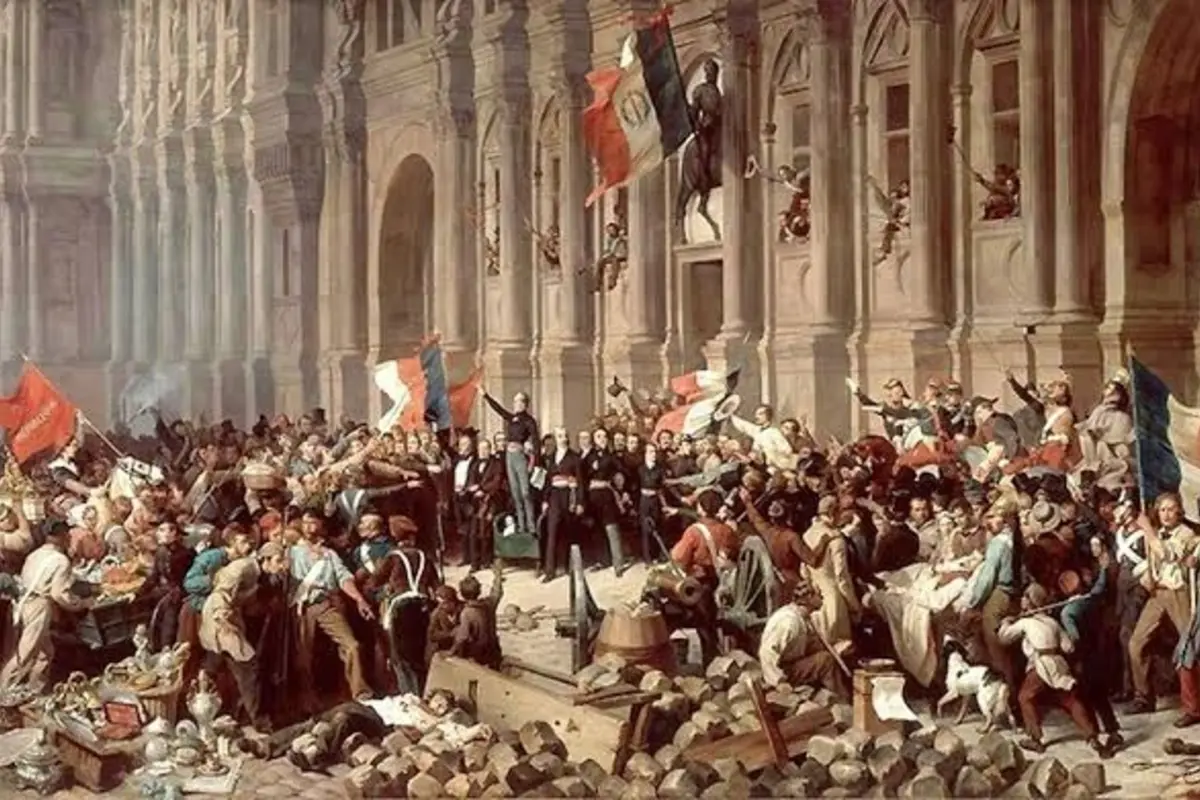
“Men are born and remain free and equal in rights.”
Declaration of the Rights of Man and of the Citizen, 1789
The French Revolution of 1789 was one of the most consequential political and social upheavals in modern history. It dismantled institutions that had governed France for centuries and transformed the meaning of citizenship, sovereignty, rights and political authority. Yet the Revolution did not emerge from a single cause or from one social group acting according to a simple plan. Historians have offered competing explanations, ranging from class conflict and economic inequality to political failure, cultural transformation and the spread of Enlightenment ideas. More recent interpretations emphasize that these forces interacted with one another: economic hardship created grievances, political institutions prevented effective reform, and new ideas provided people with a language through which those grievances could be expressed.
On the eve of the Revolution, France was simultaneously one of Europe’s greatest powers and a state suffering from profound structural weaknesses. It had a population of almost 28 million, a large army and navy, a substantial colonial empire and considerable influence in European culture. French literature, philosophy, fashion and language enjoyed enormous prestige, while France’s economy benefited from commercial agriculture, banking, manufacturing and colonial trade. Yet this apparent strength concealed a fragile fiscal system. The nobility enjoyed important tax exemptions, the Church possessed substantial land while operating under a distinctive taxation arrangement, and the burden of taxation fell disproportionately upon ordinary people.
Financial crisis was one of the Revolution’s most immediate structural causes. France had spent heavily on wars, including the Seven Years’ War and its intervention on the side of the American revolutionaries against Britain. Loans became an increasingly important means of financing the state, and by 1789 French debt had reached between 8 and 12 billion livres according to the study material. Debt servicing consumed an increasing proportion of government revenue, while attempts to reform taxation repeatedly encountered resistance from privileged interests and institutions such as the parlements. Thus, the monarchy faced a fundamental contradiction: France possessed considerable wealth, but the state lacked an effective and politically sustainable system for collecting revenue.
The economic crisis became a social crisis because ordinary people experienced it directly. A significant portion of peasant income could be absorbed by taxes, Church tithes and seigneurial dues. Population growth and the division of land through inheritance placed additional pressure on agricultural resources. Around half of the peasantry either lacked land or cultivated only small plots, leaving many families highly vulnerable to poor harvests. When agricultural production stagnated and food prices rose, purchasing power declined and poverty intensified. The crisis also affected urban workers: falling demand for manufactured goods contributed to unemployment in industries such as textiles. Consequently, abstract problems of state finance became tangible problems of bread, wages, employment and survival.
Economic hardship alone does not explain why France experienced a revolution rather than merely an economic downturn. A crucial problem was the inability of the political system to reform itself. Successive attempts to change taxation and administration encountered resistance from privileged groups and institutions. France also possessed a complicated administrative structure, with different provinces, legal systems, privileges and regional arrangements. This complexity made coherent reform difficult. The monarchy therefore faced a dangerous situation: it needed fundamental changes to restore its finances, but the institutions and privileged interests capable of blocking those changes were deeply embedded within the existing system. The failure to reform gradually transformed a financial crisis into a crisis of political legitimacy.
The Revolution was also intellectual. Enlightenment thinkers such as Montesquieu, Voltaire, Diderot and Rousseau questioned traditional assumptions about authority, law, religion and society. Ideas concerning liberty, political representation, equality before the law and popular sovereignty increasingly entered public discussion. The American Revolution reinforced this intellectual transformation. French participants and observers encountered the contradiction of France’s absolute monarchy supporting an American political experiment built around representation and the famous principle of “no taxation without representation.” The American Declaration of Independence subsequently provided an important reference point for French reformers and contributed to the intellectual environment from which the Declaration of the Rights of Man and of the Citizen emerged.
Ideas became politically powerful because France developed new spaces through which they could circulate. Newspapers, pamphlets, books, salons, societies, Masonic lodges and coffeehouses created an expanding public sphere in which political questions could be discussed. Paris alone had around 1,600 cafés by 1789, many of which provided access to newspapers and periodicals. Increasing literacy and the expansion of publishing allowed arguments about government and society to reach audiences beyond traditional political institutions. This transformation is philosophically significant: political power was no longer confined entirely to the palace, court or formal institutions. Public opinion itself was becoming a political force.
The immediate political crisis began when Louis XVI summoned the Estates-General in 1789 to address the kingdom’s financial problems. The Third Estate, representing the overwhelming majority of the population, demanded greater political representation. When disputes over voting and political authority intensified, its deputies declared themselves the National Assembly and took the Tennis Court Oath, promising to continue until France had a constitution. The storming of the Bastille on July 14 became the iconic symbol of the Revolution, while rural unrest known as the Great Fear contributed to the abolition of feudal privileges. The Declaration of the Rights of Man and of the Citizen subsequently articulated principles of liberty, equality before the law and popular sovereignty.
Individuals mattered, although no single personality created the Revolution. Louis XVI became associated with a monarchy unable to resolve its financial and political crisis; Marie Antoinette became a powerful symbol of royal privilege, whether or not the popular image accurately reflected the complexities of court politics. Figures such as the Marquis de Lafayette represented connections between the American and French revolutionary experiences. Maximilien Robespierre, Georges Danton and Jean-Paul Marat became prominent during the increasingly radical phase of the Revolution, while Rousseau and other Enlightenment thinkers had helped provide the intellectual vocabulary of political transformation. Their roles demonstrate an important historical principle: individuals can accelerate, redirect or embody broader forces, but they generally operate within circumstances created by institutions, economic conditions and public expectations.
The Revolution did not move in a straight line toward liberal democracy. War with European powers, internal rebellion and political polarization pushed the Revolution toward increasingly radical measures. The monarchy was abolished in 1792, and Louis XVI was executed in January 1793. The subsequent Reign of Terror demonstrated the darker possibilities of revolutionary politics, as the pursuit of political enemies and perceived counter-revolutionaries produced widespread executions and repression. Eventually, revolutionary instability contributed to the rise of Napoleon Bonaparte. His ascent demonstrated another paradox of political transformation: a revolution undertaken partly in the name of popular sovereignty ultimately produced a powerful centralized ruler.
The Revolution nevertheless permanently altered France’s political and social structure. Feudal privileges were abolished, the principle of equality before the law gained institutional importance, and traditional forms of inherited privilege were challenged. The redistribution of Church property also transformed patterns of land ownership: according to the economic research provided, more than 700,000 ecclesiastical properties around 6.5 percent of French territory were sold during the revolutionary period. The economic consequences remain debated. Some scholars emphasize the dismantling of feudal restrictions, legal simplification and new property arrangements as foundations for modernization, while others argue that France remained predominantly agricultural for much of the nineteenth century and that the Revolution had more complicated economic effects.
The deepest lesson of the French Revolution is that political systems become vulnerable when economic inequality, institutional rigidity, political exclusion and loss of public confidence reinforce one another. It also demonstrates that ideas matter: societies change not only because people suffer material hardship, but because they begin to imagine alternative forms of political and social organization. At the same time, the Revolution warns that the destruction of an old order does not automatically produce a stable or just new one. Reform requires institutions capable of translating popular demands into durable arrangements. The French experience therefore remains relevant today not as a simple model to imitate, but as a historical case showing how economic pressures, social structures, political institutions, public opinion and philosophical ideas can converge to transform a nation. Its enduring question is not merely how revolutions begin, but how societies can achieve meaningful change without replacing one form of instability with another.
Catch all the Blogs News, Breaking News Event and Trending News Updates on GTV News
Join Our Whatsapp Channel GTV Whatsapp Official Channel to get the Daily News Update & Follow us on Google News.
Must Read


World
Iraqi Resistance Groups Welcome US Withdrawal, Call for Air Defense Strengthening
30-September،2026