
Vladimir Lenin and the Architecture of Revolution

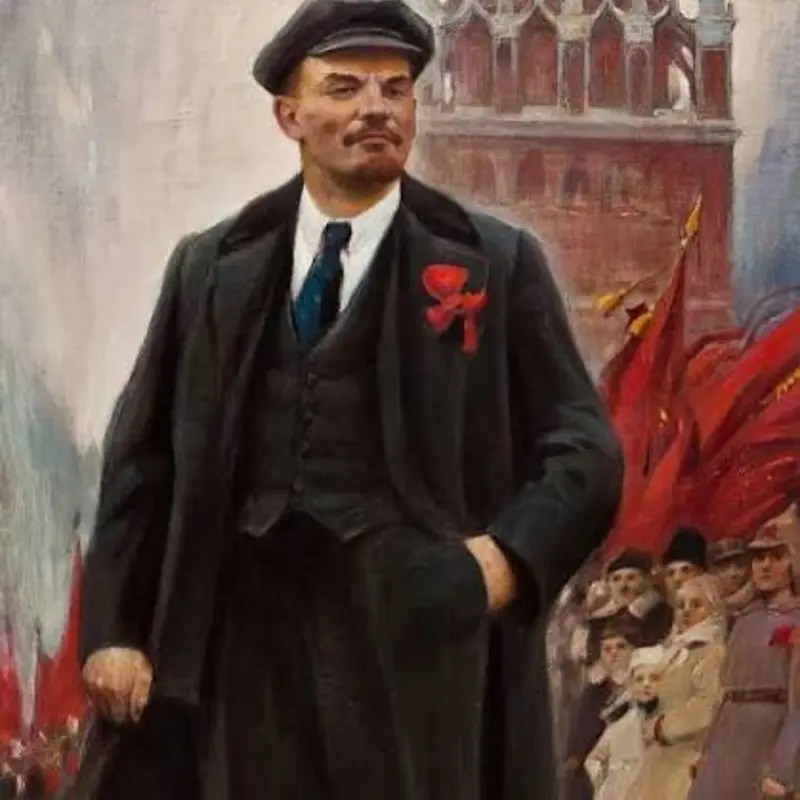
Vladimir Ilyich Lenin remains one of the most consequential and contested political thinkers of the twentieth century. His importance lies not simply in the fact that he led the Bolsheviks to power in 1917, but in the intellectual architecture he constructed around the relationship between class, political organization, revolution, economics and the state. Lenin inherited Marxism but transformed it into a practical theory of political action suited to the conditions of autocratic Russia. His central question was not merely how capitalism functioned, but how a revolutionary movement could transform an existing society and acquire the organized power necessary to build an alternative political order.
Lenin’s political thought emerged from the contradictions of late imperial Russia: autocratic government, a predominantly peasant population, uneven industrialization, a growing urban working class and severe social inequality. The execution of his brother Alexander after his involvement in a plot against Tsar Alexander III had a profound influence on Lenin’s political development, although Lenin ultimately moved away from individual terrorism toward organized mass politics. His encounter with Marxist literature led him to regard social transformation not as the product of isolated heroic acts but as the consequence of historical forces, class organization and political struggle. In this sense, Lenin’s revolution was conceived as an organized historical process rather than an explosion of spontaneous anger.
One of Lenin’s most important contributions was his theory of the revolutionary party. In What Is to Be Done?, he argued that workers’ economic struggles alone could not automatically produce a comprehensive revolutionary consciousness. A disciplined political organization was therefore necessary to connect immediate struggles with broader political objectives. His conception of the party as a highly organized vanguard became one of the defining features of Leninism. Supporters regarded this organization as a mechanism for transforming fragmented social discontent into collective political power; critics argued that concentrating revolutionary authority in a disciplined minority created conditions for political centralization and weakened pluralism. This tension between mass participation and concentrated leadership remained embedded in Lenin’s political project.
The 1903 split between the Bolsheviks and Mensheviks gave this organizational question a concrete political form. Initially, the dispute concerned party membership and organization more than a fully developed ideological divide, but the factions subsequently developed increasingly different strategic perspectives. Lenin believed that Russia’s liberal bourgeoisie was too closely connected with existing property relations and political interests to be relied upon as the decisive force of revolutionary transformation. He therefore emphasized an alliance between workers and peasants. The 1905 Revolution strengthened his belief that Soviets workers’ and other popular councils could become instruments of revolutionary political authority. The experience also demonstrated to Lenin that political power depended not merely on ideas but on institutions capable of organizing collective action.
Lenin’s understanding of revolution was therefore inseparable from his theory of the state. In State and Revolution, written in 1917, he argued from a Marxist perspective that the state was not a politically neutral institution standing above social classes. Rather, he viewed it as connected to the organization of class power. His conception of the “dictatorship of the proletariat” referred, in his theoretical framework, to a transitional political order in which the working class would exercise state power during the transformation away from capitalism. Lenin associated this process with a broader objective: the eventual disappearance of class divisions and, consequently, the coercive political state itself. Historically, however, the Soviet state that emerged after 1917 retained coercive institutions and developed increasingly centralized structures, creating a major gap between the theoretical destination described in Leninist thought and the political realities of Soviet rule.
The First World War radically intensified Lenin’s international outlook. He rejected the support given by many European socialist parties to their respective governments during the war, interpreting the conflict through the framework of imperialism and competition among capitalist powers. His analysis in Imperialism, the Highest Stage of Capitalism connected finance, monopolies, colonial expansion and international rivalry. For Lenin, capitalism had developed beyond purely national competition into a global system in which powerful states and economic interests competed for markets, resources and strategic influence. His opposition to the war consequently became part of a wider international revolutionary strategy. The Zimmerwald movement and later the Communist International reflected his belief that the Russian Revolution could not be understood independently from the global struggle against capitalism and imperialism.
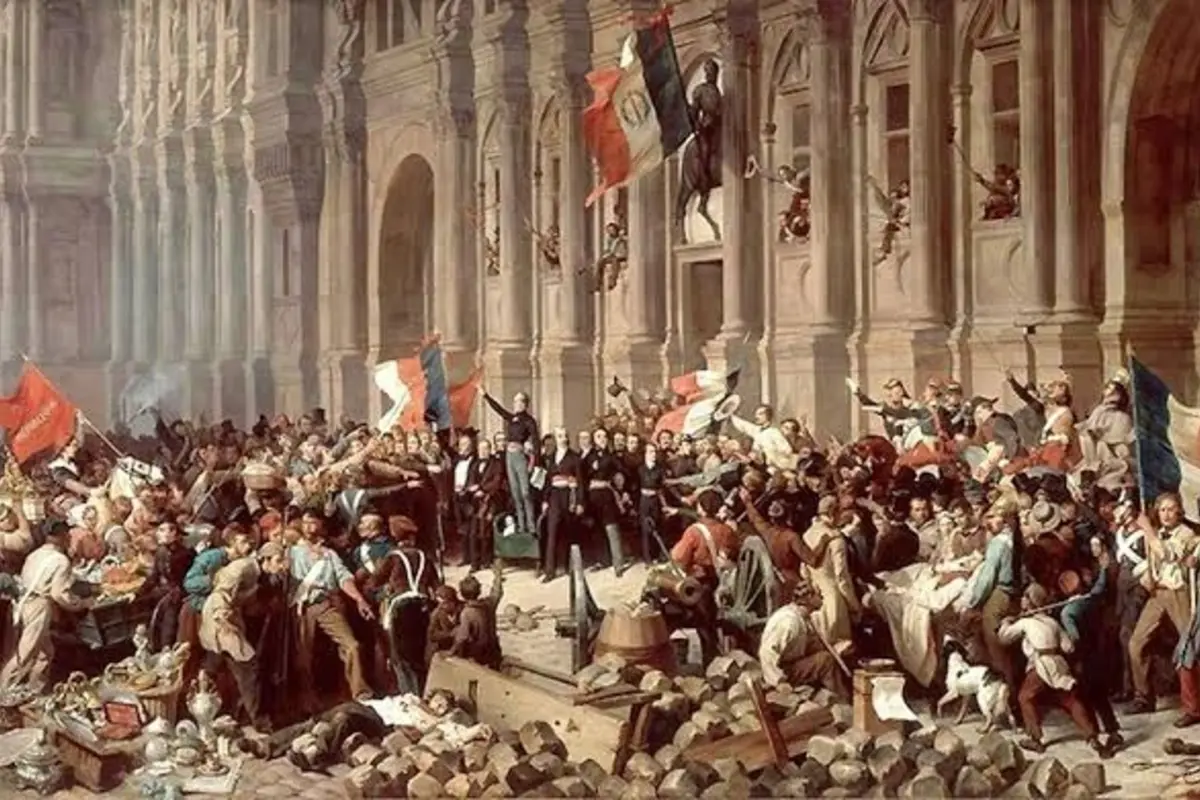
The revolutions of 1917 transformed Lenin from an underground revolutionary theorist into the central political figure of a new government. His April Theses rejected the idea that the February Revolution had completed Russia’s political transformation. Instead, Lenin argued for “All Power to the Soviets” and insisted that the Bolsheviks should prepare for a further transfer of political authority. His political method combined ideological conviction with tactical flexibility: he adapted slogans and strategies to rapidly changing circumstances while maintaining his broader objective of revolutionary transformation. The Bolshevik seizure of power in October was therefore not simply a spontaneous uprising but the culmination of years of organizational development, political argument, social crisis and wartime collapse.
The Bolshevik government immediately faced the problem that revolutionary theory had to become governmental practice. Decrees on peace and land addressed two of the most immediate demands of a war-weary and predominantly agrarian society. The government withdrew Russia from the First World War through the Treaty of Brest-Litovsk, accepting severe territorial and political costs in order to preserve the revolutionary government. Lenin defended the decision as a necessary retreat in the face of military and economic realities. His approach demonstrated an important characteristic of his political thought: revolutionary objectives did not eliminate tactical compromise. For Lenin, political power had to survive before it could transform society.
The creation of the Soviet state also revealed the difficult relationship between revolution and democracy. The Bolsheviks claimed to represent the political interests of workers and peasants through the Soviet system, but their government increasingly restricted competing political organizations and institutions. The Constituent Assembly, elected in late 1917, was dissolved after it failed to produce a political arrangement acceptable to the Bolshevik government. During the Civil War, political repression intensified, while the Red Terror and the activities of the Cheka became central elements of the emerging political order. These developments remain among the most important subjects of historical debate over Lenin: some historians emphasize the extraordinary violence and institutional collapse of the Civil War period, while others place Bolshevik repression within the broader context of armed counter-revolution, foreign intervention and state breakdown. The historical record nevertheless demonstrates that coercion became an important instrument of the new state.
Economically, Lenin’s experience demonstrated the difficulty of translating revolutionary doctrine into a functioning economy. War Communism involved extensive state control, requisitioning and restrictions on private economic activity. The policy contributed to severe economic disruption and intensified tensions between the government and the peasantry. By 1921, Lenin recognized the need for a major adjustment and introduced the New Economic Policy, or NEP. Under the NEP, limited private trade and market mechanisms were restored while the state retained control over key sectors. Philosophically, this was significant because Lenin demonstrated that revolutionary politics could coexist with temporary economic retreat. The NEP represented an attempt to preserve political power while rebuilding an economy devastated by war, revolution and civil conflict.
Lenin’s social vision was equally ambitious. He regarded education, literacy, industrial development and technological modernization as essential to transforming the social foundations of Russia. His famous association of socialism with Soviet political power and electrification captured his conviction that political revolution without economic and technological development would remain incomplete. Education was not merely an individual benefit in Lenin’s conception; it was a mechanism through which a largely illiterate population could acquire the technical and political capacities necessary for a modern society. This approach gave the Soviet project a powerful developmental dimension, although the politicization of education and culture also became an enduring feature of the Soviet system.
The national question presented another profound challenge. The Russian Empire had incorporated numerous peoples with different languages, religions and historical identities. Lenin formally defended national self-determination and criticized Great Russian chauvinism, while simultaneously seeking to maintain a viable revolutionary federation. The creation of the Union of Soviet Socialist Republics in 1922 attempted to institutionalize this balance between multinational unity and republican forms of national autonomy. Yet the history of Soviet nationalities policy remained complex: constitutional declarations of equality coexisted with substantial centralization, political coercion and later campaigns of forced population transfer and repression under Stalin. Lenin’s writings on nationality therefore reveal both an attempt to solve the imperial legacy of Russia and the unresolved tensions inherent in constructing a centralized multinational revolutionary state.
Lenin’s legacy cannot be separated from the distinction between Leninism and the later development of Stalinism. Lenin died in January 1924 before the Soviet political system reached the form it would acquire under Joseph Stalin. The subsequent Soviet state introduced policies and levels of repression that cannot simply be attributed retrospectively to Lenin without historical qualification. At the same time, institutions created during Lenin’s leadership including one-party political dominance, restrictions on opposition, the security apparatus and the concentration of political authority formed part of the institutional inheritance from which the later Soviet system developed. Historians therefore continue to debate the degree of continuity and discontinuity between Lenin’s political project and Stalin’s dictatorship rather than treating the two as either completely identical or completely unrelated.
Philosophically, Lenin’s greatest significance may lie in his attempt to reconcile historical theory with political action. Marx had provided a critique of capitalism and a theory of class struggle; Lenin asked what kind of organization could convert such a theory into political power under concrete historical conditions. His answer was a disciplined revolutionary party capable of interpreting circumstances, organizing social forces and acting decisively when a political crisis opened a path to power. This produced a distinctive philosophy of praxis: ideas were meaningful insofar as they could guide organized action, while political action continually tested and modified strategic assumptions. Lenin consequently treated politics not as the passive implementation of doctrine but as a continuous interaction between theory, organization and historical circumstance.
More than a century after 1917, Lenin remains simultaneously a revolutionary symbol, a subject of historical scholarship and a figure of profound controversy. His political thought changed the vocabulary of the modern left through concepts such as imperialism, vanguard organization, revolutionary party, Soviet power and the dictatorship of the proletariat. His political career also demonstrated the enormous human and institutional costs that accompanied revolutionary state-building in conditions of war and collapse. His legacy therefore cannot be reduced either to heroic mythology or to denunciation. Lenin’s historical importance lies precisely in the unresolved contradiction at the center of his project: he sought to liberate society from entrenched structures of class domination while constructing an exceptionally centralized political organization to accomplish that transformation. The history of Lenin is consequently also a deeper question about politics itself whether a movement seeking to abolish concentrated power can acquire extraordinary power without reproducing new forms of concentration, and whether the architecture built to make revolution possible can ultimately become the architecture that determines the limits of the society created in its name.
Catch all the Blogs News, Breaking News Event and Trending News Updates on GTV News
Join Our Whatsapp Channel GTV Whatsapp Official Channel to get the Daily News Update & Follow us on Google News.
Must Read