

Imam Hasan al-Askari (A.S.): The Scholar of Silence, Knowledge and Spiritual Resistance

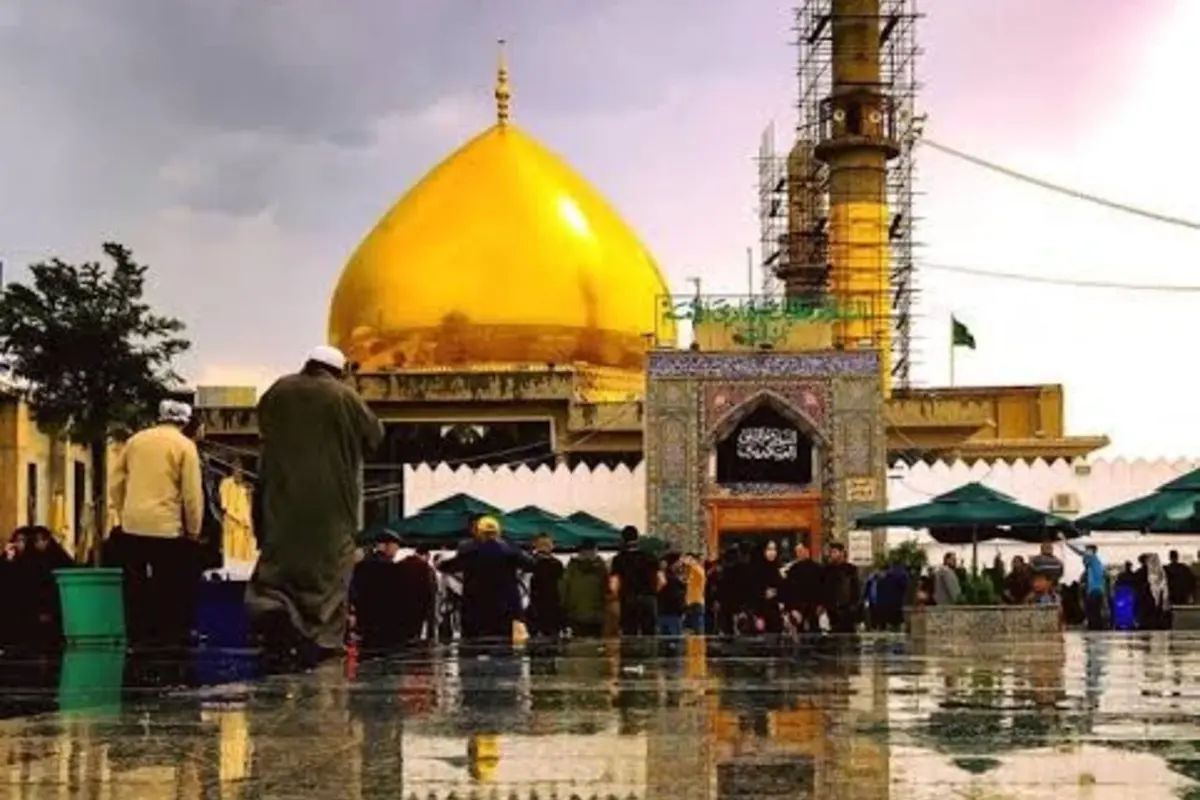
Imam Hasan al-Askari (A.S.), the eleventh Imam in Twelver Shi‘i tradition, He was given the title, Imam al-Askari because he was forced to reside in Samarra, which was also known as “Askar” (a military camp or town). His other titles include Ibn al-Rida, al-Hadi, al-Naqi, al-Zaki, al-Rafiq and al-Samit. Lived during one of the most politically restrictive periods of the Abbasid caliphate. Born in Medina in 232 AH/846 CE and later compelled to reside in Samarra, he inherited not merely a religious title but an extraordinary intellectual responsibility. His life unfolded under surveillance, political pressure and restrictions on communication, yet these circumstances did not diminish the importance of his scholarly and spiritual work. Rather, they transformed the nature of religious leadership. His contribution can be understood not through the size of the institutions he controlled or the political territory he commanded, but through his preservation of knowledge, ethical discipline, intellectual continuity and spiritual consciousness in an age in which open religious activity was severely constrained.
The intellectual personality attributed to Imam Hasan al-Askari (A.S.) is particularly significant because his authority was exercised primarily through teaching, correspondence, interpretation and the cultivation of individuals. His environment did not permit him the public scholarly life associated with earlier Muslim intellectuals, yet reports from the Shi‘i tradition portray him responding to theological questions, explaining religious principles, advising followers and communicating with communities beyond Samarra. His scholarship therefore belonged to a different model of intellectual activity: knowledge transmitted through carefully cultivated relationships rather than through a large public academy. The Imam’s historical importance consequently lies partly in demonstrating that scholarship does not depend exclusively upon institutional freedom. A scholar may be physically confined while ideas, arguments and ethical teachings continue to travel across geographical and political boundaries.
One of the central themes associated with Imam Hasan al-Askari (A.S.) is the relationship between knowledge and moral responsibility. In the famous childhood account in which he refuses to regard human existence as mere play, the young Hasan interprets creation through the Qur’anic question of whether humanity was created without purpose. Whether approached as devotional literature or as a representation of his intellectual formation, the story captures a profound philosophical principle: human existence becomes meaningful when consciousness is connected to responsibility. Knowledge, in this worldview, is not accumulated merely to increase information. It is intended to transform the human being. Learning without ethical refinement can become another form of heedlessness, whereas genuine knowledge awakens a person to accountability before God and responsibility toward creation.
This connection between knowledge and character is essential to understanding Imam Hasan al-Askari’s (A.S.) intellectual legacy. The religious scholar, in his conception, cannot be separated from the ethical person. Intellectual brilliance without humility, worship without understanding, and religious authority without justice are incomplete. His reported teachings repeatedly emphasize patience, self-control, sincerity, moderation and trust in divine wisdom. One of the most philosophically significant pieces of advice attributed to him concerns the human tendency to demand immediate solutions: a person should not become consumed by anxiety when an expected outcome has not yet arrived, because divine wisdom operates according to a time beyond the impatience of the individual. The underlying philosophy is one of disciplined hope—the ability to act responsibly while accepting that human beings do not possess complete knowledge of time, consequence and destiny.
His scholarly contribution must also be viewed within the broader intellectual history of the Ahl al-Bayt. Imam Hasan al-Askari (A.S.) inherited a tradition in which questions of Qur’anic interpretation, theology, jurisprudence, ethics and spiritual development were treated as interconnected dimensions of knowledge. His predecessors had developed networks of students and representatives across different regions of the Muslim world. Under the eleventh Imam, these networks assumed even greater importance because direct communication with him was increasingly difficult. The development of correspondence and trusted representatives meant that intellectual and religious guidance could continue despite political restrictions. In this respect, his achievement was organizational as well as scholarly: he helped preserve a community of learning when the conventional mechanisms of public teaching had become dangerous.
The political circumstances of Samarra make this achievement particularly striking. Samarra was fundamentally associated with the Abbasid military establishment, and Imam Hasan al-Askari (A.S.) lived there under circumstances that severely restricted his freedom. Yet the political attempt to contain his physical presence did not necessarily eliminate his intellectual influence. His reported communications with believers in places such as Qom, Rayy, Nishapur, Gorgan, Hamadan, Ahvaz and other centres demonstrate the importance of networks in the transmission of religious knowledge. The phenomenon raises a broader philosophical question: what is power? Political authority may control prisons, armies and streets, but intellectual authority operates differently. It survives through memory, teaching, argument and the internal transformation of people. In that sense, the history of Imam Hasan al-Askari (A.S.) illustrates the distinction between physical power and intellectual influence.
His intellectual method also appears in the emphasis placed upon reason, reflection and spiritual discernment. The religious tradition surrounding him does not present faith merely as inherited identity; it repeatedly connects belief with understanding. The believer must distinguish truth from falsehood, sincerity from hypocrisy and genuine knowledge from superficial claims. This is particularly important in an age of political pressure because persecution can produce two opposite dangers: intellectual surrender on one side and uncontrolled emotional reaction on the other. The ethical model associated with Imam Hasan al-Askari (A.S.) instead emphasizes patience, discernment and disciplined commitment. Resistance, in this framework, is not necessarily manifested through political rebellion; it can also take the form of preserving intellectual independence and refusing to allow oppressive circumstances to determine one’s moral identity.
The episode traditionally known as the “rainwater and guidance” incident further illustrates the intellectual image associated with him. The story describes a moment when a religious spectacle apparently produced confusion among Muslims, and Imam Hasan al-Askari (A.S.) was asked to explain what had happened. Regardless of how the miraculous dimension of the narrative is interpreted, its theological purpose is revealing: apparent phenomena should not automatically replace understanding. Religious communities can be unsettled by extraordinary events when they lack a framework for interpreting them. The scholar’s responsibility is therefore not simply to demand belief but to restore intellectual clarity. Knowledge becomes a form of spiritual protection because it prevents the believer from confusing spectacle with truth.
Perhaps the most historically consequential dimension of Imam Hasan al-Askari’s (A.S.) final years was the preservation of continuity within the religious community during a period of uncertainty. Twelver Shi‘i sources maintain that he privately introduced his son, Muhammad al-Mahdi, to selected companions and prepared trusted representatives for the transition that followed his death. Other historical sources dispute aspects of this account and record substantial disagreement among Shi‘i groups concerning succession after his death. Academically, this disagreement should not be ignored. It demonstrates that the death of Imam Hasan al-Askari created a genuine historical crisis of succession and identity. Yet from the perspective of Twelver Shi‘ism, the measures attributed to him represent a carefully constructed transition from the period of visible Imamate to the period of occultation. His work, therefore, is remembered not simply as succession planning but as the preservation of a religious-intellectual tradition under extraordinary conditions.
The philosophical significance of his life becomes clearer when his six-year Imamate is placed within the longer history of the Ahl al-Bayt. His predecessors had faced different political circumstances: some engaged directly with intellectual debates, others developed extensive circles of students, and others were forced into increasingly restrictive environments. Imam Hasan al-Askari inherited the accumulated intellectual capital of these generations and adapted it to an environment in which public religious leadership was increasingly impossible. His genius, as understood within the Shi‘i tradition, was therefore not primarily the creation of a new school but the preservation, consolidation and transmission of an existing intellectual civilization. His task was to ensure that knowledge survived when its principal teacher could no longer freely stand before the public.
The martyrdom attributed to Imam Hasan al-Askari (A.S.) at the age of approximately twenty-eight or twenty-nine therefore closes a life that was short chronologically but significant intellectually. The traditional account holds that he was poisoned on the orders of the Abbasid ruler al-Mu‘tamid, although historical discussions of the circumstances require careful differentiation between devotional tradition and independently established historical evidence. He was buried beside his father, Imam Ali al-Hadi (A.S.), in Samarra. What remained after him was not an empire, army or political institution, but a body of teachings, ethical principles, scholarly relationships and a community trained to preserve its religious identity under conditions of uncertainty.
The enduring importance of Imam Hasan al-Askari (A.S.) can consequently be located in a deeper idea: civilization is not preserved only by rulers who control institutions; it is also preserved by scholars who protect meaning. His life represents the possibility that intellectual work can continue even under surveillance, that moral authority can exist without political power, and that knowledge can become a form of resistance against historical forgetfulness. For his followers, he was the eleventh Imam and a divinely guided authority; for the broader history of Islamic thought, he can be studied as a figure associated with scholarship, ethical philosophy, spiritual discipline and the preservation of an intellectual community during a period of extraordinary political constraint. His legacy ultimately asks a question that extends beyond sectarian boundaries: when circumstances prevent a thinker from changing the world through power, can he change it through knowledge, character and the formation of human beings? The life attributed to Imam Hasan al-Askari (A.S.) offers a powerful answer: intellectual influence may be quiet, but it can outlive the institutions that attempted to silence it.
Catch all the Blogs News, Breaking News Event and Trending News Updates on GTV News
Join Our Whatsapp Channel GTV Whatsapp Official Channel to get the Daily News Update & Follow us on Google News.
Must Read