Core member Anjum Zaman Awan announces split from Banned JAAC

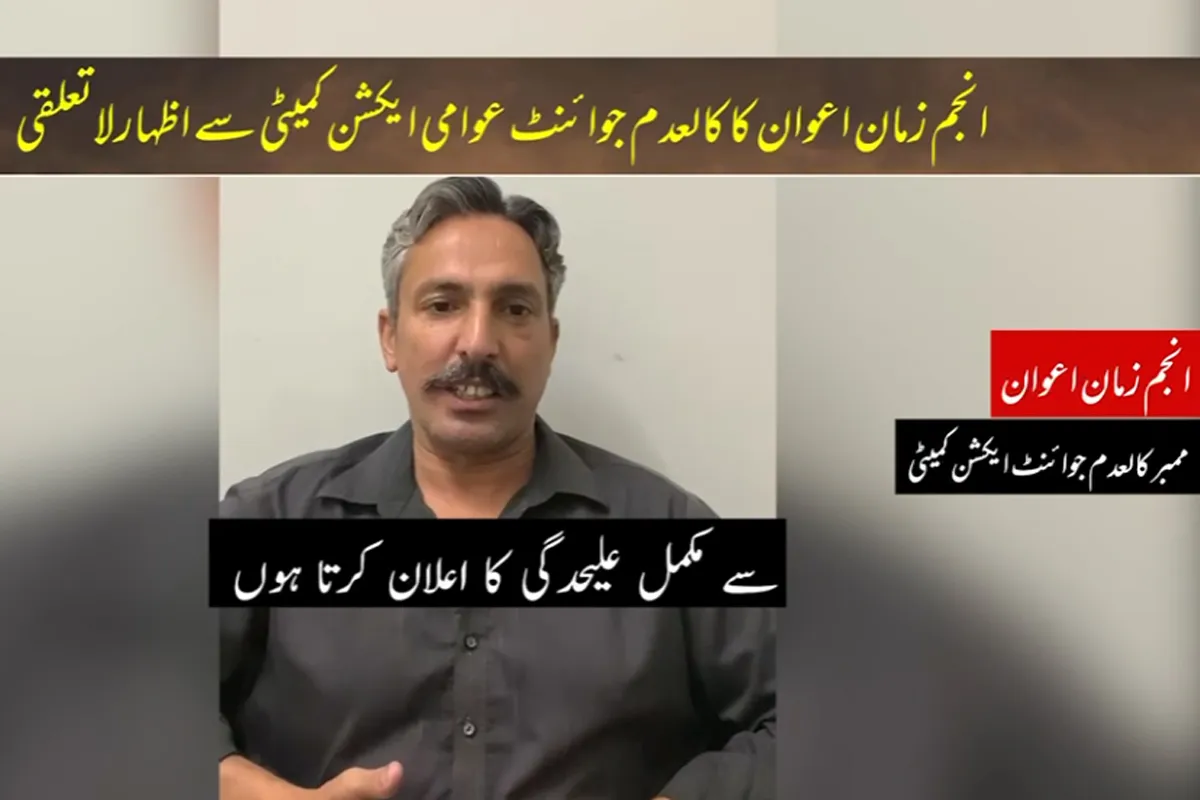
The public disavowal by core members of the Joint Action Committee signals either genuine organizational collapse or sophisticated public relations damage control—distinguishing between them matters significantly for understanding what’s actually occurring within Kashmir’s militant ecosystem.
Anjum Zaman Awan’s video message claiming the committee was “hijacked” by anti-Pakistan forces represents a classic defection narrative. When organizational members publicly distance themselves from their own group’s stated ideology, they’re typically responding to one of three circumstances: genuine disillusionment, tactical repositioning ahead of crackdowns, or coordinated messaging to rehabilitate their public image. Awan’s timing—after the government’s Fourth Schedule designations of 150 committee members—suggests strategic calculation more than spontaneous conscience awakening.
The anti-Pakistan framing deserves scrutiny. Awan claims separatist rhetoric masks “anti-Pakistan forces” manipulating youth. This narrative simultaneously distances him from the organization while legitimizing government counterterrorism operations. By reframing the committee as a foreign proxy rather than indigenous political movement, he provides rhetorical cover for mass detention, asset freezing, and surveillance of 150 designated members. Whether this represents sincere analysis or tactical alignment with government messaging remains unclear.
Historically, defections from militant organizations follow predictable patterns. The Irish Republican Army experienced similar internal fractures when members publicly renounced violence while remaining organizationally connected. The Palestinian militant groups saw core members distance themselves publicly while maintaining operational involvement. Public disassociation frequently precedes either continued clandestine activity or genuine transition, but external observers cannot reliably distinguish between them without operational intelligence.
The previous defection by Amjad Ali Khan Advocate suggests systemic organizational pressure rather than isolated dissent. Two sequential core member defections indicate either widening internal disagreement or coordinated messaging strategy. If genuine, the organization faces recruitment challenges and ideological fragmentation. If tactical, both defectors are simultaneously positioning themselves for potential rehabilitation and signaling to authorities their willingness to cooperate.
What’s tactically significant is how government authorities utilize these defections. By publicizing core member disavowals, the state reinforces its Fourth Schedule designations as justified and demonstrates the organization is internally delegitimizing. This narrative—”even the organization’s own leaders think it’s destructive”—provides political cover for continued crackdowns while suggesting the government is winning a hearts-and-minds contest it may not actually be winning.
The “anti-Pakistan forces” accusation raises uncomfortable questions. If the committee represents indigenous political grievances about autonomy and governance, labeling separatism as “anti-Pakistan infiltration” conflates genuine political dissent with foreign manipulation. This rhetorical move conveniently eliminates space for legitimate political opposition while casting all autonomy movements as proxy operations of hostile powers.
Youth recruitment implications matter operationally. If Awan’s appeal persuades committee members to abandon the organization, recruitment becomes harder and operational capacity declines. If youth interpret his message as government-orchestrated messaging rather than genuine political conversion, radicalization potentially accelerates as youth view defectors as state collaborators.
The broader pattern suggests the committee faces organizational decline whether from genuine ideological fracture or external pressure. Sustained counterterrorism operations, Fourth Schedule designations, and now public defections create operational friction. Militant organizations survive through operational cohesion and ideological clarity. Public member defections erode both, regardless of whether they’re spontaneous or coordinated.
What remains unclear: whether the Joint Action Committee is actually collapsing or simply adapting messaging to survive intensified government pressure. History suggests defecting members often maintain clandestine involvement while publicly disavowing organizational affiliation. Until operational metrics—attack frequency, recruitment rates, financial flows—actually decline, organizational collapse remains rhetorical rather than confirmed.
Catch all the Pakistan News, Breaking News Event and Trending News Updates on GTV News
Join Our Whatsapp Channel GTV Whatsapp Official Channel to get the Daily News Update & Follow us on Google News.
Must Read