

3I/ATLAS pulses every 16.16 hours — could this affect Jupiter and Callisto?

Web Desk
10 December, 2025 10:54
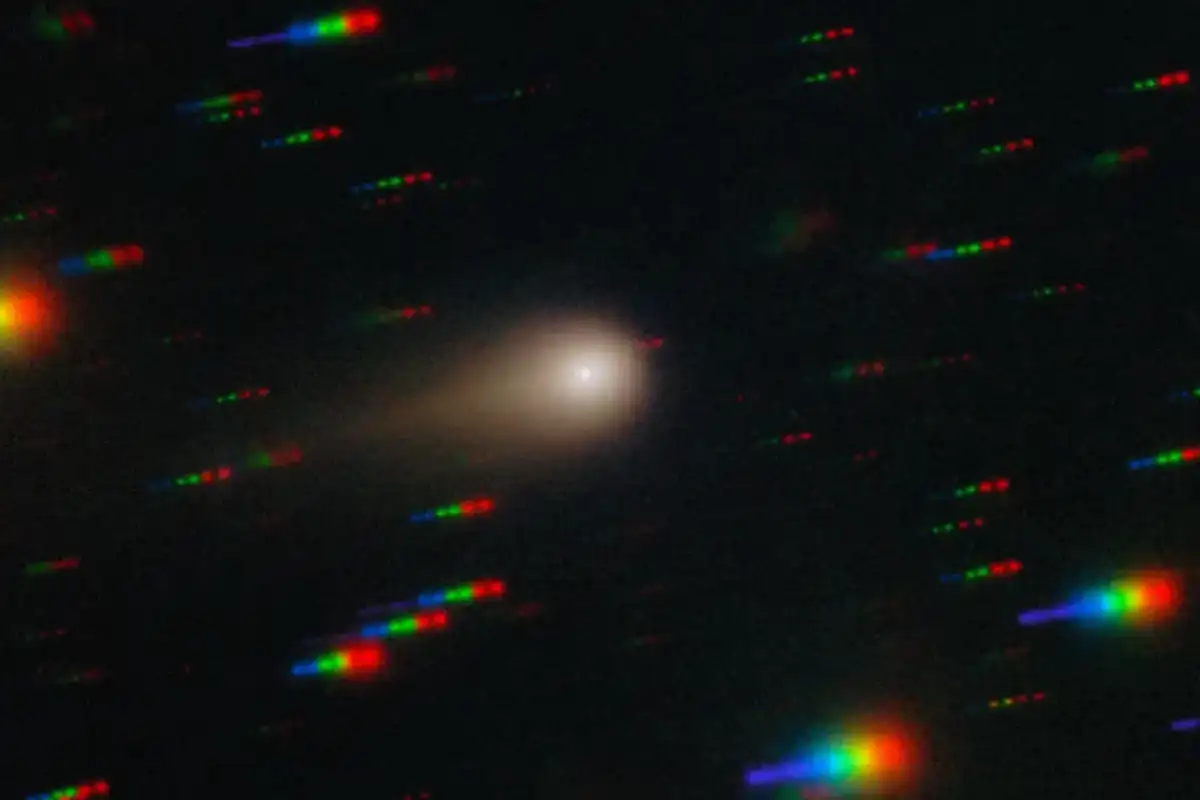
3I/ATLAS pulses every 16.16 hours — could this affect Jupiter and Callisto?
Something unusual is happening with the interstellar object 3I/ATLAS: the comet is brightening and dimming in a remarkably steady 16.16-hour rhythm, resembling a heartbeat.
This regular flicker has intrigued scientists and sparked significant online discussion, with some speculating whether it could affect one of Jupiter’s moons, Callisto.
However, experts emphasize that there is no danger. “Nothing dangerous is going on, and this pulse does not have any influence on Jupiter, Callisto, or any planet whatsoever; it is just a different way the comet reflects the sun.”
Tracking 3I/ATLAS
First observed on July 1, 3I/ATLAS has been under careful observation by telescopes worldwide. Reports from Axy Media note that its brightness rises and falls in a smooth, regular pattern, prompting further scientific investigation.
Why the comet is pulsing
Initially, scientists considered that the brightness changes might be due to the comet’s rotation, which is common among comets. Different sides facing the Sun can cause brightness shifts.
However, new data from NASA’s Hubble Space Telescope revealed that most of the light does not come from the comet’s solid surface but from its large surrounding cloud of gas and dust, known as a coma. Hubble images indicate that the nucleus itself is small and faint, so rotation alone cannot explain such significant brightness variations.
Researchers are now examining another explanation: jet activity. Certain areas of the comet’s surface may contain more frozen material. When these regions face the Sun, heat causes gas to shoot out like a jet, making the coma expand and reflect more sunlight, producing sudden brightening. As the area rotates away from the Sun, the brightness diminishes. This cycle aligns closely with the 16.16-hour pulse.
No danger to Callisto or Jupiter
Despite social media claims that the pulsing could “send energy” toward Jupiter or Callisto, scientists confirm that this is false. “The comet’s pulse does not change its mass or path. It is not releasing dangerous radiation or pushing anything toward the planets.” The observed brightness changes are purely optical, and 3I/ATLAS will not come near Jupiter.
Next steps for scientists
Researchers plan to observe 3I/ATLAS for extended periods to determine whether the brightening consistently occurs when the same section of the comet faces the Sun. Confirmation would support the jet activity theory.
As only the third interstellar object ever discovered, each finding about 3I/ATLAS helps scientists better understand objects originating from other star systems. For now, its 16-hour “heartbeat” remains a fascinating but harmless cosmic curiosity.
Catch all the Trending News, Breaking News Event and Trending News Updates on GTV News
Join Our Whatsapp Channel GTV Whatsapp Official Channel to get the Daily News Update & Follow us on Google News.
Must Read