Even America’s Harshest China Critic Now Admits Beijing Has the Upper Hand

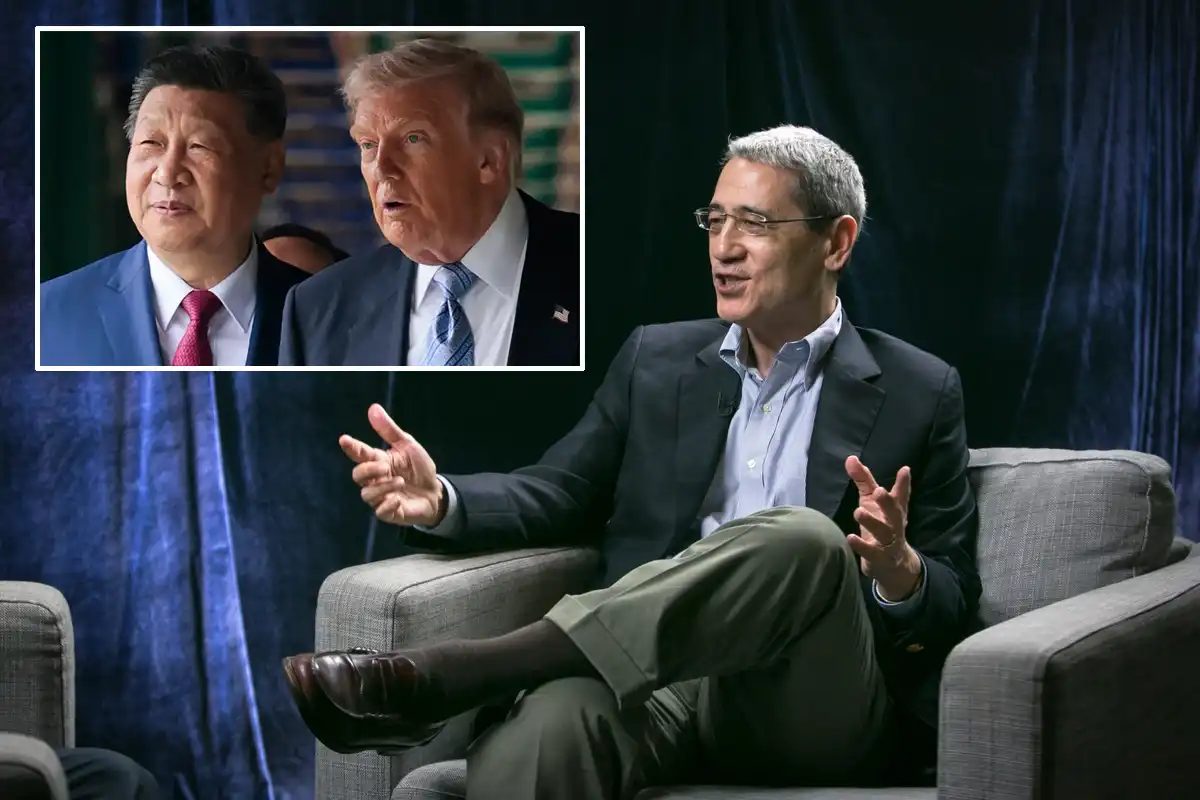
When Gordon Chang — the man who has spent decades predicting China’s imminent collapse — tells Forbes that Chinese dominance is now a reality, Washington has a credibility problem it cannot spin away.
Gordon Chang built his public profile on one argument: China’s political and economic system was fundamentally unsustainable and collapse was inevitable. He has been making versions of this argument since his 2001 book “The Coming Collapse of China.” China has not collapsed. It has instead become the world’s largest economy by purchasing power parity, the world’s largest manufacturer, the world’s largest holder of US debt, and now — according to Chang himself — the power that is openly challenging American global supremacy to a sitting American president’s face.
Chang’s admission to Forbes is not a small thing. It is a confession from the most prominent voice in the American China-skeptic community that the story he has been telling for a quarter century was wrong about the direction of travel.
The Thucydides Trap Reference That Alarmed Chang
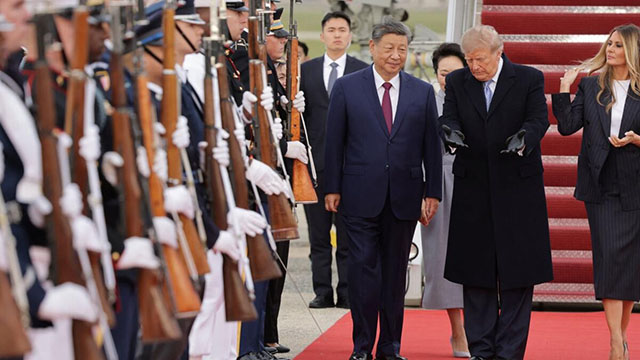
During the Beijing summit, Chinese President Xi Jinping referenced the Thucydides Trap concept in conversation with Donald Trump — a theoretical framework describing the structural tendency toward war when a rising power challenges an established one. The reference, derived from ancient Greek historian Thucydides’ analysis of the Peloponnesian War, carries a specific message: China sees itself as the rising power, America as the declining hegemon, and the historical pattern suggests their collision is structural rather than contingent.
Chang’s interpretation of Xi’s choice to invoke this framework directly to Trump is precise: Beijing was telling Washington that China is on the ascent while America is in managed decline, and that Chinese leadership has never previously used language this direct with an American president. The absence of diplomatic softening — the willingness to state the power transition thesis explicitly — signals a confidence level that Chang finds genuinely alarming.
What Changed Between 2001 and 2026
Chang’s original collapse thesis rested on assumptions that have been systematically falsified by events. He assumed China’s authoritarian political system would generate fatal internal contradictions. Instead it generated the Belt and Road Initiative, Made in China 2025, and a military modernization program that has produced a navy larger than America’s by hull count.
He assumed American technological and economic dominance would remain structurally unchallengeable. Instead China has achieved 86 percent AI chip self-sufficiency trajectory, holds 40 percent of global 6G patents, deployed 4.8 million 5G base stations against America’s 500,000, and doubled its missile manufacturing companies from 32 to 81 since 2013.
He assumed American alliance structures and forward military presence would deter Chinese assertiveness. Instead the Iran war has depleted American munitions stockpiles to levels that alarm sitting senators, revealed submarine production failures, and consumed the precision weapons that any Taiwan contingency would require.
Xi’s Confidence Is Evidence-Based
Chang’s warning that American deterrence has “badly deteriorated” is supported by the observable record. China has watched the Iran conflict drain American military readiness. It has watched American semiconductor sanctions accelerate rather than prevent Chinese chip independence. It has watched the Beijing summit produce a trade framework while Xi explicitly refused to pressure Iran — demonstrating that Washington cannot compel Chinese cooperation on its most urgent strategic priority.
Xi did not invoke the Thucydides Trap to threaten Trump. He invoked it to describe a reality he believes is already visible to both parties. The rising power does not need to announce its ascent. It simply needs to stop pretending it has not happened.
Gordon Chang spent 25 years warning America about China’s fragility. He is now warning America about China’s strength. The subject of the warning has reversed. The urgency has not.
When your most committed critics start confirming your adversary’s self-assessment, the gap between narrative and reality has closed in ways that policy cannot ignore much longer.
Disclaimer; Based on Gordon Chang’s Forbes interview and open-source US-China strategic competition analysis.
Catch all the World News, Breaking News Event and Trending News Updates on GTV News
Join Our Whatsapp Channel GTV Whatsapp Official Channel to get the Daily News Update & Follow us on Google News.
Must Read

Entertainment
King Charles Sends Independence Day Wishes to Botswana on 60th Anniversary
30-September،2026