
US Admits 42 Aircraft Lost or Damaged in Iran War: What the Congressional Report Actually Reveals

America’s own research arm has done what the Pentagon would not — counted the planes that did not come back, and published the number.
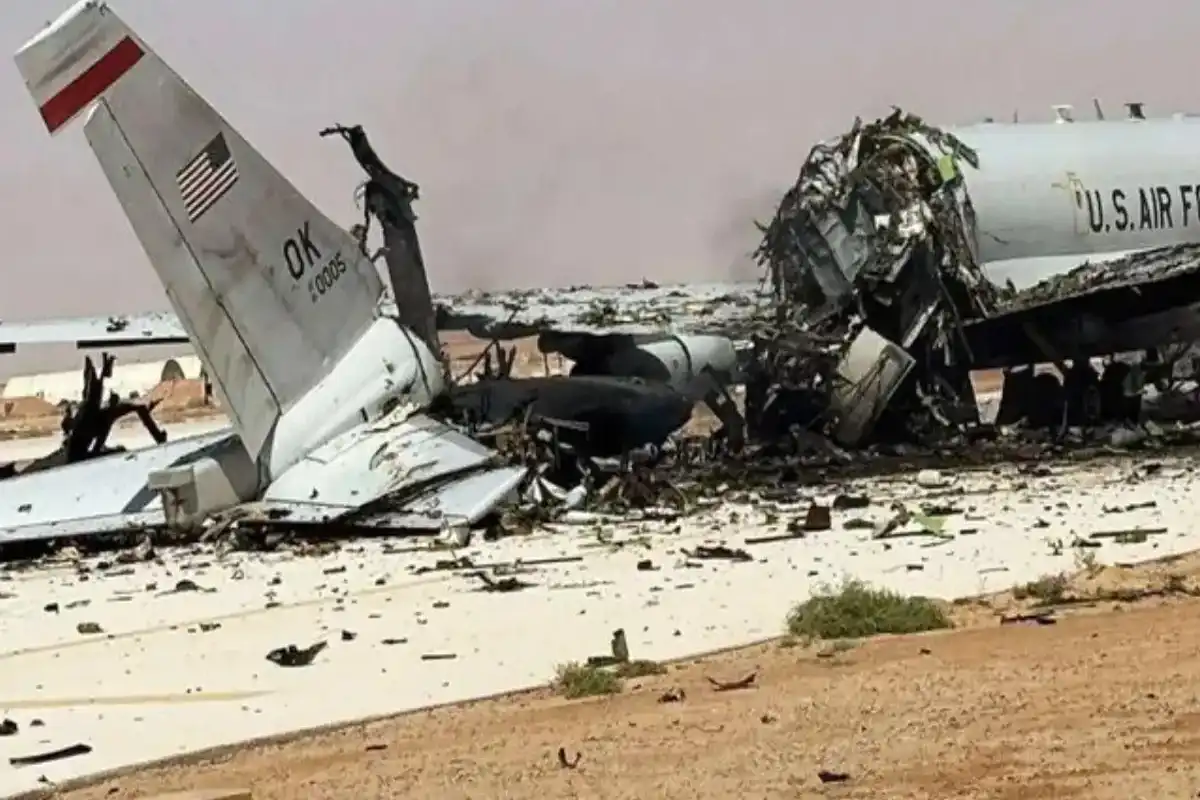
The Congressional Research Service — the nonpartisan research arm of the United States Congress — has formally acknowledged in a published report that American forces lost or sustained significant damage to 42 aircraft during the Iran conflict. It is the first official American institutional admission of aerial losses at this scale, and Iranian Foreign Minister Abbas Araghchi wasted no time responding on social media.
The breakdown of what was lost tells a story about the conflict’s intensity that Pentagon press releases have carefully avoided telling.
What the Report Says Was Destroyed
The CRS report itemizes losses across multiple aircraft categories. Four F-15E Strike Eagles — among America’s most capable multi-role fighters — were completely destroyed. One F-35A, America’s most expensive and technologically advanced stealth aircraft, was severely damaged by Iranian ground-based air defense fire. One A-10 Thunderbolt attack aircraft was destroyed. Of seven KC-135 Stratotanker aerial refueling aircraft, two were destroyed and five returned with serious damage. One E-3 Sentry AWACS surveillance aircraft — the flying command center that coordinates air operations — was significantly damaged.
The drone losses were the single largest category. Twenty-four MQ-9 Reaper drones were shot down. One MQ-4C Triton maritime surveillance drone was destroyed. Two MC-130J special operations aircraft were lost. One HH-60W combat rescue helicopter was hit by small arms fire.
Total: 42 American aircraft destroyed or seriously damaged in a conflict that lasted 40 days.
Why the F-35 Loss Is the Most Significant Detail
The F-35 was designed around one core promise: that its stealth technology would make it effectively invisible to radar-based air defense systems. That promise justified a program cost exceeding $400 billion — the most expensive weapons program in human history.
Iranian air defense damaging an F-35 under combat conditions does not prove stealth is dead. It does prove that Iranian air defense operators have developed detection and engagement capabilities sophisticated enough to threaten the aircraft the entire program was built around. Every adversary air force on earth — Chinese, Russian, North Korean — is now analyzing whatever sensor and engagement data Iran collected.
Araghchi’s Response and What It Signals
Iranian Foreign Minister Araghchi’s social media response was pointed: Iran’s armed forces have become the first military in history to shoot down America’s vaunted F-35 stealth fighter. He added that Iran has learned significant lessons from this conflict and has prepared “even more dangerous surprises” if America makes the mistake of starting another round.
This is not post-conflict boasting. It is a deterrence communication directed at Pentagon planners currently developing Operation Sledgehammer — the reported third military campaign against Iranian nuclear infrastructure.
The Cumulative Picture
Combined with Senator Kelly’s acknowledgment that US munitions stockpiles are “shockingly” depleted, classified intelligence assessments showing Iran retained 70 percent of its missile stockpile, and now 42 confirmed aircraft losses, the CRS report adds the final dimension to a picture of a conflict that cost America far more than its public statements acknowledged.
Forty-two aircraft. Forty days. No objectives achieved.
Disclaimer; Based on Congressional Research Service report findings and Iranian Foreign Ministry public statements.
Catch all the World News, Breaking News Event and Trending News Updates on GTV News
Join Our Whatsapp Channel GTV Whatsapp Official Channel to get the Daily News Update & Follow us on Google News.
Must Read