
Pakistan Emerges as Regional Diplomatic Hub as India’s Foreign Policy Falters

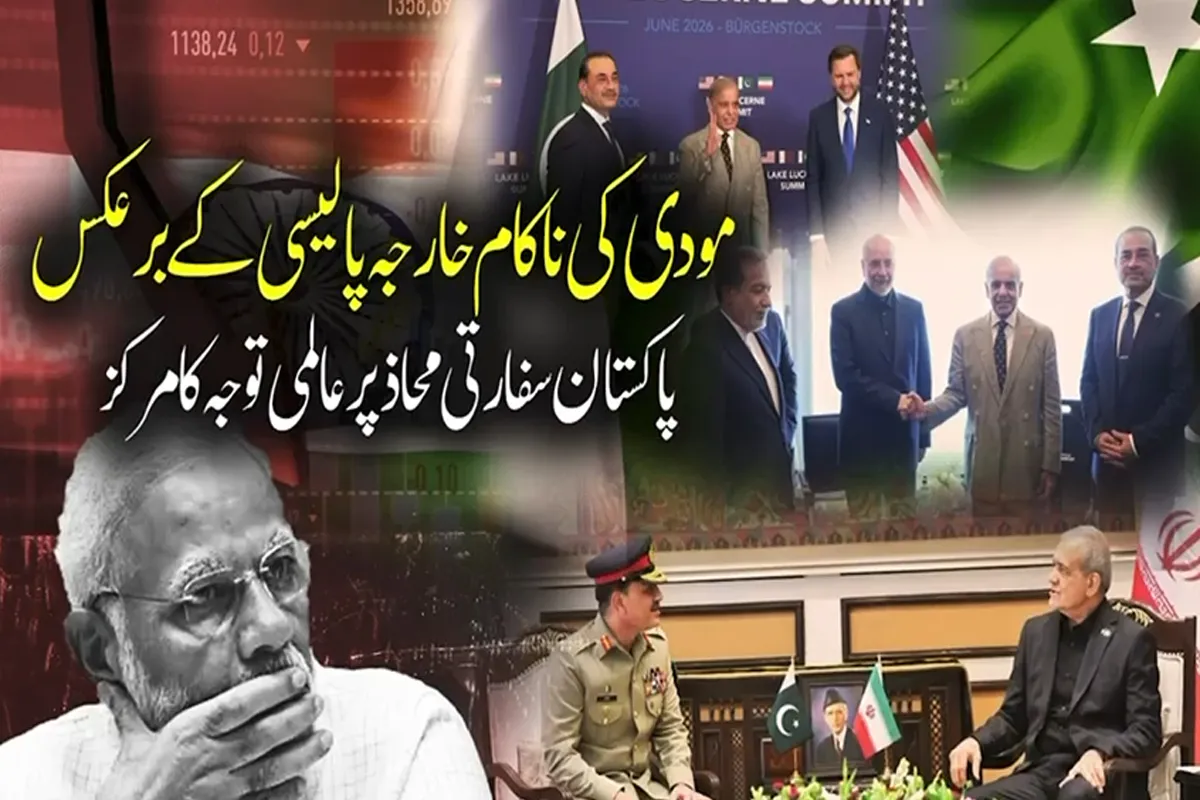
Pakistan has positioned itself as a credible regional mediator and peace facilitator, attracting international recognition for diplomatic initiatives while India’s foreign policy inconsistencies undermine New Delhi’s regional influence.
International analysts increasingly characterize Pakistan as pivotal actor capable of advancing dialogue and stabilizing tensions across South and West Asia.
Recent regional developments have elevated Pakistan’s diplomatic profile substantially. Pakistan’s mediation between Iran and the United States during ceasefire negotiations received explicit acknowledgment from both parties—a remarkable diplomatic achievement demonstrating Islamabad’s capacity to navigate complex great power relationships. Iran’s post-conflict outreach to Pakistan signaled appreciation for mediation services, while American officials publicly acknowledged Pakistan’s constructive role in facilitating peace discussions.
The contrast with India’s diplomatic positioning has become increasingly evident. While Pakistan actively engages in conflict resolution and mediation frameworks, India’s foreign policy appears constrained by contradictions. New Delhi simultaneously pursues partnerships with Iran while maintaining strategic dependence on American alignment—a balancing act that produces visible inconsistencies in diplomatic representation and commitment.
India’s low-level funeral delegation to Khamenei’s ceremonies exemplified these contradictions. Despite substantial economic interests in Iran (energy cooperation, trade, regional development initiatives), India sent junior ministers rather than senior leadership. This choice signaled to Iran that New Delhi’s American relationship management supersedes bilateral Iran partnership—a message that weakened India’s regional positioning while strengthening Pakistan’s perceived reliability as independent mediator.
Analysts emphasize that Pakistan’s diplomatic activism addresses genuine regional needs. In multipolar environments where multiple actors pursue conflicting interests, neutral mediators become increasingly valuable. Pakistan, positioned geographically between Middle East and South Asia, possesses natural advantages for facilitating dialogue. Recent crisis management demonstrates that Islamabad can exercise this role effectively, translating geographic position into diplomatic influence.
Pakistan’s diplomatic strategy emphasizes dialogue over confrontation—an approach gaining international credibility as alternatives to military solutions. The successful Iran-US mediation required sustained engagement, trust-building, and willingness to absorb pressure from both parties without capitulating to either. Pakistan demonstrated these capabilities despite asymmetric pressures from both Washington and Tehran.
India’s foreign policy, by contrast, appears increasingly reactive rather than strategically proactive. Critics note inconsistency between stated commitment to Iranian partnership and operational decisions that subordinate Iran relationship to American alignment. This pattern extends beyond Iran: India’s broader regional strategy reflects similar contradictions where economic cooperation aspirations conflict with geopolitical constraints limiting actual engagement.
International relations experts observe that rising powers typically gain influence by pursuing independent foreign policies reflecting their national interests rather than accommodating external pressures. Pakistan appears increasingly willing to exercise this independence—accepting diplomatic risk to maintain credibility as reliable mediator. India, conversely, appears constrained by perceived American expectations regarding Pakistan relationships.
The regional perception gap has widened accordingly. Pakistan is increasingly viewed as strategically autonomous actor capable of independent decision-making; India appears as constrained by external alliance obligations limiting genuine regional initiative. This perception gap translates into concrete diplomatic advantage for Pakistan in multilateral regional forums and bilateral negotiations.
Pakistan’s growing diplomatic prominence also reflects institutional capacity development. The Foreign Office has strengthened institutional expertise in conflict mediation, regional analysis, and great power diplomacy. These capabilities enabled sustained engagement during Iran-US negotiations when diplomatic pressure from both parties might have produced lesser states’ withdrawal.
Looking forward, analysts project that Pakistan’s diplomatic positioning will strengthen as regional instability persists and demand for skilled mediators increases. Conversely, India’s foreign policy constraints may limit its ability to capitalize on regional opportunities, further shifting regional diplomatic balance toward Pakistan.
Catch all the World News, Breaking News Event and Trending News Updates on GTV News
Join Our Whatsapp Channel GTV Whatsapp Official Channel to get the Daily News Update & Follow us on Google News.
Must Read