
US Reassesses India as Pakistan’s Regional Importance Grows, Indian Magazine Reports

US Reassesses India as Pakistan’s Regional Importance Grows, Indian Magazine Reports
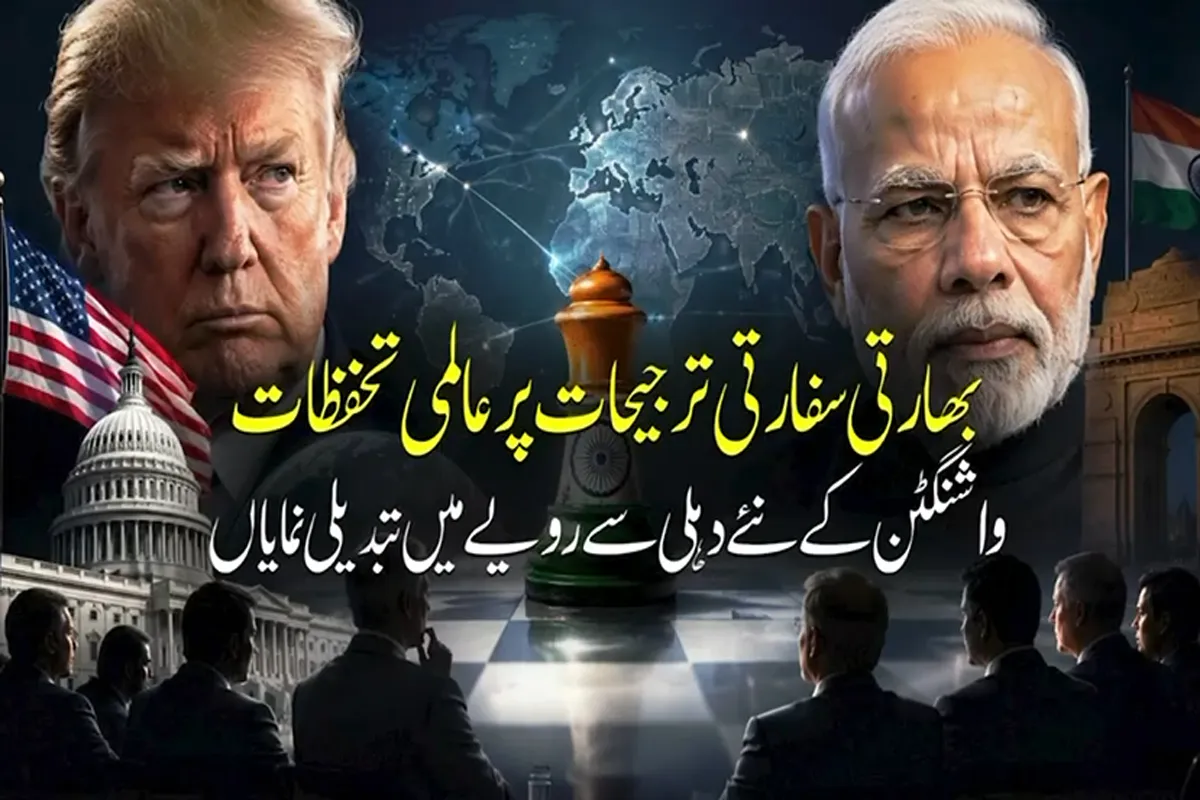
Washington’s strategic calculus toward New Delhi has shifted, with the once-close US-India relationship no longer resembling its earlier form, according to an analysis in Indian outlet Open Magazine.
The report argues Washington increasingly views India not as a strategic partner but as a potential economic competitor — a reframing that has accelerated rather than eased since Trump’s return to office.
The magazine’s analysis suggests expectations of warming ties under Trump’s second term have gone largely unmet, with tensions instead becoming more visible across multiple fronts. It points to Pakistan’s growing weight in US regional policy, noting Islamabad’s role facilitating US contacts with Tehran during the current Iran conflict as one marker of that shift — a role that has given Pakistan renewed diplomatic relevance in Washington at a moment when India’s own standing appears less secure.
Indian ruling party BJP has accused the American “deep state” of using false narratives to destabilize India, according to the report — a claim reflecting the party’s own political framing of the diplomatic friction rather than an independently verified assessment. The analysis also cites two concrete legal flashpoints straining the relationship: a 2024 US case against a former Indian intelligence officer over an alleged assassination plot targeting Gurpatwant Singh Pannun, and fraud allegations brought against Gautam Adani, which the magazine says were perceived in New Delhi as an indirect move against the Modi government rather than a purely commercial legal matter.
International affairs expert Kanti Bajpai described the US-India special relationship as having become a cold, interest-based arrangement rather than the warmer strategic partnership both sides once emphasized. He and other experts cited in the report point to Modi’s Hindutva-aligned policy approach, what they characterize as an inconsistent foreign policy strategy, and ongoing trade disputes as combining to put serious strain on the relationship.
That characterization of India’s domestic politics and foreign policy reflects the experts’ own critical assessment rather than a neutral description; supporters of the Modi government have consistently rejected framings that describe its ideological orientation as destabilizing to foreign relations, arguing instead that India’s assertive posture reflects legitimate national interest rather than policy failure.
The shift carries real stakes for both countries. India has spent the past decade positioning itself as a counterweight to China in US regional strategy, and any sustained cooling would complicate that alignment at a moment when Washington’s attention is already stretched across conflicts in the Middle East and ongoing competition with Beijing.
Whether this represents a durable recalibration or a temporary rough patch will likely depend on how the Pannun case, Adani proceedings, and broader trade negotiations resolve in the coming months — outcomes that will test whether the relationship’s underlying strategic logic still holds despite the accumulating friction points the magazine’s analysis identifies.
Catch all the World News, Breaking News Event and Trending News Updates on GTV News
Join Our Whatsapp Channel GTV Whatsapp Official Channel to get the Daily News Update & Follow us on Google News.
Must Read

Pakistan
Maryam Nawaz Vows to Empower Women and Provide Students with a Safe Environment
20-October،2026