Iran’s Space Program: Journey From Its First Satellite in 2009 to a Plan for 24 Satellites by 2027

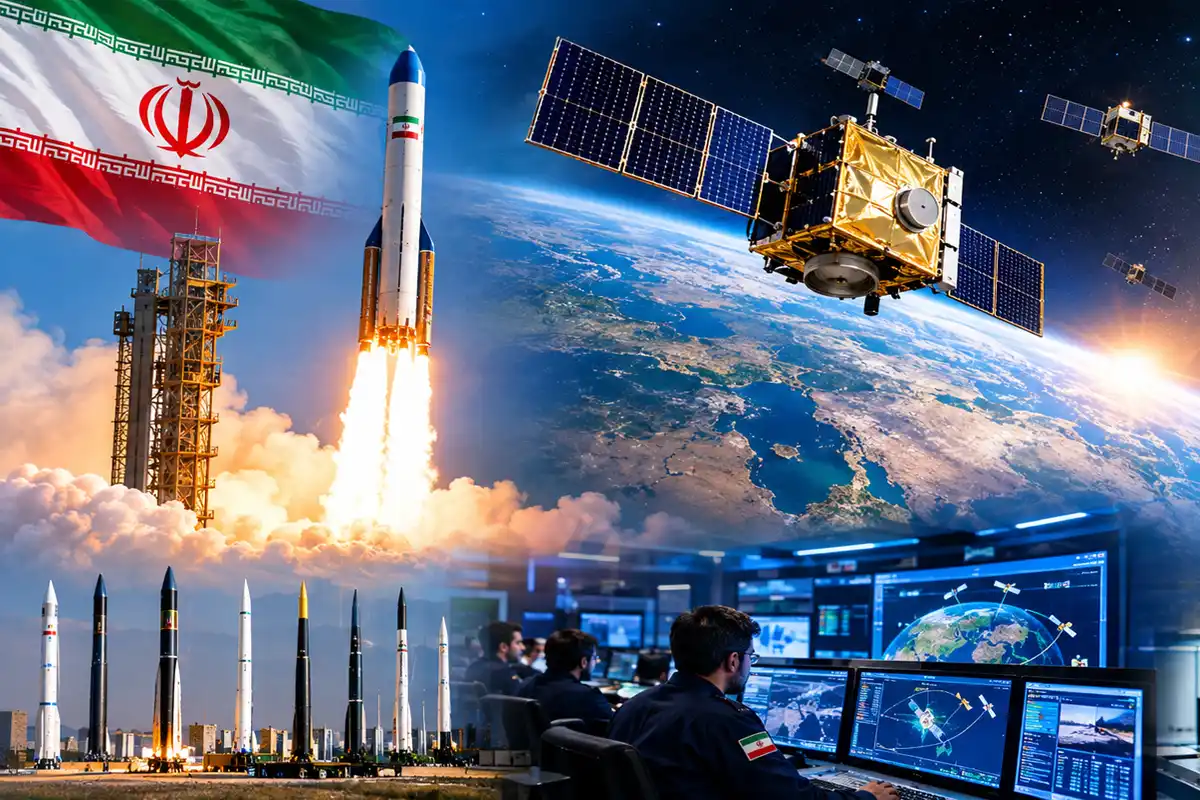
Iran's Space Program: Journey From Its First Satellite in 2009 to a Plan for 24 Satellites by 2027
TEHRAN: Iran’s space program has once again attracted global attention during World Space Week. Despite facing economic and technological sanctions for decades, Iran has developed the ability to launch satellites into orbit using locally developed rockets.
Iran’s space program focuses on scientific research, communications, monitoring natural resources and military applications. Tehran considers the programme a sign of technological progress and self-reliance, while the United States and some Western countries have expressed concerns about the possible military use of Iranian space technology.
Omid Satellite Marked a Historic Beginning
Iran made a major breakthrough on February 2, 2009, when it launched the Omid satellite into orbit using its locally developed Safir rocket.
According to NASA records, Omid was Iran’s first domestically built satellite launched into orbit by an Iranian rocket. Although it was a small experimental satellite, the mission marked an important step in Iran’s efforts to develop its own space launch capabilities.
The achievement also helped Iran reduce its dependence on foreign launch services.
Military Space Programme and Noor Satellites
Iran’s Islamic Revolutionary Guard Corps (IRGC) expanded the country’s military space programme with the launch of the Noor-1 satellite in April 2020 and Noor-3 in September 2023.
These missions gave Iran further experience in developing, launching and operating satellites for military purposes.
Earth-observation satellites can help monitor borders, infrastructure, agricultural land and geographical changes. However, their capabilities depend on factors such as orbit, camera quality, weather conditions and data transmission systems.
Khayyam Satellite Launched with Russian Support
Iran has also benefited from cooperation with Russia. In August 2022, a Russian Soyuz rocket launched the Khayyam Earth-observation satellite into space.
The satellite, built in Russia, was reported to have an imaging resolution of approximately one metre. Such satellites can be used to monitor agricultural land, water resources, forests, infrastructure and natural disasters.
This technology has both civilian and potential defence applications, although the actual capabilities depend on the satellite’s equipment and operational use.
Qaem-100 Rocket and Chamran-1 Mission
On September 14, 2024, Iran launched the Chamran-1 research satellite into orbit at an altitude of approximately 550 kilometres using its locally developed Qaem-100 rocket.
The solid-fuel rocket is associated with the IRGC’s Aerospace Force. The Chamran-1 satellite weighed approximately 60 kilograms.
The mission aimed to test technologies related to satellite movement, speed and orbital positioning. It also included experiments involving a cold-gas propulsion system and equipment for guidance and attitude control.
Why Is Changing an Orbit Important?
Launching a satellite into orbit is a major technical achievement, but controlling its movement and changing its orbit require additional capabilities.
Iranian officials said in November 2024 that Chamran-1 had completed orbital adjustment and related technical experiments. Such technologies could support future missions involving satellite inspection, servicing and positioning in different orbits.
However, independent information about the full operational performance of these systems remains limited.
Iran Plans 24 Satellites by 2027
Iran is also developing a new satellite network named after Shahid Soleimani. In August 2026, Iranian Communications and Information Technology Minister Sattar Hashemi said the project would include 24 satellites.
According to Iranian officials, the network will consist of 18 operational satellites and six backup satellites. The country aims to launch the first three satellites in a single mission before March 2027.
The project is intended to provide a communications system for transmitting small data messages and collecting information from devices in remote areas.
Potential Uses in Agriculture and Emergency Services
Small communications satellites could help connect devices in areas where ground-based communication networks are limited.
Potential applications include agricultural monitoring, water-resource management, oil and gas pipeline monitoring, and emergency communications during natural disasters.
However, the Shahid Soleimani satellite network is still under development, and its full operational capabilities have yet to be demonstrated.
Have Sanctions Failed to Stop Iran’s Space Programme?
Iran’s successful satellite launches show that the country has developed important domestic capabilities in rocket and satellite technology despite international sanctions.
However, sanctions continue to create challenges. Limited access to advanced electronic components, sensitive equipment, specialised materials and certain technologies can affect the cost, pace and performance of Iran’s space projects.
Iran’s cooperation with Russia also shows that the country continues to rely on international partnerships alongside its domestic technological development.
Why Are Western Countries Concerned?
Space launch vehicles and long-range ballistic missiles share some underlying technologies, including powerful rocket engines, multistage propulsion systems and guidance equipment.
This overlap has raised concerns in the United States and some Western countries about the potential military applications of Iran’s space program. Iran, however, says its program supports scientific research, communications and national development.
Experts note that a successful space launch does not, by itself, prove that a country has a specific intercontinental missile capability. Space launch vehicles and military missiles have different designs, requirements and operational purposes.
The Next Challenge for Iran
Iran has developed the ability to launch satellites into orbit using some of its domestically developed rockets. Its next challenge will be to achieve more reliable launches, improve satellite technology, provide consistent communications services and establish a fully operational satellite network.
The planned launch of the first three Shahid Soleimani satellites could mark another important step in this effort.
Iran’s progress highlights the growing importance of space technology not only for scientific research but also for communications, resource monitoring, industrial development and national security. The country’s long-term goal is to move beyond individual satellite missions and establish a reliable, permanent satellite system.
Catch all the World News, Breaking News Event and Trending News Updates on GTV News
Join Our Whatsapp Channel GTV Whatsapp Official Channel to get the Daily News Update & Follow us on Google News.
Must Read