
Music Revolution: How 90’s Karachi Ignited Pop Music

All cousins feeling intense cold in the suburbs newly started to develop in the northern areas of Karachi in the warm blankets having peanuts, home made “Patt” (a traditional jaggery sweet) with socks and “Ninja Turtles” hats on which was the most loveable thing for us all to buy and have in those times. We all are waiting anxiously for 11 p.m for a 15 minutes of NTN wrestling to see our favorite wrestler “Sting” with a white mask he would come and beat all the villain’s but suddenly we all shouted together with the light went off and all our hopes vanished, we all went to sleep with the dreams of watching Sting next week on “STN”. Those Fifteen minutes were the most of the entertainment for us other than “luddo” and “Naunihaal”.
Now can you imagine a world without Spotify algorithms, TikTok sounds, or wireless earbuds. Put on your headphones, close your eyes, and step back into Pakistan in the 1990s.
The political landscape is shaky, and the streets of Karachi are tense with curfews and arrests. Yet, if you walk down the lanes of PECHS, Defense, or Gulshan-e-Iqbal, a different kind of noise cuts through the humid coastal air. It is the raw, electric sound of garage bands plugged into heavy amplifiers, reinventing what it means to be young in Pakistan, Karachi.
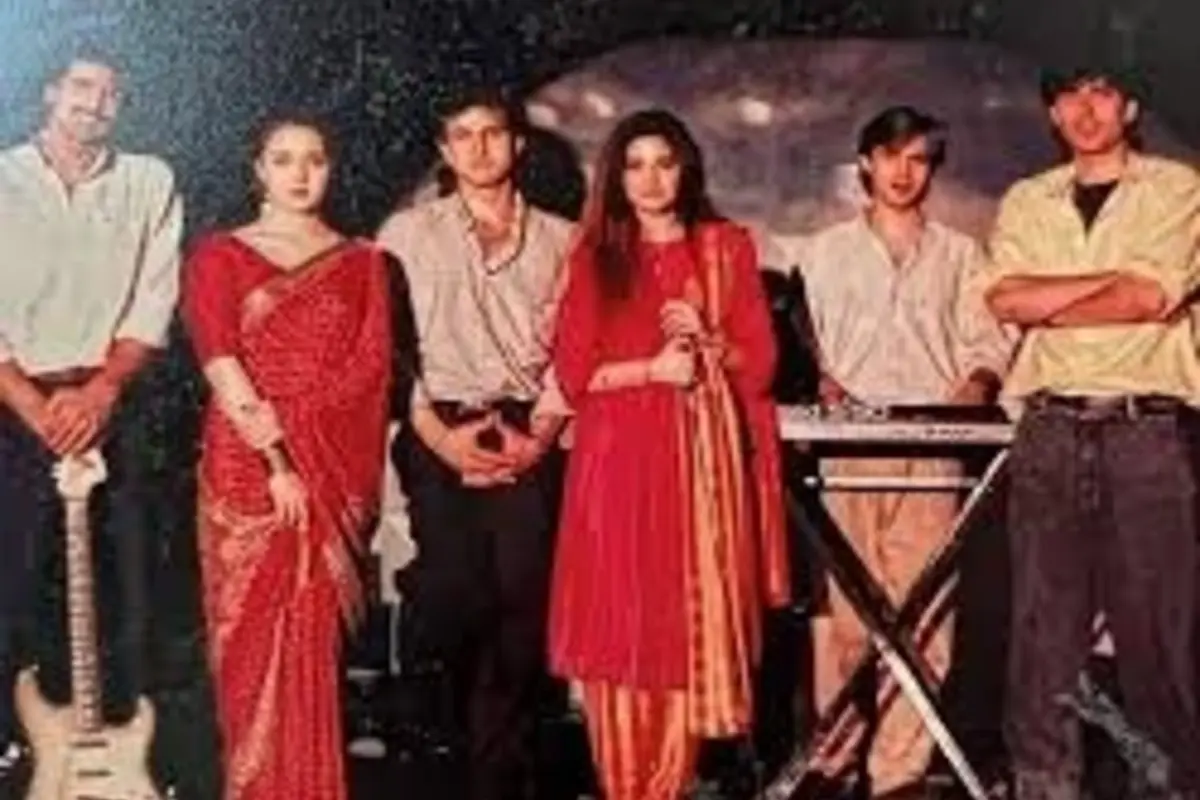
This was a time when youth culture broke free from state-controlled TV formulas to spark a raw, poetic, and wildly chaotic musical revolution, giving us Alamgir, Sajjad Ali, Saleem Javaid, Hassan Jahangeer, Naeem Abbas Rufi, the legendry Junaid Jamshed, Nazia Hassan known to be the founder of pop culture, Nusrat’s Qawwali Aura, Abida Parveen’s dhamal, Bunny and a lot more legendry singers coming up every week in a competition to bring the best music and songs.
While going to my college in 1994 I heard a tremendous, heart wrenching and igniting Qawwali starting with a little bit of pop touch, the buses had some good speakers in those era, “Jhoole Jhoole Lal Dam Mast Qalander” till now this has been a mood swinger for me, every time I go to the podium for a speech, played a cricket match or would have a negative day, this changes my day.
The Karachi Crucible: The Birthplace of the Scene
While Islamabad produced clean-cut melodies and Lahore nurtured underground metal roots, Karachi was the gritty furnace where genres collided. The city’s unique energy created the perfect storm for a musical uprising.
The Infrastructure of Rebellion
Karachi possessed the exact infrastructure that independent music desperately needed. “Vanguard Studio” and “Digital Fidelity Studio” became holy grounds where engineers and young musicians experimented with multi-track recording. Down in Saddar, the historic “Rainbow Centre” grew into the massive distribution hub of the entire South Asian audio cassette industry.
From Sajjad Ali’s “Chief Sahab” to Junaid Jamshed’s “Dil Dil Pakistan” it was rebellious yet pouring poetry and music to support and love the land of the Pure.
Before the 90s, the state-run Pakistan Television (PTV) strictly censored outfits, lyrics, and musical styles. The game changed overnight with the launch of “NTM”, Pakistan’s first private television slot. NTM introduced Music Channel Charts (MCC) and Video Countdown. Suddenly, long-haired teenagers in ripped jeans playing electric guitars were beamed directly into conservative living rooms. Karachi directors like Asim Raza and Saqib Malik revolutionized music videos, turning them into cinematic art forms.
The Pioneers: Shaping the 90s Soundtrack
The sonic architecture of the 90s was a brilliant tapestry of distinct movements that captured the collective psyche of Pakistani youth.
Music Industry cannot talk about the 90s without Vital Signs, fronted by the effortlessly charismatic “Junaid Jamshed”, alongside Rohail Hyatt, Shahzad Hasan, and Salman Ahmad (later replaced by Aamir Zaki and Asad Ahmed). They were the undisputed blueprint for the modern Pakistani pop group. Junaid’s rich vocals and boy-next-door charm drove crowds into a frenzy.
The Anthem: “Dil Dil Pakistan” (1987, carrying heavily into the 90s) became the country’s unofficial second national anthem. Their tracks like “Goray Rang Ka Zamana” and “Sanwali Saloni” dominated every wedding, school trip, and radio station across the country.
If the bands brought the rock attitude, Sajjad Ali (also known as Gaggi Bhai) brought unmatched vocal mastery. A classically trained prodigy who could effortlessly pivot from traditional ghazals to synth-pop, Sajjad was a force of nature. He understood the pulse of the street better than anyone. The Anthem: “Babia” (1993) smashed the charts with its infectious reggae-pop beat, changing the commercial music scene overnight. He followed it with masterpieces like “Chief Saab” and “Cinderella,” proving that a solo artist could hold a stadium just as violently as a full rock band.
Long before modern DJs started flipping tracks, Karachi’s own Saleem Javed pioneered the pop-remix culture in Pakistan. He took traditional folk melodies, pumped them full of synthesizers, electronic drum beats, and heavy basslines, and performed them with high-energy dance moves. The Anthem: His electronic rendition of the folk song “Jugni” turned club nights and private parties into absolute dance marathons, making him the ultimate pioneer of Pakistani club-pop.
For the late-night drives along the Sea View coast, there was Bunny (Asad Jamil). Standing out with his distinct, deeply soulful, and melancholic voice, Bunny brought a westernized acoustic-pop vibe that hit hard for anyone nursing a broken heart. The Anthem: “Bheege Din” and “Dil Main Tum” remain timeless, bittersweet classics that captured the moody, rain-soaked nostalgia of youth romance.
Salman Ahmad, Ali Azmat, and Brian O’Connell, they invented “Sufi Rock” by blending aggressive Zeppelin-style guitar riffs with the mystical poetry of Bulleh Shah. Their 1997 hit “Sayonee” became a global juggernaut.
Bilal Maqsood and Faisal Kapadia brought a sophisticated, literary aesthetic to Karachi pop. Relying on acoustic guitars and deeply poetic Urdu lyrics, their track “Sar Kiye Ye Pahar” captured a quiet coastal longing that perfectly mirrored the moody Karachi sea breeze.
The Fan Frenzy: Stadiums and School Yard Wars
The madness of 90s fandom in Pakistan was visceral. It was a pre-internet hysteria driven purely by physical presence, posters, and radio airplay.
The Concert Culture: Massive, adrenaline-fueled concerts packed venues like the KMC sports complex, Karachi Gymkhana, and the Annu Bhai Park. Security details struggled to contain thousands of teenagers screaming lyrics in unison. It was one of the few spaces where young men and women could gather collectively to experience raw euphoria, with a lot of private gatherings at weddings, birthdays and political campaigns.
The Counter-Culture Fashion: The music dictated the streets. The “Western-Desi” look long unkempt hair, silver rings, amulets (taweez), and loose kurtas over ripped jeans—became the uniform of rebellion. Conversely, the Vital Signs and Awaz fanbases favored leather jackets, tucked-in graphic tees, and slicked-back hair, becoming the trend later all over Pakistan.
The Fandom Wars: Schools and universities were fiercely divided. You were either a die-hard Vital Signs loyalist, a fierce Junoon devotee, or a Sajjad Ali purist. Arguments over who had the better guitarist or the best vocal range frequently disrupted college cafeterias, the peak of this madness can be felt with the debate competitions held at cafeterias to support as a fan and bring new rebuttals to support singer’s. Even the singer’s would never know such minute details brought in these cafeteria debate’s settling Karachi culture to have dialogue and discussions. This war would go on to using toothpastes, shoes, clothing brands and soaps, everyone of us started buying one soda because Junaid Jamshed had it in an advertisement.
The World will move on like it did in the past from cassette recorders to Mp3 players to now different music forums via Cell phones with the latest music updates. But the legacy of music, poetry and these singers will live on for centuries as a trend settler, innovator and guiding a whole generation positively through music.
The 1990s music scene was more than just a collection of hit songs; it was the soundtrack of resilience. In a time when Pakistan was searching for its modern identity amid political and social fracturing, these musicians gave the youth a sense of pride, unity, and ownership.
Decades later, when the opening chords of “Sayonee,” “Babia,” or “Dil Dil Pakistan” play on a smartphone screen in a Karachi traffic jam, the nostalgia is immediate—reminding the nation of a time when its youth picked up microphones and guitars, and loudly conquered the world.
NOTE: This writing is a tribute to legendry pop culture pioneers and founders known as South Asian “Queen of Pop” Madam Nazia Hassan (late) and the legendry Martyr Junaid Jamshed, for such people “Allama” Jon Ailiya Bhai expressed:
“How captivating you are, and how accommodating I am,
What an irony it is that we will eventually die”.
Catch all the Blogs News, Breaking News Event and Trending News Updates on GTV News
Join Our Whatsapp Channel GTV Whatsapp Official Channel to get the Daily News Update & Follow us on Google News.
Must Read
Pakistan
Ishaq Dar Joins R-4 Ministerial Meeting at UNGA 81, Reaffirms Support for Palestine
22-September،2026