
Strait of Hormuz; Iran Issues Clear Message to the World


Iran Says Neighbouring States Seek New Security Deals
Ghalibaf’s Hormuz declaration signals Iran’s real victory wasn’t blockade lifting—it was international legitimation of unilateral control.
Iranian Parliament Speaker Mohammad Ghalibaf’s statement that the Strait of Hormuz “will never return to pre-war status” under Iranian administration transcends ceremonial post-negotiation rhetoric. It represents explicit claim that Iran secured strategic concession invisible in official diplomatic communiqués: international acceptance of Iranian dominance over the world’s most critical energy chokepoint.
The distinction matters operationally. The Switzerland agreement addressed immediate ceasefire, asset unfreezing, and technical verification mechanisms. Ghalibaf’s assertion that Iran will “administer” the Strait—a phrase absent from official joint statements—indicates Iran extracted implicit understanding that post-war Hormuz security operates under Iranian parameters previously unacceptable to Western negotiators.
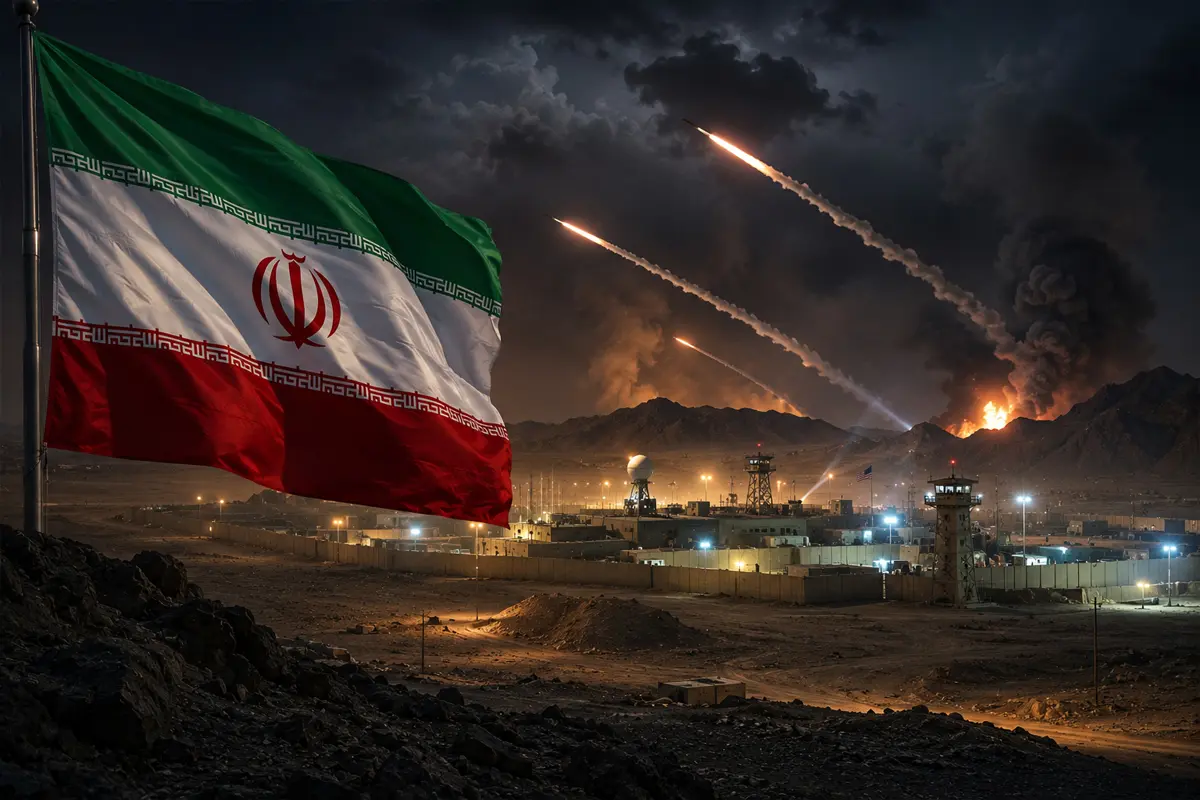
This represents extraordinary geopolitical reversal. Pre-war, the Strait operated under fragile equilibrium: US-led maritime coalitions asserting freedom of navigation rights while Iran sporadically threatened closure or interdiction. The recent Iranian strikes on Gulf energy infrastructure shifted power calculus decisively. Qatar’s production halted for months; Saudi facilities sustained damage; UAE infrastructure required hardening. Iran demonstrated it could inflict economic damage exceeding any Western military response cost.
Ghalibaf’s “distrustful of Americans” formulation signals Iran negotiated from genuine strength position. Iran didn’t accept American terms reluctantly; it extracted maximum advantage while maintaining rhetorical hostility toward agreement’s author. This strategy—simultaneously praising diplomatic breakthrough while emphasizing continued American adversity—allows Ghalibaf domestic political cover with hardliners who view American engagement as ideological contamination.
The blockade “lifted overnight” claim requires scrutiny. The blockade wasn’t formally lifted through negotiation—it ended because Iran exhausted military capacity to sustain it without risking catastrophic escalation. Reframing capitulation necessity as diplomatic victory represents standard negotiation narrative: transforming constraints into strategic choice. Ghalibaf positioned Iran as magnanimous power permitting commerce through magnanimity rather than concession extraction.
Israeli opposition to negotiations Ghalibaf references reveals deeper competition. Israel faces strategic marginalization if US-Iran normalization proceeds. Previous Israeli military operations against Iranian nuclear sites and proxy forces derived legitimacy from American policy alignment. Normalized US-Iran relations eliminate that shared interest. Ghalibaf explicitly weaponizes Israeli concern to reinforce Iranian negotiating credibility: “Even our enemies recognize we extracted genuine concessions.”
What’s geopolitically significant is energy market vulnerability created by this arrangement. Global oil supply depends on Hormuz transit—approximately 30% of seaborne traded oil. If Iranian administration of Strait translates to Iranian veto power over transit, energy markets face structural risk unaddressed in post-war negotiations. Insurance costs for transiting vessels would spike; shipping firms would demand routing insurance; energy prices would incorporate permanent Iran-disruption risk premium.
The “never return to pre-war status” formulation suggests Iran negotiated permanent institutional change rather than temporary ceasefire. That indicates Iran secured recognition of expanded maritime authority—potentially including expanded territorial claims, enhanced inspection rights, or veto authority over specific traffic categories. These concessions, if granted, represent fundamental power redistribution in regional geopolitics.
Forward implications depend on whether Iran interprets “Hormuz administration” as custodial responsibility or imperial control. The answer determines whether post-war energy security stabilizes or faces recurring disruption cycles.
Catch all the World News, Breaking News Event and Trending News Updates on GTV News
Join Our Whatsapp Channel GTV Whatsapp Official Channel to get the Daily News Update & Follow us on Google News.
Must Read

Entertainment
Dylan Sprouse Calls Child Acting ‘Child Labour’ and Opens Up About Its Impact
2-September،2026