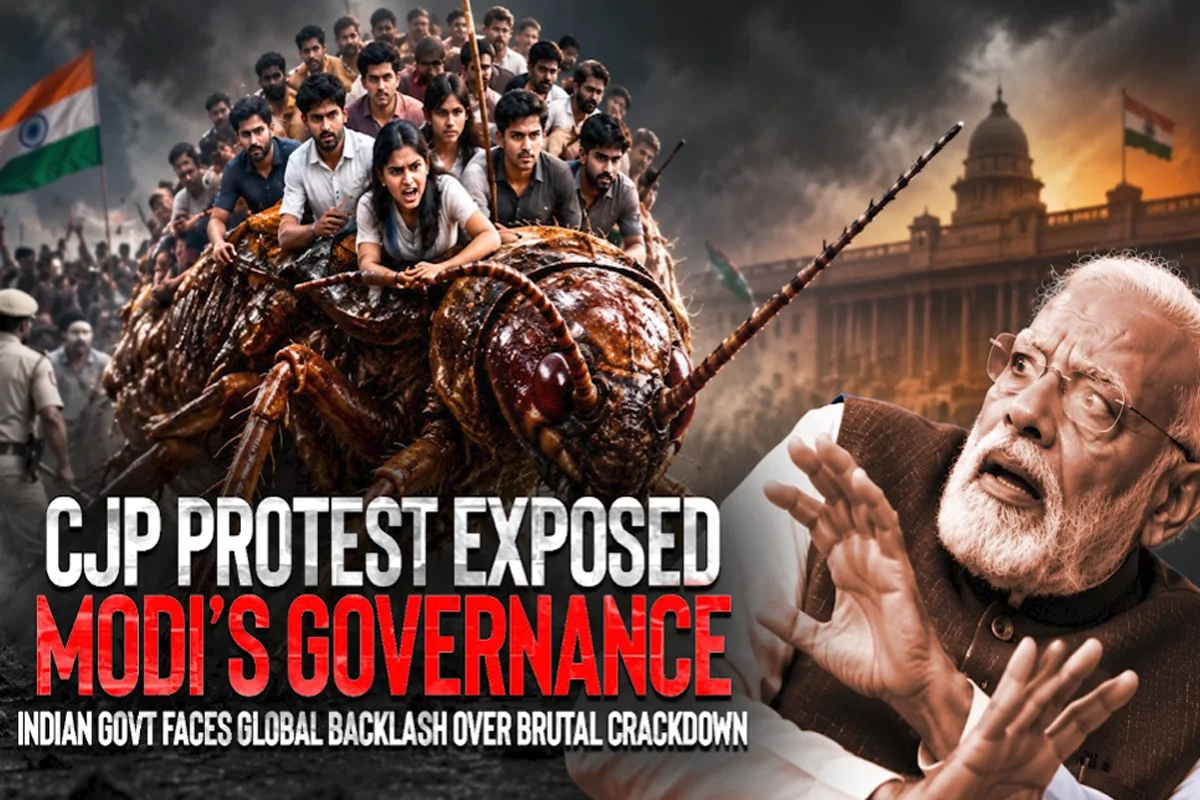

India’s Cockroach Generation; How Youth Uprising Exposes Modi’s Institutional Bankruptcy

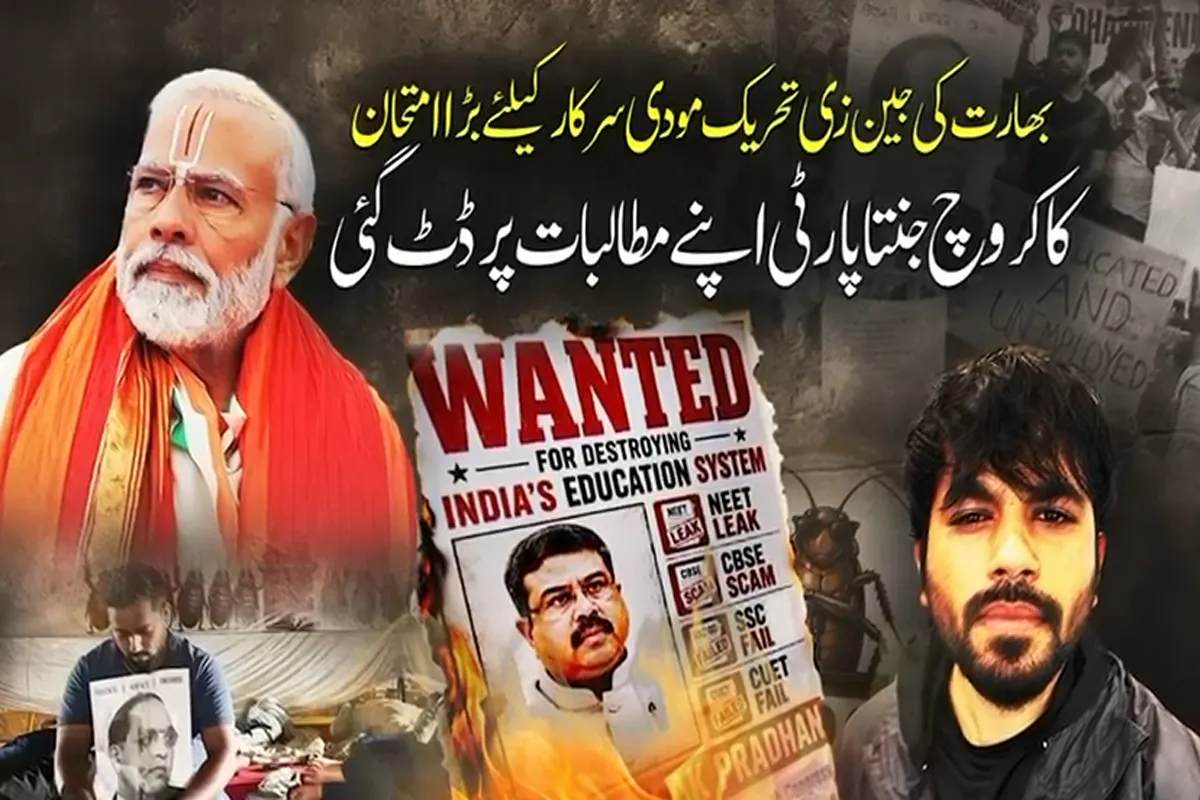
The Cockroach People’s Party represents something Modi’s government catastrophically miscalculated—a generational rupture where institutional failure translated directly into political rebellion. That name itself signals contempt: comparing themselves to cockroaches reflects recognition that in Modi’s governance hierarchy, India’s aspiring youth possess minimal political value once they cease serving electoral narrative purposes.
The movement’s shift from online agitation to street encampments in New Delhi’s June heat represents calculated escalation targeting governmental legitimacy. When thousands voluntarily sleep on pavement during extreme temperatures, they’re not protesting inconvenience—they’re staging public rejection of state authority. The Education Ministry’s incompetence manifesting through repeated exam paper leaks became the catalyzing incident, but the underlying fury concerns something deeper: systematic institutional decay that transforms youth aspirations into unemployment and fraud.
Modi’s political model thrived on packaging aspirational narratives—”Make in India,” “Digital India,” “Skill India”—without constructing actual institutional capacity to deliver them. Exam corruption exposes this gap catastrophically. Repeated paper leaks signal either deliberate system sabotage or comprehensive bureaucratic incompetence; either interpretation destroys governmental credibility with constituencies most invested in institutional legitimacy. Students cannot simultaneously trust meritocratic examination systems and Indian state institutions.
The unemployment dimension transforms this from isolated protest into systemic indictment. India’s youth unemployment has become structural rather than cyclical, yet Modi’s government responds with rhetoric rather than policy. When Abhijit Deepak mobilizes student-farmer coalitions, he articulates what institutional analysis confirms: Modi’s economic model systematically produces joblessness while extracting labor value from desperate populations. Farmers and students face identical predatory state apparatus; their coalition represents recognition that individual grievance categories mask unified class interests.
The regional contagion Deepak invokes—Sri Lanka, Bangladesh, Nepal—warns that youth uprisings follow predictable escalation patterns. When governments fail to address legitimate grievances through institutional channels, movements radicalize toward confrontational tactics. Sri Lanka’s 2022 protests that forced a president’s departure demonstrate trajectory endpoints when ruling coalitions ignore youth fury systematically.
What’s strategically dangerous for Modi is the movement’s refusal to accept ceremonial concessions. Demanding Education Minister Dharamendra Pradhan’s resignation signals protesters recognize individual scapegoating as insufficient—they demand institutional accountability. This represents escalation beyond traditional Indian protest dynamics where governments co-opt leadership or offer token reforms. The CJP explicitly rejects governmental damage control as inadequate.
The movement’s organizational structure—decentralized, digitally coordinated, horizontally structured—mirrors successful youth uprisings globally. Traditional hierarchical party structures prove vulnerable to state repression; distributed movements prove resistant. Modi’s government developed extensive surveillance and suppression capacity targeting conventional opposition parties yet possesses limited tools against amorphous networks lacking centralized leadership.
The farmer coalition expansion represents BJP’s most serious vulnerability. Agricultural constituencies sustained Modi’s electoral dominance; aligning them with urban youth creates political coalition challenging BJP’s core support. If successful, this realignment transforms Indian electoral mathematics fundamentally, particularly in states where rural-urban political integration determines outcomes.
Forward indicators suggest escalation momentum. If government concessions remain insufficient—if exam reforms don’t produce genuine meritocracy or unemployment policies don’t create actual jobs—the movement’s protest phase transitions toward electoral opposition phase. That represents potential transfer of street anger into ballot box rejection, with generational implications far exceeding immediate policy disputes.
The Cockroach Generation learned institutional trust is earned through delivery, not narrative. Modi’s government has delivered neither.
Catch all the World News, Breaking News Event and Trending News Updates on GTV News
Join Our Whatsapp Channel GTV Whatsapp Official Channel to get the Daily News Update & Follow us on Google News.
Must Read