

Unknown Hackers Breach Indian Sun TV Network, Disrupting Broadcasting Across Multiple Channels

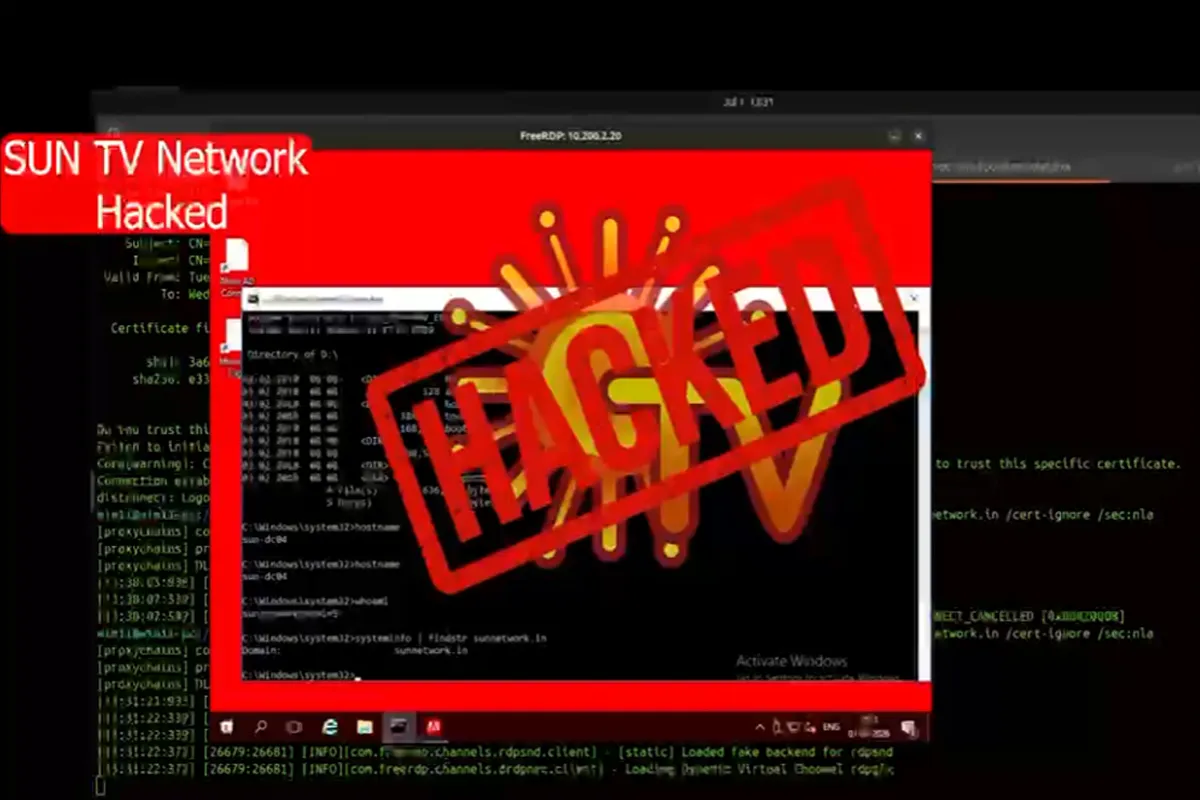
Unknown cyber attackers penetrated India’s Sun TV Network infrastructure, temporarily disrupting broadcasts across multiple television channels and subsequently deploying ransomware that locked approximately 1,800 domain systems.
The incident exposed vulnerabilities in critical media infrastructure while raising attribution questions that remain unresolved pending technical forensics.
The attack progressed through identifiable stages. Initial penetration granted attackers access to Sun TV’s internal broadcast management portal—the centralized system controlling content distribution. Using this access, operators disrupted live broadcasts before displaying messages including a Pakistani flag and “Pakistan Zindabad” banner across affected channels. Subsequent ransomware deployment locked 1,800 domains, escalating impact beyond broadcast disruption into potential financial extortion scenario.
Attribution remains undetermined. The messages displayed during the attack suggest possible Pakistani origin, yet sophisticated cyber operations frequently include false-flag indicators designed to misdirect investigation. Technical forensics analysis—examining malware signatures, attack infrastructure, and operational tradecraft—would be necessary to confirm or refute attribution. Such analysis requires time and expertise that public reporting cannot yet provide.
Indian cybersecurity officials characterized the incident as exposing “serious administrative and technical deficiencies” in the nation’s IT security infrastructure. These assessments suggest that Sun TV’s security architecture contained preventable vulnerabilities: inadequate network segmentation, insufficient access controls, or compromised credentials. The scale of compromise (1,800 locked domains) indicates that attackers achieved extensive system access beyond broadcast portals specifically.
Pakistani officials have not publicly claimed or denied involvement. Absent official statements, attribution depends entirely on technical analysis rather than geopolitical claims. Pakistani cybersecurity capabilities have documented sophistication; similarly, Indian government cyber operations have conducted documented activities. Either nation—or third parties entirely—could execute operations of this scale depending on motivation and resources.
The operational sophistication suggests organized actors rather than amateur hackers. Penetrating broadcast management systems requires specialized knowledge of media infrastructure architecture and operational technology protocols. The coordinated deployment across fragmented systems indicates either prolonged reconnaissance or detailed pre-attack intelligence. Either scenario reflects more-capable actors than typical opportunistic cybercriminals.
The timing and targeting choices offer limited attribution insight. Selecting major broadcaster as target indicates desire for maximum visibility and operational impact. This strategy could serve multiple purposes: demonstrating capability for deterrent effect, seeking ransom payment leverage, or inflicting strategic damage on target nation’s media infrastructure. Each motivation produces similar operational outcomes, preventing definitive attribution based on targeting alone.
Broadcast portal compromise raises questions about Sun TV’s security investment relative to infrastructure criticality. Major television networks distribute national information during emergencies and crises—making them critical national infrastructure. Their operational continuity carries strategic significance exceeding typical commercial enterprise. Yet the apparent ease of penetration suggests security investments lagged behind operational importance.
The ransomware deployment’s financial implications remain unclear. Whether attackers demanded ransom, attempted system crippling for strategic effect, or simply demonstrated capability cannot be determined from public reporting. Ransom demands would clarify attacker motivation; absence of known demands suggests either covert extortion or pure capability demonstration.
The 1,800 locked domains indicate network architecture allowing lateral movement across system boundaries. Enterprise security frameworks typically isolate critical systems (broadcast infrastructure) from administrative systems (domain controllers) through air-gapping and access restrictions. The simultaneous compromise of both categories suggests either inadequate compartmentalization or successful privilege escalation permitting boundary traversal.
Historical context provides limited attribution assistance. South Asia has experienced documented cyber incidents attributed to various actors—Pakistan, India, China, and third parties—making regional cyber warfare a recognized phenomenon. The Sun TV operation fits established patterns of regional cyber operations without uniquely identifying specific attacker.
Indian incident response capacity will test whether cybersecurity infrastructure actually matches government claims. System restoration timeline, prevention of recurrence, and identification of attacker origin will indicate whether India’s IT security capabilities substantively match technology sector reputation. Delayed response or recurrent vulnerabilities would suggest infrastructure inadequacy.
International implications extend beyond bilateral India-Pakistan dynamics. Successful penetration of major broadcaster demonstrates general vulnerability patterns potentially affecting regional media networks throughout South Asia. If Sun TV’s security proved inadequate, comparable networks likely share similar weaknesses, creating cascade risk across the region.
Pakistani perspective emphasizes that attribution without technical evidence constitutes unfounded accusation. Without forensic confirmation, claiming Pakistani involvement represents assumption rather than fact. International norms require evidence-based attribution in cyber incidents, not geopolitical speculation.
Indian perspective emphasizes that message content displaying Pakistani symbols constitutes meaningful attribution indicator. While not conclusive forensic evidence, deliberate attribution claims during attacks carry strategic significance. Attackers rarely accidentally include false-flag indicators—message content typically reflects actual or deliberately false attribution intent.
Technical analysts note that definitive attribution requires malware analysis, infrastructure investigation, and operational pattern correlation—processes requiring weeks or months. Public attribution statements issued immediately after incidents typically reflect geopolitical assessment rather than technical conclusion.
The incident demonstrates that critical infrastructure vulnerability transcends borders and technology sector sophistication. Large IT sectors provide insufficient security guarantee for essential national systems. Cyber attacks against television networks expose infrastructure gaps across South Asia requiring substantial security investment regardless of attribution.
Whether the attack represents state-sponsored operation, hacktivist activity, or independent criminal enterprise remains unknown pending forensic analysis. Attribution will ultimately depend on technical evidence rather than message content or geopolitical assumptions.
Catch all the World News, Breaking News Event and Trending News Updates on GTV News
Join Our Whatsapp Channel GTV Whatsapp Official Channel to get the Daily News Update & Follow us on Google News.
Must Read


Pakistan
Bilawal Bhutto Pays Tribute to Karsaz Martyrs, Calls for Unity Against Terrorism
18-October،2026