Hazrat Abdullah Shah Ghazi (RA): Karachi’s Timeless Spiritual Guardian and the Legacy of a Revered Saint

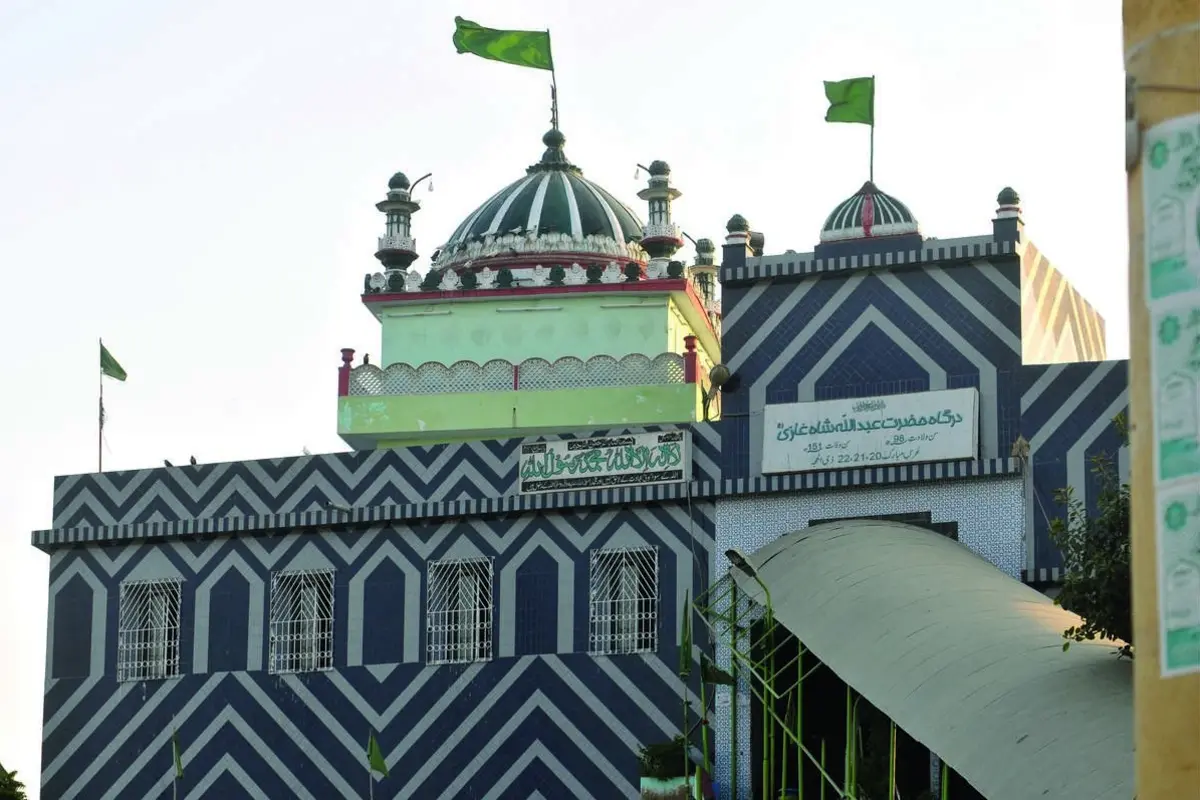
For nearly a millennium, the shrine of Hazrat Abdullah Shah Ghazi (RA) has stood proudly along Karachi’s coastline, serving as one of the most respected spiritual landmarks in South Asia. Overlooking the Arabian Sea from Clifton, the shrine represents far more than an architectural monument or burial place. It has become a symbol of unwavering faith, compassion, resilience, and hope for millions of people. Devotees from all walks of life visit the shrine seeking spiritual comfort, inner peace, healing, and divine blessings. To countless admirers, Abdullah Shah Ghazi is not simply a historical personality but a saint whose spiritual influence continues to inspire generations.
A Historical Figure Surrounded by Sacred Tradition
As with many revered saints from the early centuries of Islam, the life of Hazrat Abdullah Shah Ghazi is preserved through a blend of historical accounts and long-standing religious traditions. Although scholars differ on certain details of his biography, all narratives portray him as a man devoted to faith, righteousness, and service to humanity.
One of the most widely accepted traditions identifies him as Syed Abu Muhammad Abdullah al-Ashtar, a descendant of Hazrat Imam Hasan (RA), the beloved grandson of Prophet Muhammad (PBUH). According to this account, he was born in Madinah around 720 CE and later travelled to Sindh as a merchant carrying horses from Kufa. Upon reaching the region, he dedicated himself to spreading Islam through wisdom, compassion, scholarship, and exemplary moral conduct rather than through force.
Another historical interpretation, presented by historian Dr. Umar Bin Muhammad Daudpota, identifies him as General Abdullah bin Nabhan, a commander who participated in the Arab expeditions to Sindh during the reign of Raja Dahir. This tradition suggests that after witnessing the hardships of conflict, he abandoned military life and devoted himself entirely to religious teaching and spiritual guidance. It is believed that his title, “Ghazi,” originally signified a victorious warrior but later came to symbolize a deeper spiritual triumph.
A third narrative describes Abdullah Shah Ghazi as a descendant of the Prophet Muhammad (PBUH) who fled political persecution during the Abbasid Caliphate. Seeking safety far from the centers of power, he eventually settled in Sindh, where he became a respected spiritual mentor instead of pursuing political influence.
Although historians continue to debate which account is historically accurate, they generally agree that Abdullah Shah Ghazi spent his life serving Islam, promoting righteousness, and guiding people with sincerity before attaining martyrdom in Sindh. His followers laid him to rest on a hill overlooking the Arabian Sea, where his shrine continues to attract millions of visitors.
From Warrior to Spiritual Guide
One of the most compelling aspects of Abdullah Shah Ghazi’s legacy is the transformation traditionally associated with his life. Unlike saints remembered solely for lives of contemplation and isolation, he is often portrayed as someone who experienced both worldly struggle and spiritual awakening.
According to historical traditions, after witnessing the consequences of political conflict and warfare, he chose a different path—one centered on reforming hearts rather than conquering territories. Instead of seeking authority over people, he dedicated himself to nurturing faith, compassion, and moral character.
This transformation reflects a fundamental principle of Islamic spirituality: true victory is not achieved by defeating others but by overcoming one’s own ego (nafs). In this understanding, the title “Ghazi” comes to represent not only success on the battlefield but also the greater triumph of spiritual self-discipline and inner purification.
A Mission Rooted in Compassion
Despite the different historical accounts surrounding his life, nearly every tradition highlights Abdullah Shah Ghazi’s commitment to spreading Islam through kindness, wisdom, and exemplary conduct.
His gatherings are said to have welcomed individuals from every social background without discrimination. He encouraged honesty in business, promoted justice, inspired charitable giving, and reminded people that wealth without compassion ultimately breeds arrogance.
His approach reflected the Quranic teaching:
“Invite to the way of your Lord with wisdom and beautiful preaching.” (Quran 16:125)
This philosophy of peaceful guidance, moral integrity, and compassionate service later became one of the defining characteristics of South Asian Sufism, leaving an enduring legacy that continues to influence countless devotees today.
The Philosophy of Humility, Love, and Service
The spiritual teachings associated with Hazrat Abdullah Shah Ghazi (RA) reflect the timeless principles of classical Sufism, which emphasizes the purification of the heart alongside the practice of religious obligations. In this tradition, true spirituality is measured not by status, wealth, or knowledge alone, but by sincerity, compassion, and closeness to Allah.
His legacy teaches that material success has little value if it is not accompanied by humility and kindness. Pride separates people from their Creator, whereas humility strengthens faith and nurtures good character. Love and mercy are regarded as more powerful than force, and serving humanity is viewed as one of the noblest forms of worship. These enduring values continue to define the spiritual atmosphere of his shrine, where people from every background are welcomed without distinction.
A Lasting Legacy of Community Service
For centuries, the shrine of Hazrat Abdullah Shah Ghazi has served not only as a place of worship but also as an important center for social welfare and community support. Every day, thousands of visitors arrive seeking spiritual guidance, emotional comfort, and renewed hope during difficult times.
Charitable activities have long been an essential part of the shrine’s tradition. Food is distributed to those in need, travelers are offered rest, and individuals facing hardship often find encouragement through the welcoming environment. The shrine also hosts Qawwali gatherings that foster spiritual reflection while bringing together people from diverse communities.
Visitors representing different provinces, languages, cultures, and social classes gather peacefully at the shrine, reflecting the inclusive spirit that has characterized Sindh’s Sufi heritage for generations. Throughout its history, Muslims as well as followers of other faiths including Hindus and Christians have visited the shrine, making it a symbol of religious coexistence and mutual respect.
The Shrine’s Journey Through Karachi’s History
Historical records suggest that the shrine originally consisted of a modest structure built upon a sandy hill overlooking the Arabian Sea. For many years, it remained a simple place of devotion before Karachi developed into one of South Asia’s largest metropolitan centers.
Following Pakistan’s independence, the city’s rapid growth brought increasing numbers of migrants from across the country, including Sindh, Punjab, Khyber Pakhtunkhwa, Balochistan, and other regions. As Karachi expanded, the shrine became an even more prominent destination for pilgrims and visitors from every corner of Pakistan.
Over the decades, the shrine underwent several phases of renovation and expansion. Major restoration efforts took place during the administration of Field Marshal Ayub Khan, were later continued during the government of Prime Minister Zulfikar Ali Bhutto, and received further improvements under the city’s administration in the mid-2000s.
The shrine has also endured difficult periods. Despite neglect at various times and the devastating terrorist attack of 2010, it has remained standing as one of Karachi’s most recognizable religious landmarks. Millions of pilgrims continue to visit every year, and its survival through changing political, social, and security challenges has strengthened its symbolic importance.
Today, the shrine represents not only a sacred place of worship but also a powerful reminder of Karachi’s resilience. Through every era of the city’s history, it has remained a constant source of faith, unity, and hope for generations of devotees.
The Legend of the Saint Who Protects Karachi
Among the many traditions associated with Hazrat Abdullah Shah Ghazi (RA), none is more deeply rooted in Karachi’s popular culture than the belief that he continues to protect the city from destructive cyclones originating in the Arabian Sea.
For generations, many residents have observed that severe storms forecast to strike Karachi have often weakened or altered their course before reaching the coastline. Events such as Cyclone Yemyin in 2007 and Cyclone Phet in 2010 strengthened this popular belief when both storms changed direction before making a direct impact on the city. To countless devotees, these incidents are viewed as signs of the saint’s spiritual blessings (barakah) and his continued protection over Karachi.
From a scientific standpoint, however, meteorologists attribute the movement and intensity of cyclones to natural atmospheric processes, including wind patterns, sea-surface temperatures, pressure systems, and steering currents. Modern meteorological science does not recognize supernatural intervention as an explanation for cyclone behavior.
For many believers, these two perspectives are not necessarily contradictory. They maintain that the natural laws governing the universe ultimately operate according to the will of Allah, and that divine protection may be manifested through those very laws. Consequently, the belief that Hazrat Abdullah Shah Ghazi safeguards Karachi remains a matter of personal faith rather than one that can be established through historical evidence or scientific proof.
Whether interpreted literally or symbolically, this enduring legend has become an inseparable part of Karachi’s cultural identity and collective memory.
The Tradition of the Ever-Flowing Spring
Another long-standing tradition linked to the shrine concerns the presence of water beneath its foundations. Many devotees believe that an underground spring has continued to flow there for generations despite Karachi’s recurring water shortages.
Visitors often regard this water as a symbol of Allah’s mercy and blessings rather than simply a natural resource. While some view the phenomenon through a spiritual lens and others explain it in geological terms, it remains an important element of the sacred traditions surrounding the shrine.
Accounts of Spiritual Experiences
Over the centuries, numerous visitors have described profound personal experiences during their visits to the shrine. Many speak of finding an overwhelming sense of peace and comfort, while others believe their prayers were answered after seeking Allah’s help at this sacred place.
Some devotees recount dreams that inspired significant changes in their lives, and caretakers have shared stories of unusual fragrances, deep serenity, and other extraordinary moments experienced within the shrine’s surroundings.
Such experiences are deeply personal and cannot be independently verified. Within Islamic thought, many believers regard these occurrences as examples of karamat—extraordinary favors granted by Allah to His righteous servants—while others understand them as the emotional and psychological comfort that sacred places can provide. Regardless of interpretation, these accounts continue to strengthen the spiritual bond many people feel with the shrine.
The Islamic Perspective on Saints
In mainstream Islamic belief, saints (awliya Allah) are regarded as devoted servants distinguished by their piety, righteousness, and closeness to Allah.
The Holy Quran declares:
“Indeed, the friends of Allah shall have no fear, nor shall they grieve.” (Quran 10:62)
Hazrat Abdullah Shah Ghazi (RA) remains far more than a historical figure or the occupant of a centuries-old shrine. For millions of people, he symbolizes faith, compassion, humility, and service to humanity values that continue to resonate across generations. Whether viewed through the lens of history, spirituality, or Karachi’s rich cultural heritage, his legacy has endured as a source of hope and inspiration. While stories of miracles and divine protection remain matters of personal belief rather than historical or scientific proof, the shrine’s greatest significance lies in its ability to unite people from diverse backgrounds in a shared spirit of devotion, kindness, and peace. In an ever-changing world, the enduring memory of Hazrat Abdullah Shah Ghazi serves as a reminder that true greatness is measured not by power or wealth, but by faith, selflessness, and the positive impact one leaves on humanity.
Catch all the Blogs News, Breaking News Event and Trending News Updates on GTV News
Join Our Whatsapp Channel GTV Whatsapp Official Channel to get the Daily News Update & Follow us on Google News.
Must Read