
Iran’s Qalibaf Warns Aggressors of Shocking Military Response Amid Strait of Hormuz Crisis 2026

Iran's Qalibaf Warns Aggressors of Shocking Military Response Amid Strait of Hormuz Crisis 2026
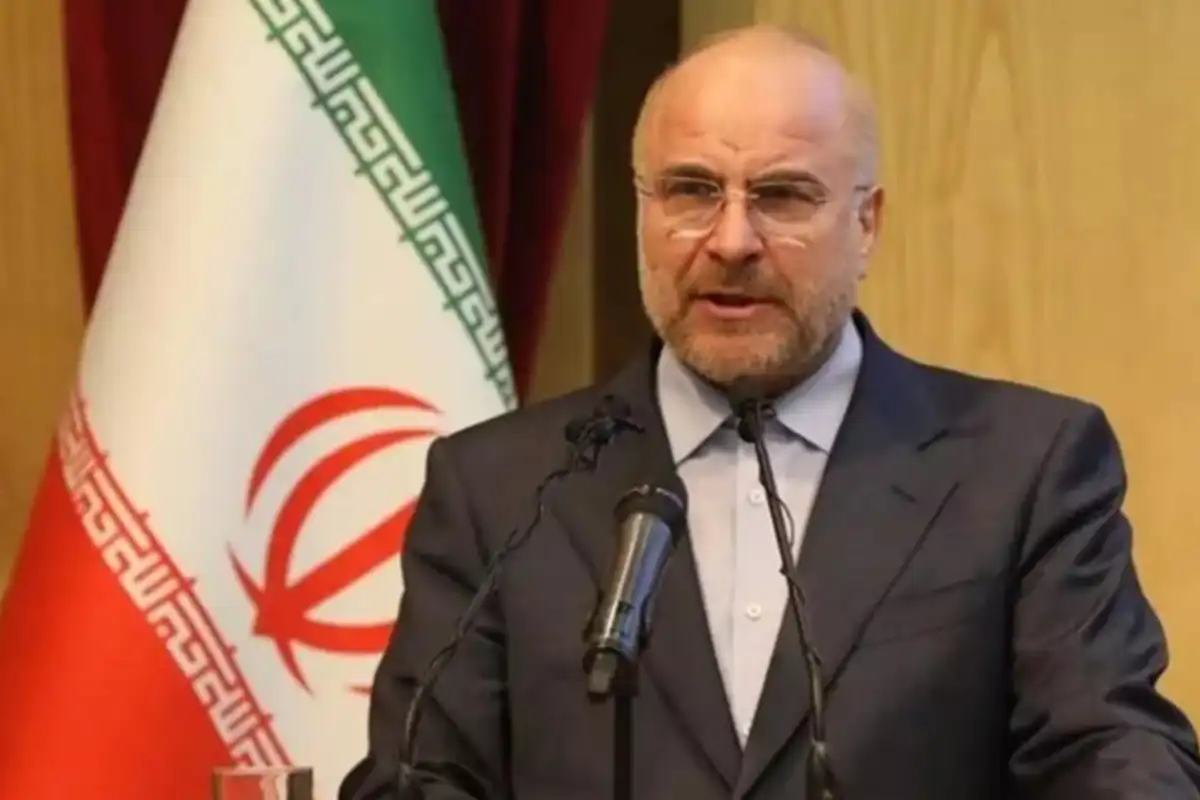
When a sitting parliamentary speaker publicly declares that enemies “will be surprised” by his country’s military response, the statement demands analysis beyond headline value. Mohammad Bagher Qalibaf — Iran‘s Parliament Speaker, former Islamic Revolutionary Guard Corps commander, and one of the most militarily experienced figures in Tehran‘s political establishment — delivered precisely that warning on Monday. Against the backdrop of a partially closed Strait of Hormuz, rising US naval pressure, and collapsed nuclear negotiations, his words carry operational weight that pure rhetoric rarely does.
What Qalibaf Actually Said — and What It Signals
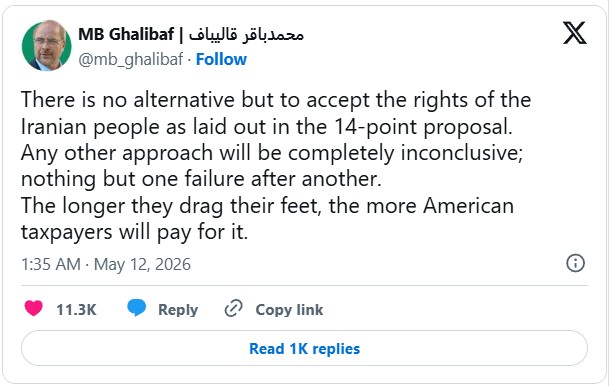
Qalibaf’s statement operates on two levels simultaneously. The first is the direct military declaration — that Iran‘s armed forces are battle-ready, that any aggression will receive a proportionate and surprising response, and that enemy miscalculations will produce disastrous results. The second, delivered in a follow-up post, is diplomatic and economic — that the only viable path forward is acceptance of Iran‘s 14-point proposal, and that prolonged American resistance will accumulate financial costs that ultimately fall on US taxpayers.
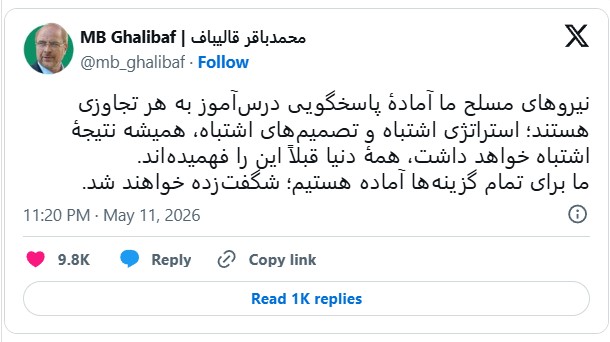
That dual framing is deliberate. It speaks to military audiences abroad while simultaneously addressing domestic Iranian constituencies who demand both strength and strategic coherence. Qalibaf is not simply issuing a threat — he is articulating a posture that positions Iran as both a capable military actor and a rational negotiating party with clearly stated terms.
The Strait of Hormuz: From Threat to Reality
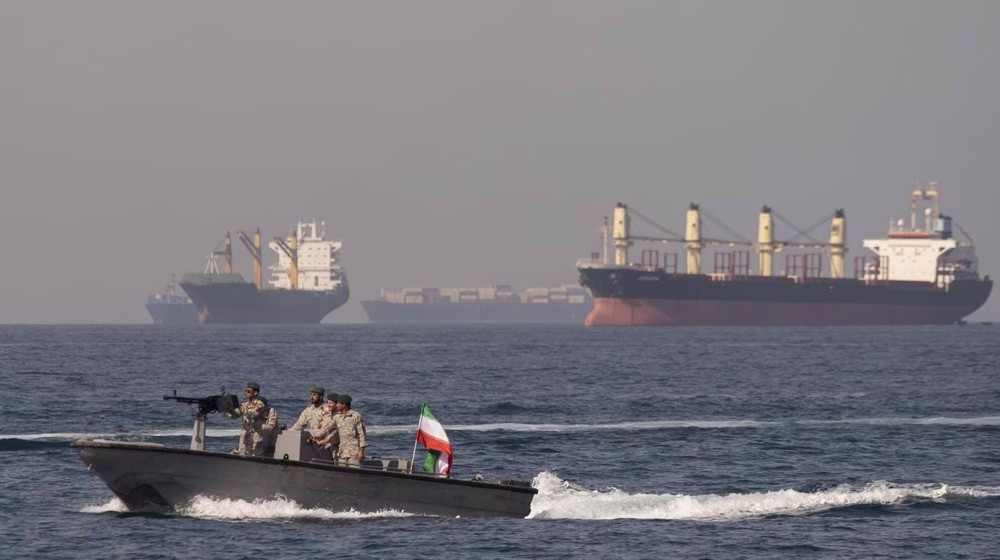
What distinguishes the current crisis from previous cycles of US-Iran tension is that the Strait of Hormuz closure is no longer a hypothetical. Tehran has moved from threatening closure to enforcing significantly tightened controls — a shift triggered, according to Iranian officials, by Trump’s announcement of a blockade targeting Iranian vessels and ports.
The practical consequences are already visible in global energy markets. Oil prices have surged as uncertainty around Persian Gulf transit disrupts supply chain calculations for buyers across Europe and Asia. The Strait handles approximately 20 percent of global oil trade daily. Even partial disruption at that chokepoint generates price volatility that cascades through every economy dependent on imported energy — which is to say, virtually every major economy on earth.
Reports that US warships attempting to approach Iranian waters in recent weeks were repelled by direct Iranian fire represent a dramatic escalation that has received insufficient Western media attention relative to its strategic significance. If accurate, these incidents mark a threshold — from posturing to kinetic engagement — that fundamentally changes the risk calculus for all parties operating in the region.
Qalibaf’s Military Credibility: Why This Voice Matters
Understanding why Qalibaf’s warning carries particular weight requires knowing who he is beyond his current parliamentary role. He served as IRGC Air Force commander, led operations during multiple periods of heightened tension with the United States, and ran for the Iranian presidency several times before securing his current position. He is not a civilian politician reading from a prepared statement. He is a former operational commander describing a military posture he helped build.
His reference to Iran being “prepared for all options” and enemies being “surprised” echoes the language Iranian military doctrine uses to describe asymmetric warfare capabilities — drone swarms, missile saturation attacks, naval mine deployment, and proxy force activation across multiple theatres simultaneously. These are not theoretical capabilities. They have been demonstrated, in varying forms, across conflicts in Yemen, Syria, Iraq, and directly against Israel in April 2024.
The European Dimension: A New Front Opening
Iran‘s Deputy Foreign Minister has separately warned France and Britain against deploying warships in the Strait of Hormuz — a warning that signals Tehran is watching European military signalling as carefully as American movements. European naval deployment in Hormuz, even framed as freedom-of-navigation enforcement, would dramatically widen the conflict’s geographic and diplomatic scope.
For European governments already managing energy security concerns, troop commitments to Ukraine, and domestic political pressures, direct military involvement in a Persian Gulf confrontation would represent an enormous and potentially unsustainable strategic overextension.
Global Economic Stakes: The Number That Focuses Minds
The specific economic mechanism through which the Hormuz crisis reaches ordinary citizens globally is energy pricing. When traders price in genuine closure risk at Hormuz, crude benchmarks spike immediately. Those spikes translate within weeks into elevated fuel costs, higher transportation costs for goods, and inflationary pressure across supply chains that took years to stabilise after pandemic disruption.
Qalibaf’s deliberate mention of American taxpayer costs is not rhetorical decoration. It is a calculated appeal to the domestic political constraint that ultimately shapes US foreign policy more reliably than any diplomatic argument — the point at which overseas military commitments become visibly expensive at home.
FAQ
Has Iran actually closed the Strait of Hormuz? Iran has enforced significantly tighter controls rather than a complete closure, targeting shipping associated with the US and its allies specifically.
What is Iran’s 14-point proposal? Iranian officials have referenced a comprehensive proposal addressing sanctions relief, frozen assets, sovereignty recognition, and security arrangements — the full text has not been publicly released in detail.
Could US-Iran conflict escalate to direct warfare? The repelling of US warships by Iranian fire, if confirmed, represents the most serious direct military contact between the two sides in years and materially raises that risk.
Catch all the World News, Breaking News Event and Trending News Updates on GTV News
Join Our Whatsapp Channel GTV Whatsapp Official Channel to get the Daily News Update & Follow us on Google News.
Must Read


Pakistan
One Killed as Under-Construction Red Line Bridge Shuttering Collapses in Karachi
1-October،2026