
UAE Wraps Oil Tanks in Anti-Drone Nets: What Abu Dhabi’s Quiet Defensive Move Reveals About Gulf Fear

UAE Wraps Oil Tanks in Anti-Drone Nets: What Abu Dhabi's Quiet Defensive Move Reveals About Gulf Fear
The Abraham Accords brought Israel and the UAE closer. That proximity now comes with a security price that Abu Dhabi is paying in hardware.
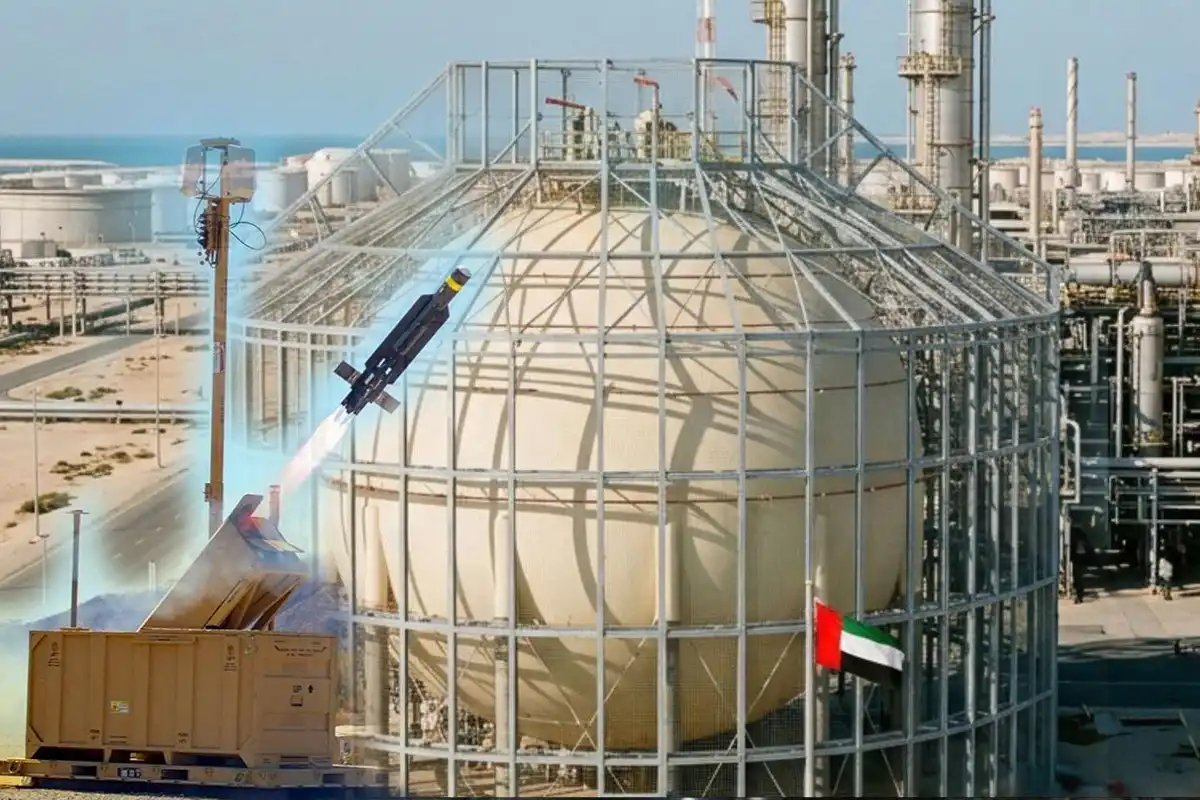
The United Arab Emirates has begun installing anti-drone protective nets around its most critical oil storage facilities and energy infrastructure — a defensive measure that reflects a specific and escalating anxiety: that Abu Dhabi’s deepening security ties with Israel have placed its economic lifelines in Iranian crosshairs.
Photographs showing large metallic protective mesh deployed around oil storage tanks have begun circulating publicly, confirming a shift from passive security posturing to active physical hardening of the UAE’s most strategically sensitive assets.
Why Nets, Not Just Missiles
The UAE already operates Israeli-origin air defense systems, including components comparable to Iron Dome technology. The decision to additionally deploy physical drone-intercept netting around storage infrastructure reflects a gap that missile-based defense cannot close economically.
Modern attack drones — particularly the loitering munition variants Iran has developed and proliferated across the region — are cheap, numerous, and increasingly precise. Intercepting each one with a missile costing orders of magnitude more than the drone itself is financially unsustainable at scale. A single salvo of 50 low-cost drones exhausts interceptor stocks faster than they can be replenished, while costing the attacker a fraction of what the defense expends.
Physical netting addresses a specific vulnerability: shaped-charge warheads on diving drones. Metallic mesh deployed above storage tanks disrupts the attack geometry, causes premature detonation before optimal penetration depth, and reduces the probability of catastrophic tank rupture and fire. It is not impenetrable. It is a cost-effective layer that raises the difficulty and cost of a successful attack.
The Abraham Accords Security Calculation
The UAE normalized relations with Israel in 2020 under the Abraham Accords, a diplomatic realignment that brought economic benefits, technology access, and deepening intelligence and security cooperation. What it also brought was a changed threat profile.
Iran has consistently characterized Gulf states with Israeli security ties as legitimate targets in any regional escalation. The 2022 Houthi drone and missile attacks on Abu Dhabi — which struck near critical infrastructure including an oil facility — demonstrated that the threat is operational rather than rhetorical. Those attacks were launched by an Iran-aligned proxy. Direct Iranian capability is substantially greater.
Abu Dhabi’s calculation is straightforward: the benefits of Israeli partnership outweigh the risks, but the risks are real and must be managed physically, not just diplomatically.
The Broader Gulf Anxiety
UAE’s infrastructure hardening is almost certainly not unique. Saudi Aramco facilities were struck by drone and cruise missile attacks in 2019, briefly cutting Saudi oil production in half. Every Gulf energy producer with Iranian exposure has been reassessing physical security since that demonstration.
What makes the UAE’s current measures notable is their visibility — the public deployment of netting signals both domestic reassurance and a message to Tehran about preparedness.
Oil at $110 per barrel makes these facilities worth protecting. It also makes them worth attacking.
Disclaimer; Based on publicly available imagery and open-source Gulf security analysis.
Catch all the World News, Breaking News Event and Trending News Updates on GTV News
Join Our Whatsapp Channel GTV Whatsapp Official Channel to get the Daily News Update & Follow us on Google News.
Must Read
Pakistan
PM Shehbaz Sharif Hails Pakistan-China Ties at Chinese National Day Ceremony
30-September،2026


World
Iraqi Resistance Groups Welcome US Withdrawal, Call for Air Defense Strengthening
30-September،2026