Russia Tests Satan II: What the Sarmat ICBM Actually Changes — and What It Doesn’t

Russia Tests Satan II: What the Sarmat ICBM Actually Changes — and What It Doesn't
The world’s heaviest nuclear missile completed another test. The strategic reality it represents is real. The panic it is designed to generate is the point.
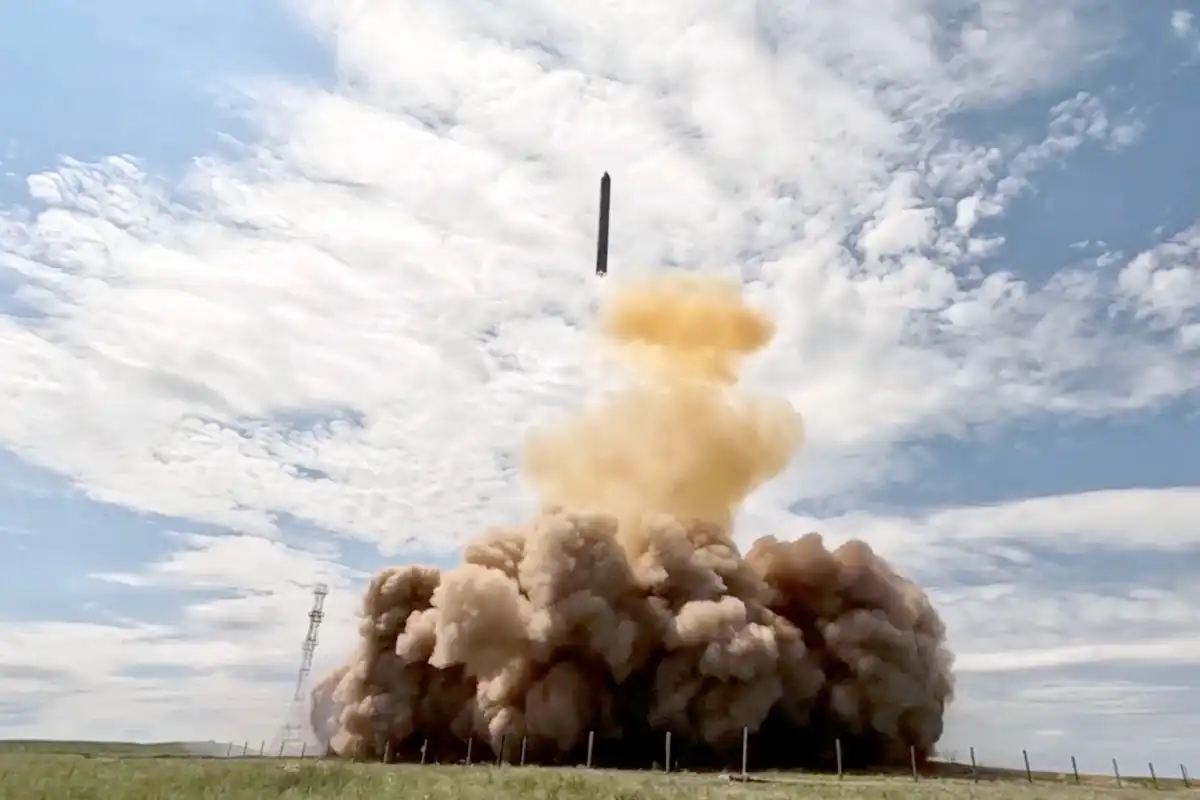
Russia has conducted a successful test launch of the RS-28 Sarmat intercontinental ballistic missile from the Plesetsk Cosmodrome, with the Strategic Missile Forces commander reporting directly to President Vladimir Putin immediately following the launch. Putin publicly praised the system’s capabilities. The test was not a surprise — it was a signal, carefully timed and deliberately publicized.
Understanding what Sarmat actually represents requires separating the weapon’s genuine capabilities from the psychological operation surrounding it.
What Sarmat Can Actually Do
The RS-28 Sarmat is the heaviest ICBM ever developed, replacing the aging Soviet-era R-36M Voevoda — the missile NATO called Satan. Western analysts have designated Sarmat as Satan II, a name Moscow finds useful for its deterrence value.
The missile’s operational range exceeds 18,000 kilometers — sufficient to reach any point on Earth. Its most strategically significant capability is trajectory flexibility: Sarmat can approach targets via the North Pole or the South Pole, attacking from directions that existing American missile defense architecture is not optimized to intercept. US missile defense systems in Alaska and California are positioned to intercept missiles approaching on standard northern trajectories. A southern polar approach bypasses that geometry entirely.
Sarmat can carry multiple independently targetable reentry vehicles — estimates range from 10 to 15 warheads — along with hypersonic glide vehicles and decoys designed to overwhelm intercept systems. Its payload capacity is substantially larger than any Western ICBM currently in service.
Russian officials have stated the first Sarmat regiment will achieve combat alert status in the Uzhur Division by late 2026.
What It Does Not Change
Nuclear deterrence between Russia and the United States has rested on mutual assured destruction for seven decades. Both sides maintain second-strike capability — the ability to absorb a nuclear first strike and still destroy the attacker. Sarmat does not break this equation. It updates Russia’s delivery capability within a framework that already assumed Russia could destroy the United States and vice versa.
The claim that Sarmat renders Western missile defense “helpless” is partially accurate but strategically overstated. American missile defense was never designed to intercept a full Russian nuclear salvo — it was designed to handle limited launches from smaller nuclear states. Sarmat’s trajectory flexibility adds complexity to an already acknowledged limitation, not a new one.
Why the Timing Matters
Russia’s decision to publicize this test now — amid the Iran-US conflict, the Trump-Xi Beijing summit, and ongoing debates about American munitions depletion — is deliberate. Moscow is reminding every party in multiple simultaneous crises that Russia’s strategic nuclear deterrent remains modernized, functional, and capable.
It is not a threat of use. It is a message about the limits of American power in a world where Russia still holds the weapons that define existential risk.
That message was received. Which was the entire purpose of the test.
Disclaimer; Based on Russian Defense Ministry statements and open-source nuclear arms analysis.
Catch all the World News, Breaking News Event and Trending News Updates on GTV News
Join Our Whatsapp Channel GTV Whatsapp Official Channel to get the Daily News Update & Follow us on Google News.
Must Read