
American Sanctions Were Supposed to Cripple China’s AI Chip Industry. Instead They Built It.

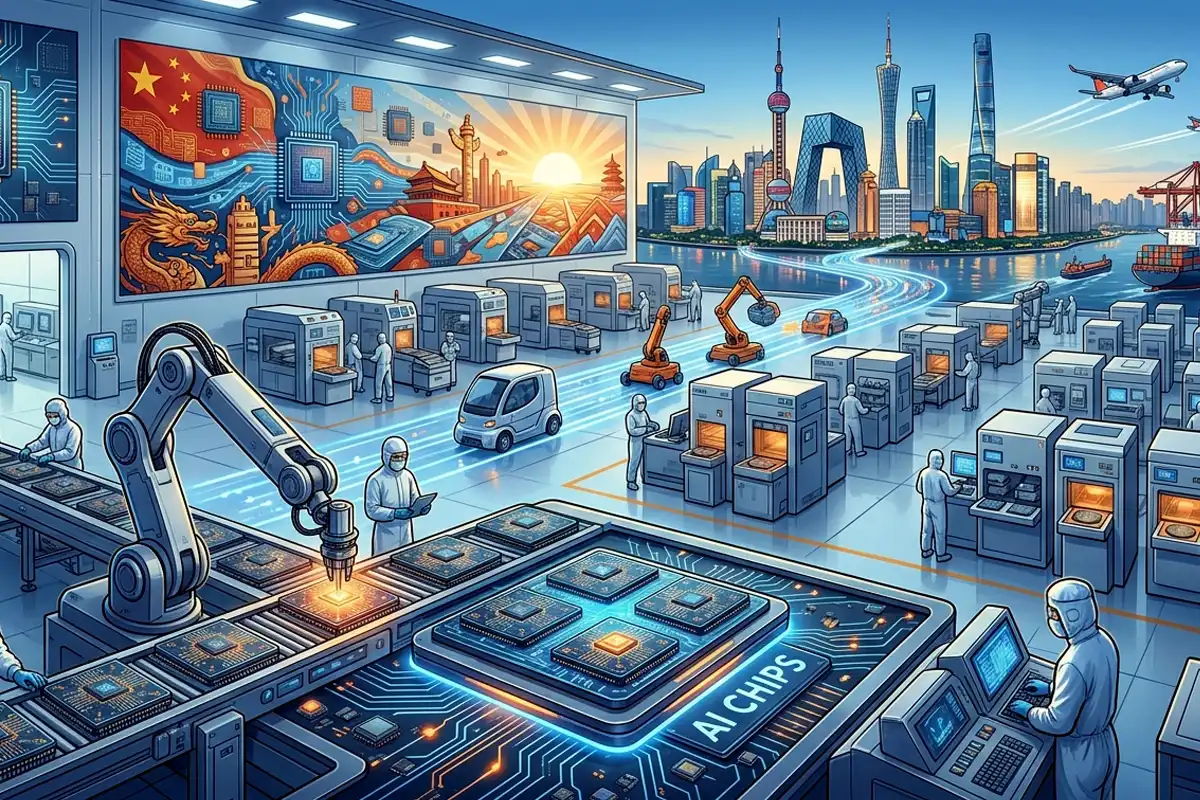
American Sanctions Were Supposed to Cripple China's AI Chip Industry. Instead They Built It.
Morgan Stanley’s numbers tell a story Washington did not intend to write: Chinese AI chip self-sufficiency is headed to 86 percent by 2030. The policy designed to prevent this made it happen.
There is a particular kind of strategic failure where the instrument of pressure becomes the engine of the adversary’s strength. American export controls on advanced semiconductors to China were designed on a “small yard, high fence” principle — restrict the most critical technologies, prevent Chinese AI from accessing the computing power it needs, and maintain American technological dominance by controlling the hardware layer.
The policy had the opposite effect. And Morgan Stanley has quantified exactly how badly it backfired.
The Numbers That Rewrite the Narrative
Five years ago, China produced approximately 10 percent of its own AI chip requirements domestically. By 2025, that figure has reached 41 percent. Morgan Stanley projects it will hit 86 percent by 2030 — meaning that within five years, China will be nearly self-sufficient in the semiconductor category that American policy specifically targeted.
China’s domestic AI chip market is projected to reach $67 billion by 2030. At current export rates, China is generating approximately $500 million per hour from AI-enabled product exports — making it the world’s largest supplier of AI-integrated goods. Semiconductor and computing exports have broken records consecutively.
The sanctions did not slow this trajectory. They accelerated it by removing the option of dependency.
What Huawei and State Investment Actually Built
When American export controls cut Chinese companies off from Nvidia GPUs and advanced chip manufacturing equipment, Beijing responded with the one tool available to authoritarian industrial policy: concentrated state capital directed at a single objective.
Huawei’s Ascend chip series — developed entirely without American components — now powers large-scale Chinese AI deployments. The Kirin processor line continues advancing. SMIC, China’s primary semiconductor foundry, has made manufacturing process advances that American analysts considered impossible under sanctions conditions.
Chinese AI chips are now priced 30 to 60 percent below American equivalents. For price-sensitive markets across the Global South, Southeast Asia, and Africa, the cost calculation is straightforward. American chips are better. Chinese chips are affordable. Affordability wins most procurement decisions.
The Parallel Ecosystem Problem
Washington’s semiconductor strategy assumed China would remain dependent on American-designed chips and American-controlled manufacturing equipment long enough for the technology gap to become permanent. That window has closed.
China has built a parallel technology ecosystem — chip design tools, manufacturing processes, packaging technology, and software frameworks — that no longer requires American inputs at critical points. Sanctions that targeted specific chokepoints discovered that a $1.4 trillion economy with determined state direction can engineer around chokepoints given sufficient time and motivation.
The Beijing summit this week includes Chinese requests to ease semiconductor export restrictions. The irony is complete: China is negotiating from a position of rapidly diminishing need for the very technology Washington used as its primary leverage.
The pressure that was supposed to produce Chinese weakness has produced Chinese independence instead.
Disclaimer; Based on Morgan Stanley analysis and open-source semiconductor industry data.
Catch all the World News, Breaking News Event and Trending News Updates on GTV News
Join Our Whatsapp Channel GTV Whatsapp Official Channel to get the Daily News Update & Follow us on Google News.
Must Read


Entertainment
Kate Middleton Surprises Sussex Residents With Special Village Hall Visit
1-October،2026