UAE and Israel Are Secretly Funding a Joint War Machine; Billions Hidden From Public View

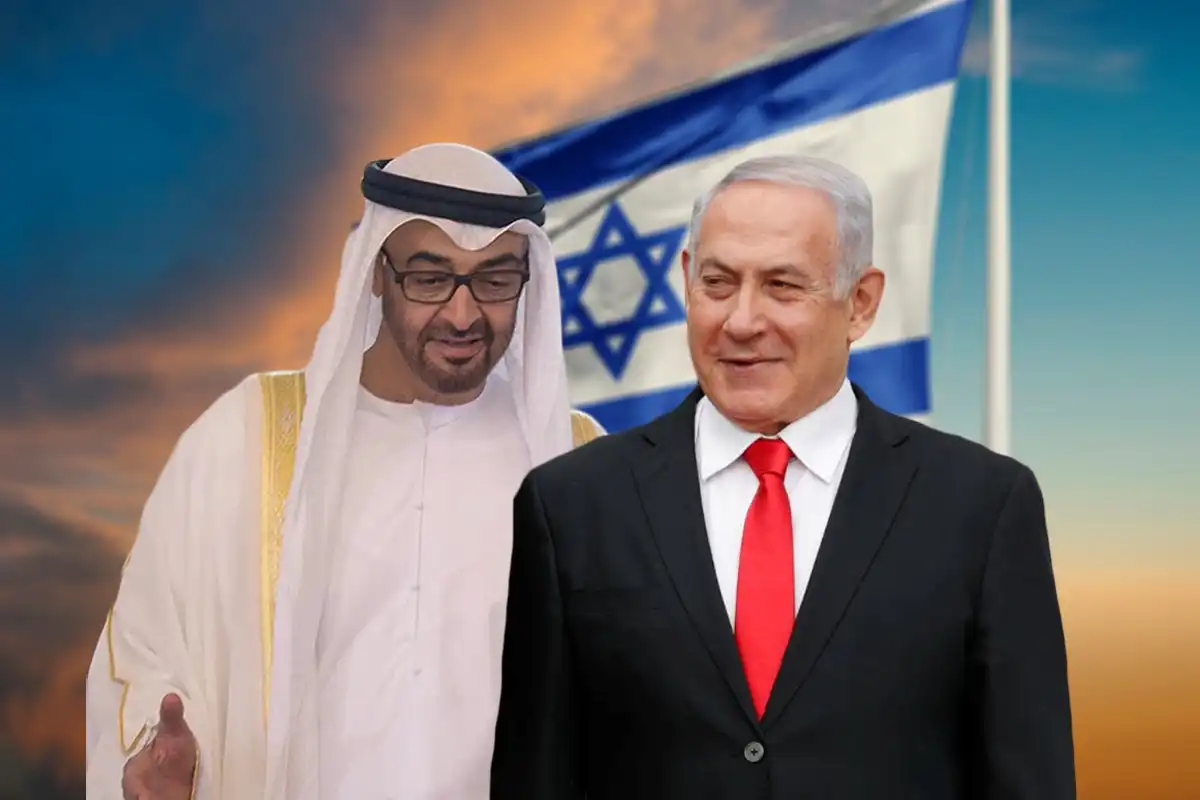
Netanyahu flew to Abu Dhabi in secret during the Iran war. He left with something more valuable than a photo opportunity — a defense financing arrangement that could reshape Middle Eastern military power for decades.
The United Arab Emirates and Israel have quietly established a joint defense fund worth billions of dollars, according to Middle East Eye — the respected British publication covering regional affairs. The fund, finalized during a secret visit by Netanyahu to the UAE during the height of the Iran conflict, is designed to develop and procure next-generation weapons systems, with a specific focus on aerial defense technology, anti-drone systems, and missile interception capabilities.
The timing, the secrecy, and the scale of what is being reported reveals a strategic realignment that goes far beyond the Abraham Accords’ diplomatic symbolism.
What Triggered the Secret Deal
The immediate military context makes the fund’s purpose unmistakable. During Iran’s retaliatory campaign following the February 28 US-Israeli assault, approximately 3,000 Iranian missiles and drones targeted UAE territory. The volume and intensity of that salvo exposed a fundamental gap in Emirati air defense capacity — one that existing American-supplied systems could not fully cover.
Israel responded by deploying Iron Dome batteries and military personnel to the UAE on an emergency basis, a deployment later confirmed publicly by US Ambassador Mike Huckabee. That emergency deployment became the foundation for a permanent arrangement: Israeli technology, Emirati financing, mutual survival interest.
The Financial Logic Behind the Alliance
Analysts cited in the Middle East Eye report identify the economic architecture with clarity. Israel possesses some of the world’s most sophisticated military technology — battle-tested air defense systems, drone warfare expertise, cyber capabilities, and missile interception technology refined through decades of conflict. What Israel currently lacks is money. The Iran war has imposed enormous financial strain on an economy already managing multiple simultaneous security commitments.
The UAE faces the mirror problem. Abu Dhabi has extraordinary sovereign wealth — energy revenues accumulated across decades of oil production, managed through some of the world’s largest investment funds. What the UAE lacks is the indigenous military technology to defend that wealth against the threat that 3,000 Iranian missiles made viscerally real in February.
Israel has the technology. UAE has the capital. The fund is where those two realities meet.
What the Fund Will Actually Finance
According to sources cited by Middle East Eye, the joint fund’s scope extends beyond simple weapons procurement. The arrangement covers co-development of next-generation air defense systems, joint acquisition of advanced anti-drone and anti-missile technology, and financing for Israeli defense technology development — with the UAE essentially becoming an investor in Israeli military-industrial capacity rather than merely a customer for its products.
This distinction matters strategically. A customer relationship can be terminated. An investment relationship creates shared interests that persist through political changes, leadership transitions, and diplomatic pressures. The UAE is not just buying Israeli weapons. It is buying into Israeli weapons development — ensuring that future Israeli military technology reflects UAE defensive requirements from the design stage.
Iran’s Strategic Reading of This Development
From Tehran’s perspective, the UAE-Israel defense fund represents exactly the kind of hostile consolidation that Iranian officials have been warning against. Mohsen Rezaei’s recent warning to Abu Dhabi — that Iran’s patience has limits regarding UAE-Israel ties — was issued with knowledge of this deepening relationship.
Iran’s calculation is straightforward: an UAE that finances Israeli air defense development is an UAE that has chosen a side in the regional conflict. The Abraham Accords created a diplomatic relationship. This fund creates a military-industrial partnership. Tehran treats these as categorically different levels of threat.
Israel’s Shifting Dependency
The fund also signals a structural shift in how Israel finances its military capacity. American military aid — historically the foundation of Israeli defense procurement — comes with congressional oversight, political conditions, and public visibility that creates constraints. Emirati sovereign wealth comes with none of these limitations.
As American political support for unconditional Israeli military aid faces increasing domestic pressure, Abu Dhabi offers an alternative financing architecture that is quieter, faster, and politically uncomplicated. Israel is not abandoning American support. It is building a parallel financial base that reduces its dependency on Washington’s political cycles.
The UAE-Israel defense fund is the Abraham Accords’ true strategic product — not normalization ceremonies and trade agreements, but a billion-dollar military-industrial partnership quietly assembled while the region was distracted by an active war.
Iran fired 3,000 missiles at the UAE. The UAE responded by financing the development of systems to shoot down the next 3,000. The cycle of escalation now has a financial architecture underneath it.
That architecture will outlast the current ceasefire — whatever form it eventually takes.
Disclaimer; Based on Middle East Eye reporting and open-source Gulf security analysis.
Catch all the World News, Breaking News Event and Trending News Updates on GTV News
Join Our Whatsapp Channel GTV Whatsapp Official Channel to get the Daily News Update & Follow us on Google News.
Must Read